Activists rally in Dresden for second 'Antifa-Ost' trial amid tight restrictions
A solidarity trip is heading to Dresden for the 27th day of hearings in the second 'Antifa-Ost' trial. Organised under the slogan Berlin goes Dresden—Process Support for Political Prisoners' Day, the journey brings together activists showing support for the seven defendants. Inside the courtroom, chants of 'Free all antifascists!' and 'United against fascism!' have filled the space as proceedings continue. The defendants, including Thomas J.—known by the alias Nanuk—face charges of membership in or support of a criminal organisation. Each arrives in double handcuffs, escorted by court officers. Communication with those in custody remains tightly controlled, limited to monitored letters, supervised visits, or phone calls.
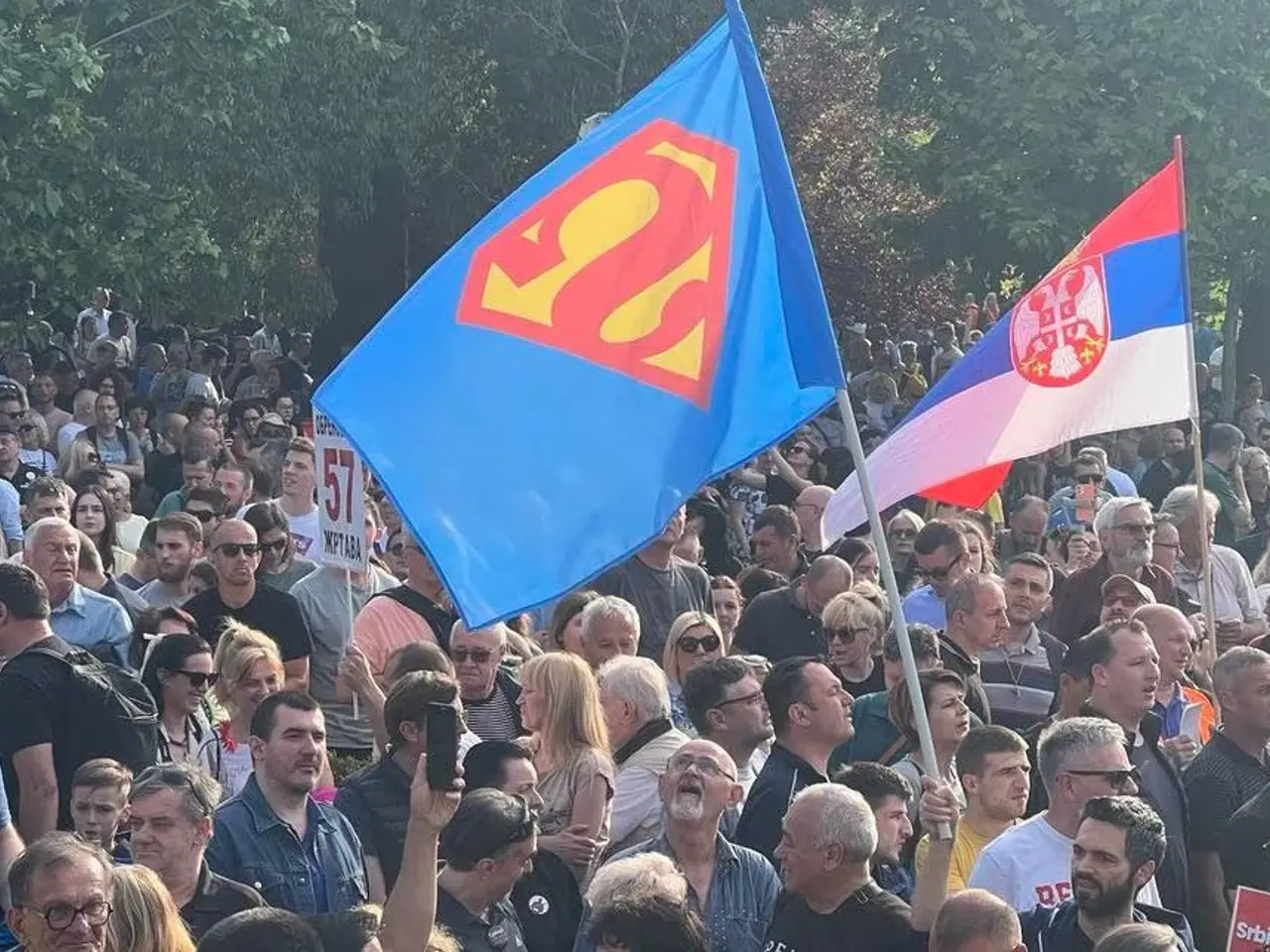
Supporters have adapted to strict courtroom rules, swapping banned political slogans on shirts for tie-dye designs as a symbolic gesture. Masha Frühling, press spokesperson for the solidarity group *KWT*, is among those attending the trial to challenge what activists describe as an oppressive atmosphere. Beyond the courtroom, support networks have expanded across nearly every major city. Groups are raising public awareness, organising demonstrations, and writing letters to imprisoned defendants. The trip itself uses the *Solibus*, a vehicle well-known in left-wing circles, to transport activists to the hearings.
The trial continues with strong public backing for the accused. Supporters maintain pressure through organised trips, symbolic gestures, and widespread campaigns. Restrictions on communication and courtroom behaviour remain in place as the legal process moves forward.
Read also:
- American teenagers taking up farming roles previously filled by immigrants, a concept revisited from 1965's labor market shift.
- Weekly affairs in the German Federal Parliament (Bundestag)
- Landslide claims seven lives, injures six individuals while they work to restore a water channel in the northern region of Pakistan
- Escalating conflict in Sudan has prompted the United Nations to announce a critical gender crisis, highlighting the disproportionate impact of the ongoing violence on women and girls.