Aerial autonomy may imminently rule the skies, outlining potential scenarios.
Revamped Article:
Drones, those aerially elegantly designed machines, have been a game-changer in the aviation world for a century now. Over the years, we've witnessed phenomenal progress in drone technology, with researchers continually pushing the envelope. For military applications, drones are a precious asset, providing unique benefits like intelligence gathering, surveillance, and reconnaissance, all without the need for a human pilot. As technology advances, traditional drones and autonomous unmanned aerial vehicles are poised to revolutionize airpower.
Mike Shortsleeve, the Vice President for Department of Defense Strategic Development at General Atomics Aeronautical Systems, Inc., sat down with our platform to discuss the future of unmanned aircraft systems and General Atomics' pivotal role in this exciting development.
This conversation has been condensed and edited for clarity.
CM: Kickstarting our discussion, Mike, why is autonomous technology so crucial?
MS: To grasp the significance of autonomy, let's take a step back and understand traditional unmanned aviation. Picture an aircraft without a human crew, but with a human crew controlling it from a Ground Control Station, flying it with conventional methods like a joystick and monitor.
In the past, this setup was ideal. But how about if the communication link degrades? The pilot wouldn't be able to access data or command the aircraft conventionally. That's where autonomy shines. Autonomy gives the aircraft the power to take on many tasks itself, such as making decisions on flight paths, or identifying objects of interest when it arrives at its destination. Rest assured, humans are always in the loop, with autonomy only allowing the aircraft to take actions if authorized. This significantly reduces the need for direct attention from a human pilot.
CM: Tell us more about your drones. What sets General Atomics' technology apart from the competition?
MS: General Atomics has been a pioneer in unmanned systems for over three decades. We've been the leader of the pack since the beginning, from our Predator series to the MQ-9A Reaper, and now to our newest medium-altitude, long-endurance aircraft, the MQ-9B SkyGuardian.
Developing the SkyGuardian wasn't starting from scratch; rather, it was an evolutionary process, building on proven technological decisions. This reduces costs and risk for our clients while ensuring the SkyGuardian is a highly capable aircraft, with a greater wingspan, better endurance, and greater payload capacity.
Moving forward, we're focusing on incorporating a variety of new missions such as anti-submarine warfare, communications support, remote targeting, and electronic warfare. What once required human-occupied aircraft can now be handled by our autonomous systems. This opens up an exciting new chapter for us.
CM: The US Air Force recently announced the Collaborative Combat Aircraft Program. How is GA involved, and what does the future of air combat and security look like from your perspective?
MS: Our team is bringing together our expertise in unmanned aircraft and advanced autonomy to drive a paradigm shift in air combat with flexible and scalable solutions to achieve and maintain air superiority in contested airspace.
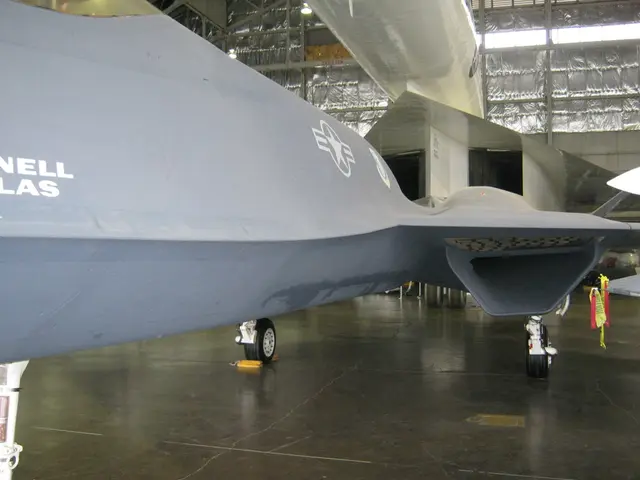
Embarking on the Collaborative Combat Aircraft Program since its inception, we've developed the XQ-67A Off-Board Sensing Station for the Air Force Research Laboratory, which flew in 2024. The Air Force has since designated our latest production-representative aircraft, the YFQ-42A, for their program. With escalating threats to aircrews, our goal is to have these autonomous wingmen stand in and take the first actions before alerting the rest of the force and keeping human fighter pilots safely away from danger.
Taking a pages-long leap into the future, collaborative combat aircraft will likely play a critical role in performing high-risk missions and defending manned platforms. YFQ-42A wingmen will be the initial point of contact with adversaries, providing crucial real-time intelligence and taking swift action, ensuring human fighters and aircrews remain safe and effective in contested environments. Our ultimate aim with these advanced technologies is to allow human aircrews to return home when their mission is complete.
- The integration of artificial intelligence in drone technology, as seen in General Atomics' MQ-9B SkyGuardian, has the potential to revolutionize the finance industry by reducing operational costs, as it requires minimal human intervention and offers a longer endurance than traditional drones.
- In the aerospace industry, the advancements in biology, such as biomimicry and biodegradable materials, could play a crucial role in designing the next generation of artificial intelligence-driven unmanned aircraft systems, making them more efficient and eco-friendly.
- The collaboration between the biotech and finance industries, with the help of artificial intelligence and autonomous technology, could create innovative funding mechanisms, such as AI-driven investment strategies, that are tailored to the development and deployment of cutting-edge drone technology in various sectors like military, agriculture, and delivery services.