Airports' techniques for deterring birds and preventing bird strikes
French airports, such as Ajaccio Napoleon Bonaparte Airport and Nantes Atlantique, are taking proactive measures to address the issue of bird-aircraft collisions. This challenge, which leads to an average of 15 incidents per year at Ajaccio Airport and approximately 1,000 collisions nationwide, is being tackled through an integrated wildlife hazard management program.
This program employs a combination of strategies aimed at reducing bird presence near runways while maintaining aviation safety and conserving biodiversity.
Active bird control methods, like falconry, are being utilised. At Nantes Atlantique Airport, four buzzards and one falcon are used to scare away other bird species. Similarly, Ajaccio Airport employs bird scarers who use pyrotechnic pistols to scare birds away, causing two explosions. These interventions occur 15 minutes before each takeoff and landing.
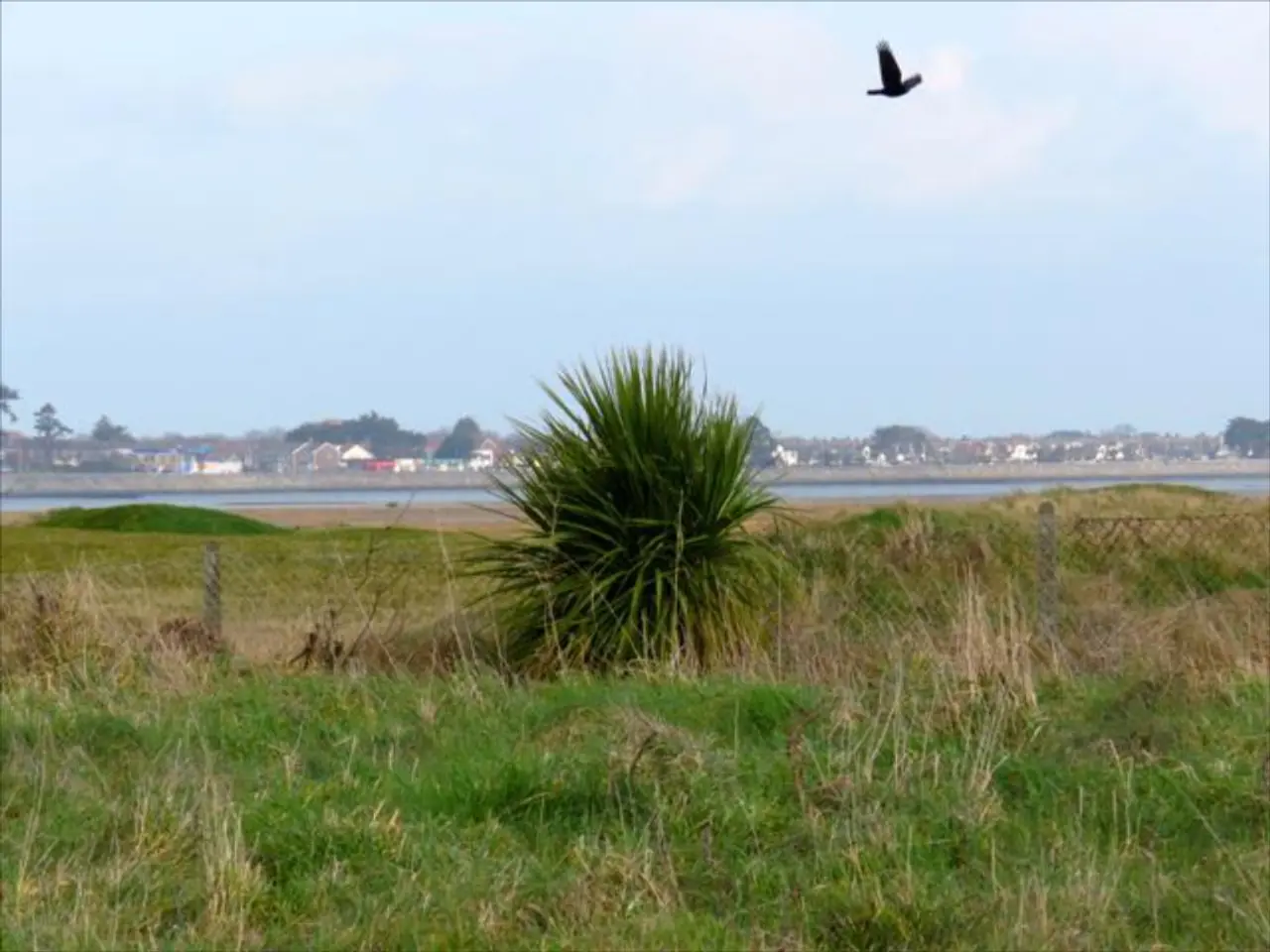
Habitat modification is another key strategy. At Ajaccio Airport, grass near the runway is cut short, while it is allowed to grow high further away to deter birds.
In addition, bird radar systems are used to monitor bird movements in real-time. This allows for timely warnings to air traffic controllers and pilots.
Environmental adjustments are also made to balance ecological conservation with safety needs. Certain green spaces are maintained that do not encourage dangerous bird congregation but support biodiversity.
Despite these measures, bird collisions remain a persistent hazard, particularly during takeoff and landing phases. These collisions can cause damage to critical aircraft components, leading to flight disruptions.
Nantes Atlantique Airport is unique in France as the only airport to have a falconry. According to an agent, the use of birds of prey has halved the number of collisions at Nantes Atlantique in the last eight years. Ajaccio Airport, located near a Natura 2000 zone, the sea, and mountains, also works year-round to prevent bird collisions with aircraft.
While these collisions can be expensive to repair and are responsible for many accidents, there have been no dramatic consequences from bird strikes at Ajaccio Airport to date. However, it is crucial to note that the key to effectiveness in reducing bird collisions, according to specialists, is to multiply the bird scarer systems.
With approximately 7,500 takeoffs and landings in Ajaccio each year, the birds of prey at Nantes Atlantique Airport are taken in the car to get them used to noise. The birds are then released to perform 'flash attacks', scaring birds and returning quickly.
In conclusion, French airports are implementing a comprehensive approach to manage bird-aircraft collisions, ensuring aviation safety while also conserving biodiversity around airport environments.
The integrated wildlife hazard management program at French airports, like Nantes Atlantique, employs falcons and buzzards for active bird control methods as a strategy to reduce bird presence near runways and maintain aviation safety. Ajaccio Airport, on the other hand, uses bird scarers with pyrotechnic pistols and habitat modification, such as cutting grass short near the runway, to deter birds. Moreover, real-time bird movement monitoring through bird radar systems is utilized at these airports to provide timely warnings to air traffic controllers and pilots, thereby ensuring safe transportation in the aviation industry.