Army helicopter exceeded approved altitude during midair collision with aircraft in DCA, according to NTSB investigation
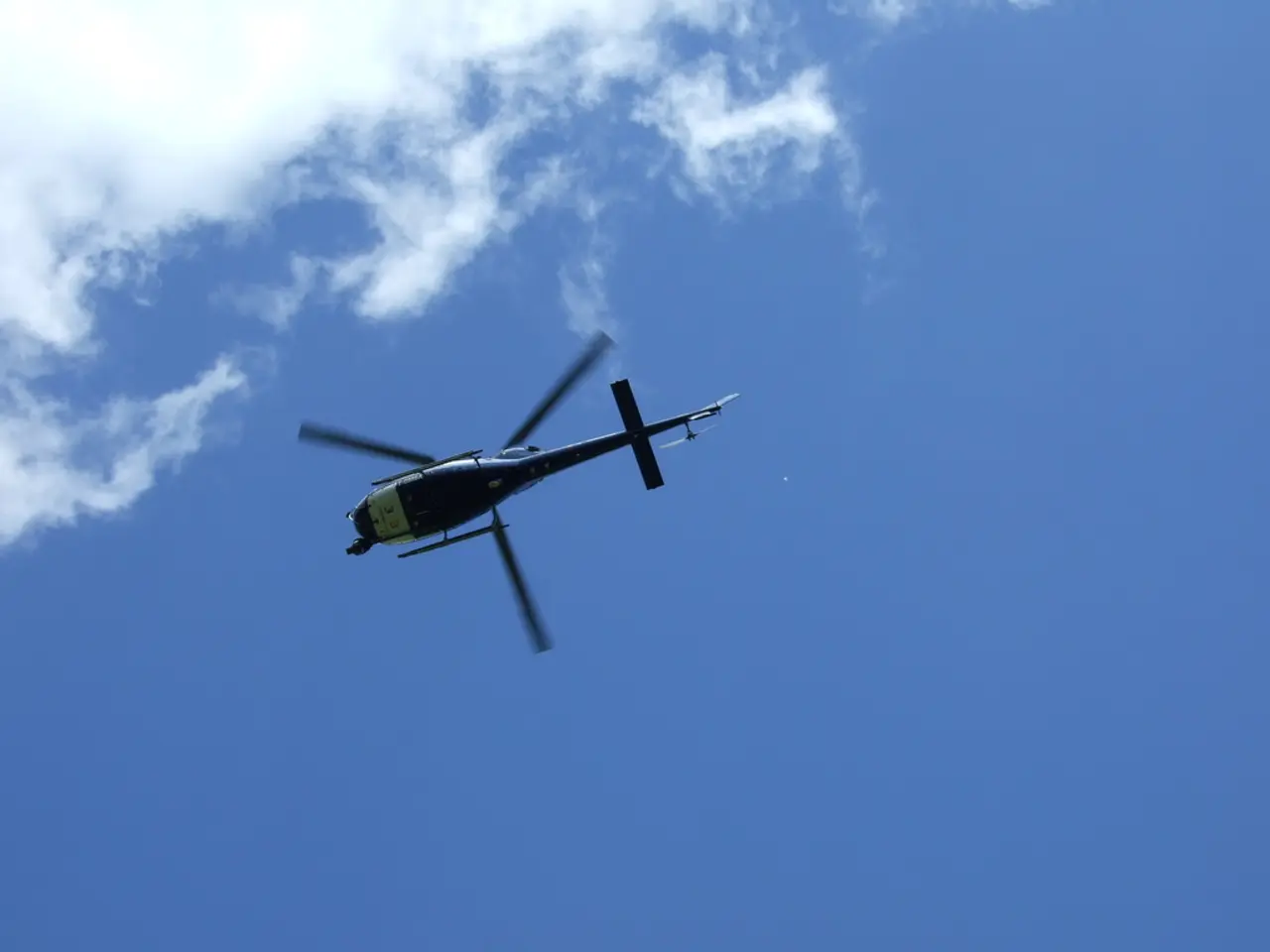
The National Transportation Safety Board (NTSB) is delving deeper into the causes of a tragic midair collision that took place over Washington, D.C., on January 29, 2025, resulting in 67 fatalities. The collision involved an Army Black Hawk helicopter and an American Eagle passenger plane.
The three-day series of hearings, which commenced on July 30, are focusing on the crash and its aftermath, with a particular emphasis on the malfunctioning and outdated altimeters on the Black Hawk helicopter. According to the NTSB, the helicopter was flying above the authorized altitude limit, and its altitude readings were inaccurate.
During the hearings, Army officials have faced questions and scrutiny over the altimeter timeline and the functionality of their equipment. The NTSB has presented official animations to illustrate the events of the collision and is scrutinizing the technical issues related to the Black Hawk's altimeter.
Meanwhile, the American Eagle flight had multiple reliable altitude measurement systems, all of which showed accurate altitude data, indicating no fault on their instruments.
The investigation is also reviewing the roles and actions of the Army, the Federal Aviation Administration (FAA), and air traffic controllers. However, specific findings about their responsibility or errors have not been detailed in the available information.
In a related development, U.S. Sen. Ted Cruz has introduced legislation, the ROTOR Act, aimed at closing aviation safety loopholes. Cruz stated that the Army Black Hawk helicopter involved in the collision had ADS-B technology, but it was turned off.
The NTSB is actively questioning Army officials and examining all involved parties, including FAA oversight and air traffic control actions, to determine root causes and recommend safety measures. The NTSB’s final report and animations about the event were recently released, marking a significant stage in the investigation.
The captain of the American Eagle flight expressed discomfort when dealing with helicopters while flying into Reagan National Airport. On the night of the crash, the captain flying ahead stated that the air traffic controller seemed "exceptionally busy" and "task saturated."
Three soldiers who died in the crash were highly respected and had dedicated their lives to defending the nation. The contributions of military families like those of the deceased soldiers are highly valued by the NTSB.
The NTSB is also examining whether a malfunctioning altimeter on the Black Hawk may have caused the helicopter to fly higher than expected, leading to the tragic collision. The investigation is ongoing, and the NTSB is committed to understanding better how the crash happened and what can be done to prevent future tragedies.
The NTSB's ongoing investigation into the bloody aviation accident includes scrutiny of the Army, the Federal Aviation Administration (FAA), and air traffic controllers, focusing on potential errors and oversight. Senator Ted Cruz has introduced the ROTOR Act to address aviation safety loopholes, highlighting the fact that the Black Hawk involved in the crash had ADS-B technology that was turned off. Meanwhile, the NTSB is actively questioning Army officials, examining equipment malfunctions, and reviewing general-news stories about the accident to determine the root causes and recommend safety measures. The tragic crash encompasses aspects of both the finance sector, with potential implications for aviation insurance and compensation, and the broader transportation industry, as it raises questions about the state of aviation equipment and safety protocols.