Austria's NEOS party reignites debate over scrapping the Federal Council
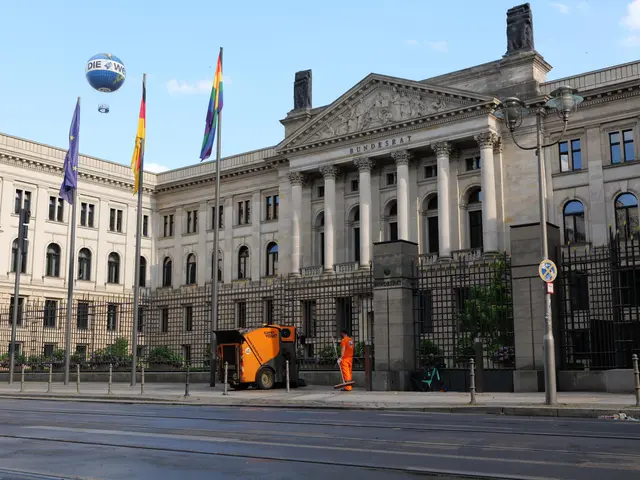
Austria's NEOS party has renewed calls to scrap the Federal Council (Bundesrat), arguing it holds too little power and merely slows down laws. The proposal has faced immediate backlash from regional leaders and major political parties, who insist the chamber plays a vital role in protecting states' rights.
NEOS MP Julia Deutsch framed the demand as a long-standing party position, not a sudden shift. She described the Bundesrat as ineffective, with its limited powers mostly allowing delays rather than meaningful influence. Deutsch also acknowledged that reform—not disrespect—was the goal, but she maintained abolition remained the best solution.
Tyrol's Governor Anton Mattle and Federal Council President Markus Stotter quickly rejected the idea. Mattle argued that progress depends on working *with* states, not bypassing them, and called the chamber a necessary 'federal corrective' in lawmaking. Stotter echoed this, warning against moves that could weaken federalism. The proposal found no support beyond NEOS. Coalition partners ÖVP and SPÖ, along with the Freedom Party and Greens, all dismissed the plan. Critics, including Mattle, pointed out that NEOS has repeatedly pushed for abolition since its founding, often linking it to broader calls for merging federal states. No detailed reform alternatives or past proposals were cited in recent debates.
The NEOS proposal has reignited a familiar debate over the Bundesrat's role, but opposition remains united. With no major party backing abolition, the chamber's future appears unchanged for now. Regional leaders continue to defend it as a safeguard for state interests in national decisions.
Read also:
- American teenagers taking up farming roles previously filled by immigrants, a concept revisited from 1965's labor market shift.
- Weekly affairs in the German Federal Parliament (Bundestag)
- Landslide claims seven lives, injures six individuals while they work to restore a water channel in the northern region of Pakistan
- Escalating conflict in Sudan has prompted the United Nations to announce a critical gender crisis, highlighting the disproportionate impact of the ongoing violence on women and girls.