Bangladesh's BNP government reshapes local leadership with 78 new appointments
Bangladesh's interim government, led by Muhammad Yunus, has appointed 78 new administrators to Zila Parishads across the country. The majority of these roles have gone to current or former politicians from the Bangladesh Nationalist Party (BNP). The appointments mark a shift in local governance as the BNP-led administration strengthens its influence.
The BNP government began replacing senior officials in local bodies shortly after taking office in late 2025. Party leaders were first appointed to 11 city corporations in two separate phases. Now, 42 Zila Parishads have received new administrators, many of whom served as BNP lawmakers, local government heads, or officials during the party's 2001-2006 coalition rule.
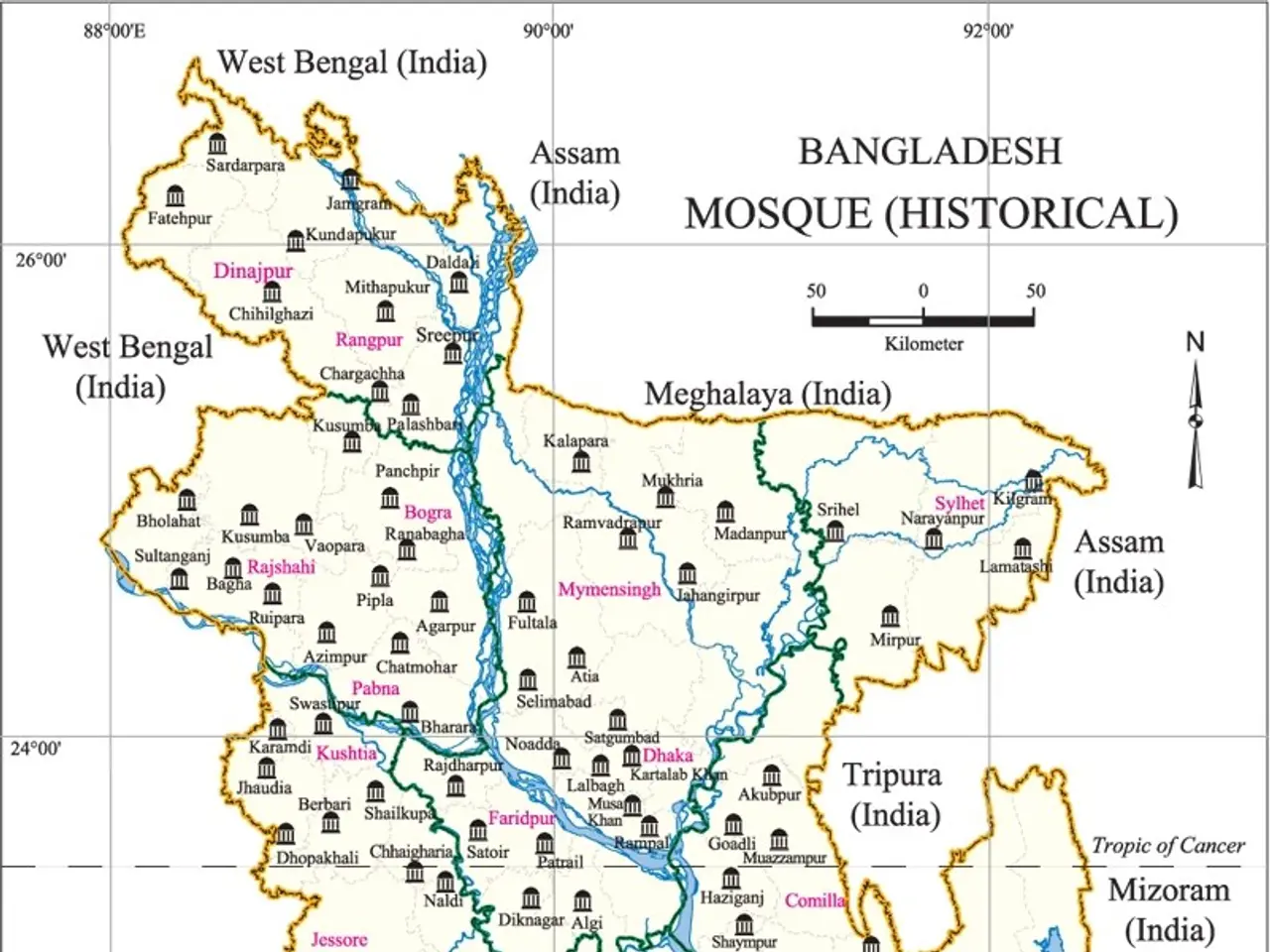
Among the new appointees, AKM Ahasanul Tayeb Zakir will oversee Bogura Zila Parishad. Harunur Rashid has taken charge in Chapainawabganj, while Mofazzal Hossain Dulal now leads Dinajpur Zila Parishad. Mohammad Saiful Islam and Mohammad Touhidul Islam have been assigned to Rangpur and Panchagarh, respectively. Sohel Hosnain Kaykobad will administer Kurigram Zila Parishad. The government stated that these appointments aim to improve local governance and speed up development projects. Many of the selected administrators bring prior experience in public administration and party leadership.
With these changes, the BNP-led administration has placed its members in key local government positions. The new administrators will now take responsibility for managing district-level development and services. Their appointments reflect the government's push to reshape local leadership structures.
Read also:
- American teenagers taking up farming roles previously filled by immigrants, a concept revisited from 1965's labor market shift.
- Weekly affairs in the German Federal Parliament (Bundestag)
- Landslide claims seven lives, injures six individuals while they work to restore a water channel in the northern region of Pakistan
- Escalating conflict in Sudan has prompted the United Nations to announce a critical gender crisis, highlighting the disproportionate impact of the ongoing violence on women and girls.