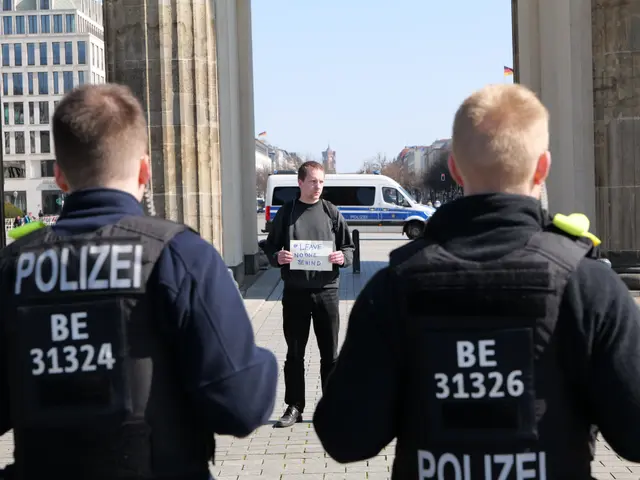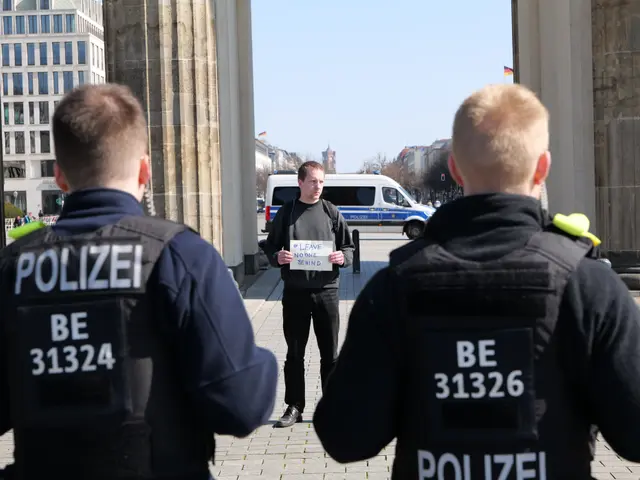
Berlin court rules police wrongfully banned Palestine Congress in 2024
A Berlin court has ruled that police unlawfully shut down the Palestine Congress in April 2024. The decision highlights a broader pattern of suppression targeting pro-Palestinian activism across Germany. Critics argue the government has systematically silenced dissent since the outbreak of the Gaza war.
The Berlin administrative court found that authorities failed to consider milder alternatives before banning the event. Instead, police moved directly to a full shutdown, a measure the court deemed disproportionate. The ruling does not, however, prevent law enforcement from continuing to regulate what forms of Palestine solidarity or criticism of Israel remain permissible.
Since October 2023, German officials have aggressively policed debates on Palestine and Israel. Dissenting voices face swift accusations of antisemitism, often leading to criminalisation. The Federal Interior Ministry has constructed legal justifications to justify crackdowns, shielding the state’s political consensus from scrutiny.
Hundreds of legal challenges are now pending in German courts, with activists and organisers contesting violations of free expression. The government’s approach extends beyond bans, employing preemptive censorship to control public discourse on the issue.
The court’s decision exposes flaws in the state’s handling of pro-Palestinian events. Yet the ruling leaves significant discretion in the hands of police to define acceptable speech. For now, the legal battles continue, with activists pushing back against what they describe as a systematic erosion of democratic freedoms.
Read also:
- American teenagers taking up farming roles previously filled by immigrants, a concept revisited from 1965's labor market shift.
- Weekly affairs in the German Federal Parliament (Bundestag)
- Landslide claims seven lives, injures six individuals while they work to restore a water channel in the northern region of Pakistan
- Escalating conflict in Sudan has prompted the United Nations to announce a critical gender crisis, highlighting the disproportionate impact of the ongoing violence on women and girls.