Berlin's cycling debate heats up over partial bike lanes on busy Berliner Straße
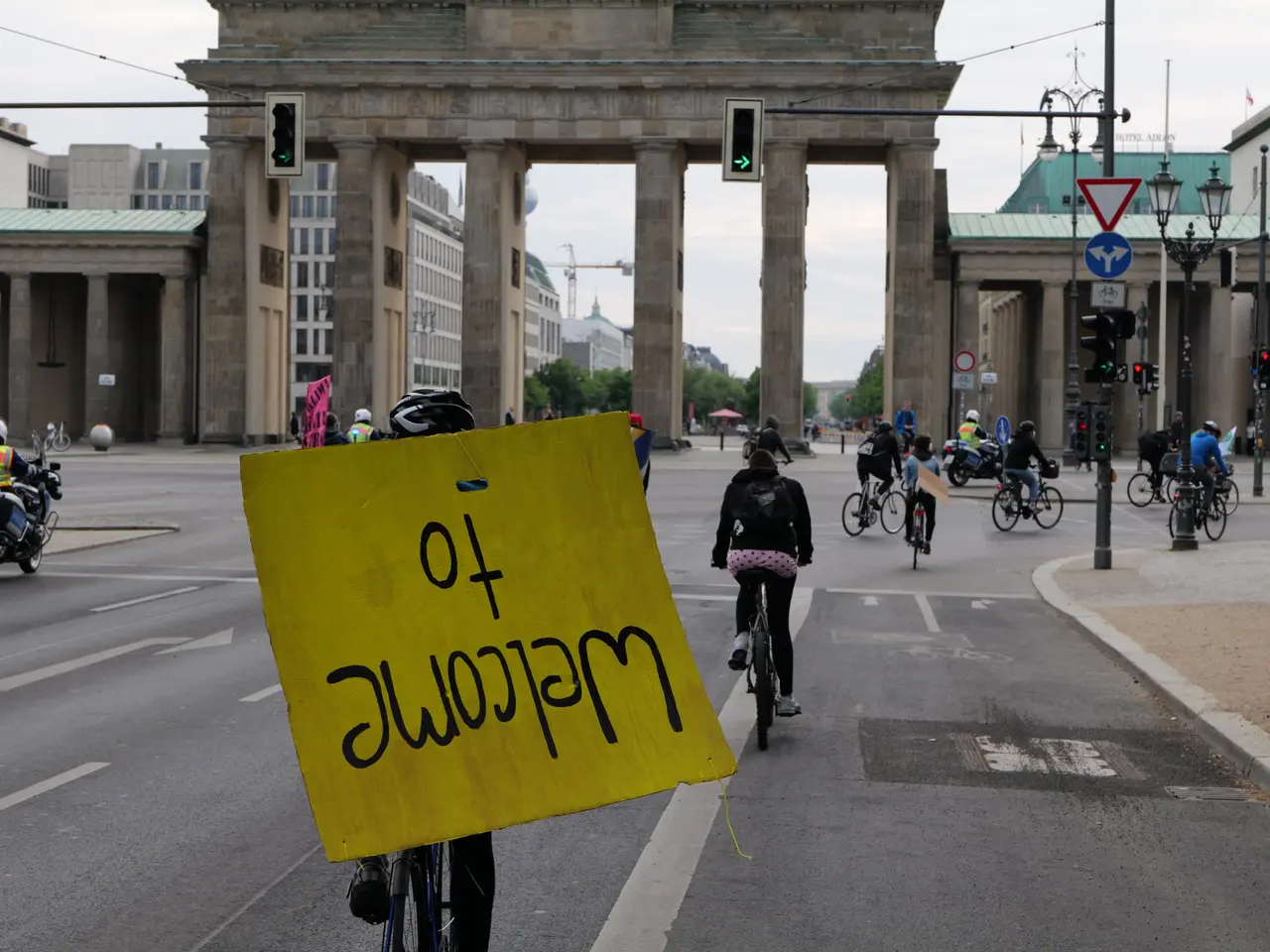
A heated debate is unfolding over cycling infrastructure on Berliner Straße, one of western Berlin's busiest arterial roads. The Senate's latest proposal for a 700-metre trek between Nassauische Straße and Bamberger Straße includes only partial protected bike lanes, sparking criticism from local politicians and cycling advocates.
The western section of Berliner Straße currently has only a narrow, inadequate bike lane, while other parts lack dedicated cycling space. Cyclists often share lanes with motor vehicles, raising safety concerns. In contrast, the eastern section in Schöneberg already features fully protected bike lanes.
The Senate's plan for the Wilmersdorf stretch keeps the bike lane mostly adjacent to the remaining car lane. Officials justify this approach by citing the need to maintain a second emergency route for fire trucks. However, noise levels along the road already reach 70 to 75 decibels at many residential buildings, and no data exists on whether protected lanes—like those on Grunewaldstraße in 2025—would reduce this issue.
Political divisions have emerged over the proposal. Only the AfD and FDP back the Senate's plan in the transport committee. Meanwhile, the Green Party and even the local CDU faction have strongly criticised the approach, arguing it fails to ensure safety or meet residents' needs.
The Senate's scaled-back solution for Wilmersdorf has drawn opposition from multiple parties. Without further adjustments, the current plan will leave cyclists with limited protection on a high-traffic route. The outcome of this debate will shape future cycling infrastructure in the area.
Read also:
- American teenagers taking up farming roles previously filled by immigrants, a concept revisited from 1965's labor market shift.
- Weekly affairs in the German Federal Parliament (Bundestag)
- Landslide claims seven lives, injures six individuals while they work to restore a water channel in the northern region of Pakistan
- Escalating conflict in Sudan has prompted the United Nations to announce a critical gender crisis, highlighting the disproportionate impact of the ongoing violence on women and girls.