Berlin's skilled trades face crisis as costs and labor shortages bite
Berlin's Skilled Trades Sector Faces Sharp Downturn in Spring 2026
In spring 2026, Berlin's skilled trades sector is grappling with a noticeable economic slump. Survey results gathered amid the current crisis paint a clear picture of the sector's precarious situation—weakness is no longer confined to expectations but is now evident in day-to-day operations, affecting orders, revenue, and employment.
The business climate index has plummeted to 100 points, hovering just at the neutral threshold. Only 32% of businesses rate their current situation as good, while 45% describe it as satisfactory and 23% as poor. The balance for current business conditions has dropped to just 9 points, marking the weakest spring reading since 2013.
"Companies are under massive pressure—and from multiple directions at once," says Jürgen Wittke, CEO of the Berlin Chamber of Skilled Crafts. "When orders decline while energy and operating costs rise, every investment and hiring decision becomes a mathematical challenge. Businesses aren't just proceeding with caution; they're moving forward with the handbrake on—and that damages the engine in the long run. In concrete terms, many are postponing investments, replacing machinery only in emergencies, and hiring new staff far more hesitantly."
Carola Zarth, President of the Berlin Chamber of Skilled Crafts, adds: "The steady deterioration of the business climate index over recent years is a clear warning sign. Skilled trades are the backbone of supply security, employment, and vocational training in our city. But if momentum stalls, policymakers must stop working against the sector. Additional cost burdens—such as levies or so-called relief premiums that, in reality, only add to the strain—are exacerbating the situation rather than creating much-needed flexibility."
Soaring Energy Prices and Supply Chain Strains Weigh Heavily on Businesses
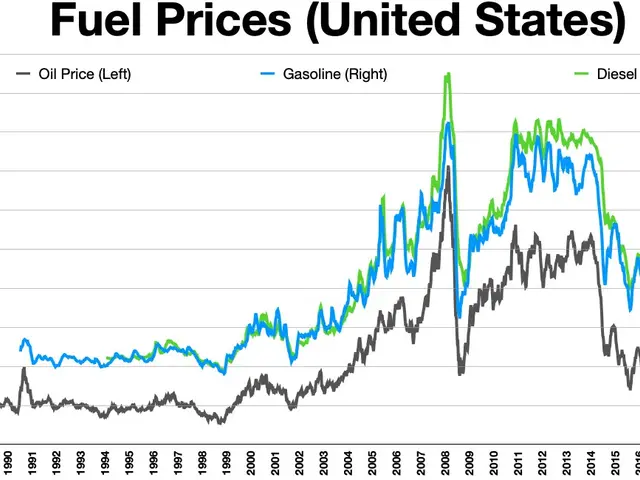
The most significant risks remain high energy and fuel costs, as many contracts require multiple trips to customers and construction sites. A staggering 83% of businesses classify raw material and energy expenses as a high or very high risk. These costs not only inflate operating expenses but also suppress demand, as customers delay investments. Even the planned short-term reduction in energy taxes is widely seen as insufficient to deliver tangible, lasting relief.
No Signs of Relief Ahead
The outlook remains equally bleak. Over the next six months, just 16% of businesses expect an improvement in their situation, while 24% anticipate further deterioration. The expectations balance stands at minus 8 points, signaling persistent pessimism.
Weak demand remains the core issue: The order intake balance has fallen to minus 15 points. At the same time, order backlogs are visibly shrinking—average order coverage has dropped from 14 to 12 weeks, and capacity utilization, at 82%, sits below the long-term average. Roughly one in four businesses now considers their order books insufficient.
Skilled Labor Shortage Remains a Structural Challenge
Despite the economic cooldown, the shortage of skilled workers remains one of the sector's biggest threats, with 71% of businesses citing it as a major burden. The current hesitation in hiring is not a sign of easing pressure but rather a reflection of a dilemma: Companies still struggle to find qualified staff but, due to economic uncertainty, are hiring less. Employment plans have stalled, with the balance at just one point.
Skilled trades are vital to Berlin's economic stability and transformation. To fulfill this role, the sector now urgently needs clear and reliable political support.
Sector-Specific Outlook
Developments vary across different trades, but the overall picture remains tense.
Construction Trades: The business climate index has dropped to 91 points. Current conditions have turned negative, with order intake, revenue, and employment all deep in the red.
Construction and finishing trades: While the index remains just above the neutral threshold at 103 points, this sector is providing noticeably less support to overall craft industry momentum than in previous years.
Automotive trades: The motor vehicle sector continues to act as a stabilizing force. With a business climate index of 117 points, it remains firmly in positive territory.
Read also:
- Federal Funding Supports Increase in Family Medicine Residency Program, Focusing on Rural Health Developments
- Potential Role of DHA in Shielding the Brain from Saturated Fats?
- Alternative Gentle Retinoid: Exploring Bakuchiol Salicylate for Sensitive Skin
- Hanoi initiates a trial program for rabies control, along with efforts to facilitate the transition from the dog and cat meat trade industry.