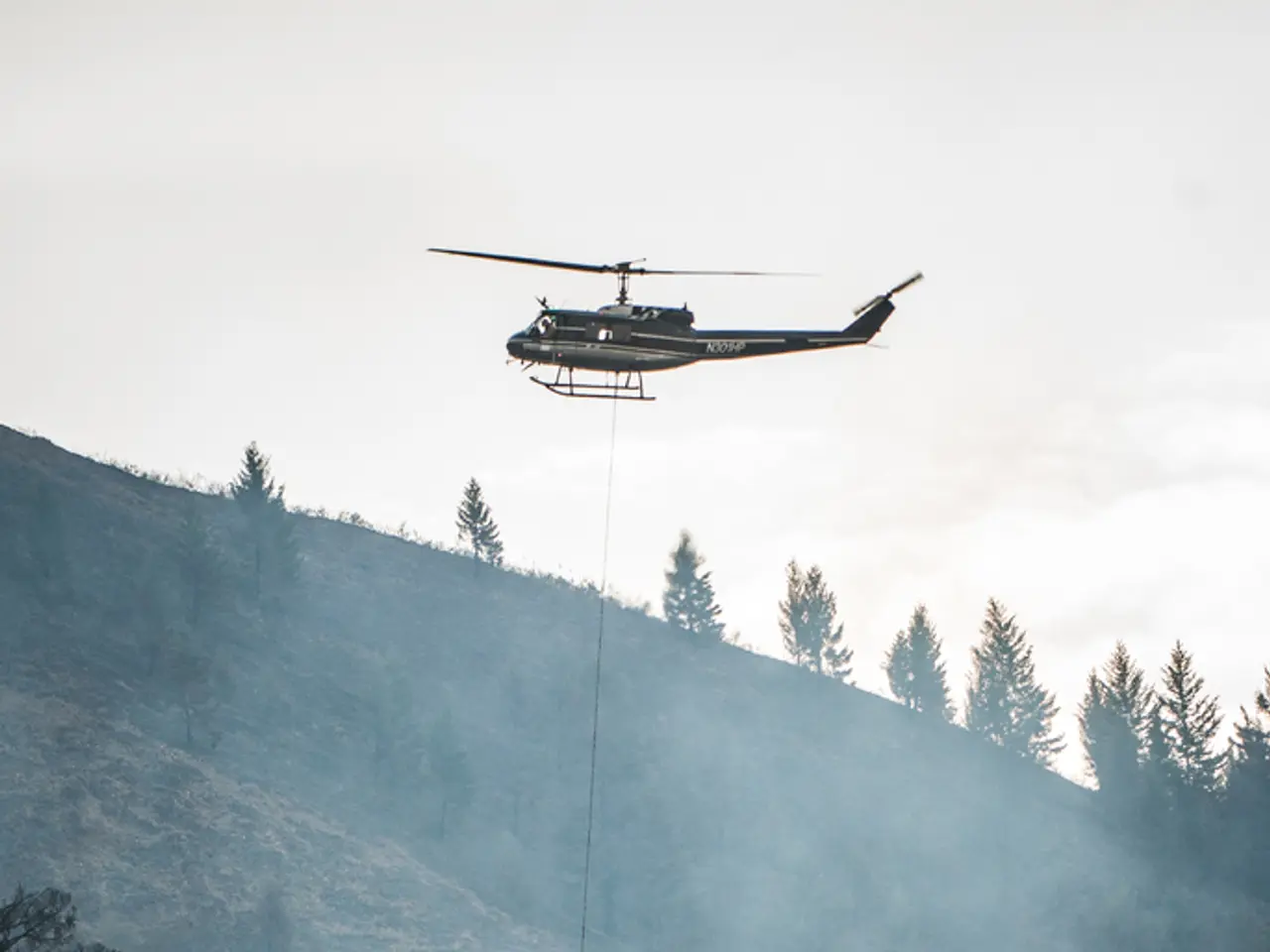
Catastrophe in the Mountains: Kedarnath Aerial Mishap
In the mountainous valley of Uttarakhand, India, a Bell 407 helicopter operated by Aryan Aviation crashed on June 15, 2025, taking the lives of all seven people onboard. The crash occurred near Gaurikund in Rudraprayag district, an area known for its unpredictable weather and challenging airspace.
In response to the tragic incident, the Directorate General of Civil Aviation (DGCA) and the Aircraft Accident Investigation Bureau (AAIB) have launched a joint investigation into the crash. Preliminary assessments suggest that Controlled Flight Into Terrain (CFIT) caused by poor visibility and dense cloud cover may have been a leading factor.
The Uttarakhand government has taken immediate steps to address the safety concerns surrounding helicopter operations in the region. A technical committee, headed by the state home secretary Shailesh Bagauli, has been established to prepare updated Standard Operating Procedures (SOPs) for helicopter operations in the state. The committee is tasked with analysing accident causes and proposing measures to prevent future occurrences.
The committee is also expected to suggest enhancements to the air traffic management system and review existing SOPs established by the Uttarakhand Civil Aviation Development Authority (UCADA). Immediately after the crash, the government suspended all helicopter operations in the region for a short period as a precautionary measure and specifically suspended services of the operator Aryan Aviation.
The deceased in the latest crash include Captain Rajbir Singh Chauhan, a 39-year-old pilot from Jaipur, and six passengers: Vikram Rawat, Vinod Devi, Trishti Singh, Rajkumar Suresh Jaiswal, Shraddha Rajkumar Jaiswal, and a 2-year-old girl named Kashi.
The Kedarnath valley has a history of helicopter accidents due to its high-altitude geography, rapidly changing weather conditions, and challenging airspace. The crash has reignited debate over the increasing use of helicopters in high-risk areas during pilgrimage season, emphasising the need for real-time weather monitoring systems, better pilot training, and mandatory compliance with revised SOPs.
Uttarakhand Chief Minister Pushkar Singh Dhami has announced the immediate formation of a technical committee to review and strengthen safety protocols for helicopter operations in the state. The committee is expected to submit its report by August 15, which should provide comprehensive recommendations that could shape future helicopter operations and safety standards in Uttarakhand.
The tragedy serves as a stark reminder of the risks posed by challenging weather conditions and complex terrain in the Himalayan region, underscoring the need for stringent operational protocols and enhanced safety monitoring. Teams from the State Disaster Response Force (SDRF), National Disaster Response Force (NDRF), and local police were swiftly deployed, but unfortunately, no survivors were found.
As the investigation into the crash continues, the focus remains on learning from this tragic event to ensure the safety of all involved in helicopter operations in Uttarakhand.
- The aviation industry and general news outlets are reporting on the Commission of a joint investigation by the DGCA and AAIB into the Bell 407 helicopter crash in Uttarakhand, which raises concerns about helicopter safety in challenging terrain.
- In the aftermath of the incident, the Uttarakhand government has set up a technical committee, led by Shailesh Bagauli, to analyze accident causes and revise Standard Operating Procedures (SOPs) for helicopter operations in the region.
- The crash has sparked broader discussion within the transportation and finance sectors about the need for improvements in air traffic management, real-time weather monitoring systems, better pilot training, and mandatory compliance with revised SOPs in high-risk areas.