
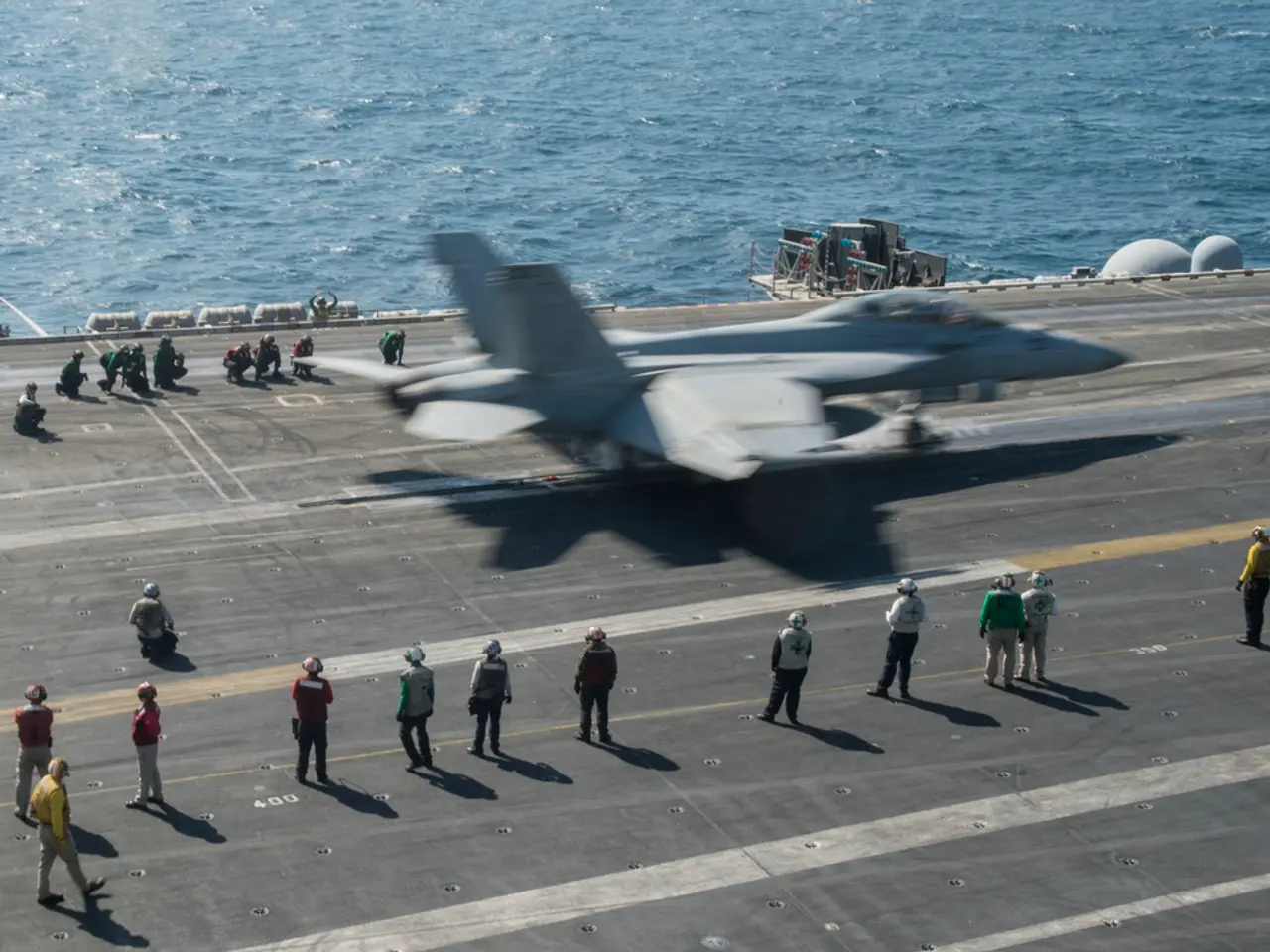
difficulties in achieving a successful landing after a flawless Inertial Landing System (ILS) descent
In a recent incident at LaGuardia Airport, a Boeing 737 carrying Vice-President Mike Pence, campaign staff, and media reporters slid off the runway. The incident, which occurred during overcast ceilings with moderate to heavy rain, highlights a common challenge faced by pilots during landings - hydroplaning on contaminated runways.
Hydroplaning on aircraft during landing occurs when a layer of water prevents the tires from making direct contact with the runway surface. This causes a loss of friction between the tires and the runway, leading to reduced braking and directional control. Essentially, the tire rides on top of the water layer instead of the pavement, similar to hydroplaning in cars but at higher speeds and more critical for aircraft safety.
Several factors influence the occurrence and speed threshold of hydroplaning. Tire pressure, runway surface condition, tire tread design, and operational speed are the key factors. Aircraft tires are inflated to very high pressures, often up to 200 psi or more. Higher pressure tends to reduce the speed at which hydroplaning can occur because it helps the tire cut through the water film more effectively.
The presence of water, slush, ice, or other contaminants on the runway contributes to hydroplaning risk. Grooved runways help channel water away, reducing the chance and severity of hydroplaning by allowing better tire-to-surface contact. Aircraft tires have tread patterns designed specifically to prevent hydroplaning on wet surfaces. These tread patterns help displace water from under the tire, improving traction and preventing the buildup of a water layer beneath the tire.
The faster the aircraft moves, the greater the likelihood of hydroplaning. The critical speed for dynamic hydroplaning approximately depends on the square root of the tire pressure (in psi) multiplied by a constant factor. If the aircraft speed exceeds this threshold, hydroplaning can occur.
To avoid hydroplaning, pilots should be mindful of their approach and landing techniques. Practicing partial-flap and contaminated runway landings can help avoid losing control on the runway. Reducing flaps after landing transfers more weight to the wheels, improving braking effectiveness. After touchdown, being gentle on the brakes reduces the chances of locking up a tire and starting to skid down the runway.
With more IFR rainy and snowy days on the way, it's beneficial for pilots to practice for partial flap landings on wet or snowy runways. Boldmethod offers an Instrument Procedures course to help master IFR flying, providing pilots with the skills needed to navigate and land safely in adverse weather conditions.
Staying informed and practicing safe flying techniques can help pilots navigate the challenges of landing on contaminated runways, ensuring the safety of everyone on board. Boldmethod's email subscription provides real-world flying tips and information weekly, helping pilots stay up-to-date with the latest best practices.
[1] https://www.aerotechnews.com/aviation-news/understanding-hydroplaning-on-aircraft-landings/ [4] https://www.faa.gov/airports/airport_safety/runway_safety/media/Runway_Safety_Fact_Sheet_Contaminated_Runways.pdf [5] https://www.aerotechnews.com/aviation-news/hydroplaning-aircraft-landings-understanding-the-critical-speed/
- In a Cessna, a careful maneuver during landing could prevent hydroplaning on a runway contaminated with water.
- During flight, a pilot should monitor the weather conditions carefully to avoid landing on a runway that is slick from rain or snow.
- In the aviation industry, training programs often focus on procedural adaptations for landing on runways with contaminated surfaces.
- The aircraft's instruments can provide valuable information about runway conditions, helping the pilot navigate a safe landing.
- After touching down, a pilot should apply the brakes cautiously to prevent hydroplaning and ensure a smooth runway transportation.
- Each aircraft has specific runway approach procedures designed to minimize the risk of hydroplaning during landing.
- Financing and maintaining a well-treaded aircraft tire can contribute significantly to safety in the busy air transportation sector.
- Practicing landing maneuvers on contaminated runways can help reduce the risks of hydroplaning, a common challenge in the aviation world.
- To stay updated with the latest safety guidelines and best practices, many pilots subscribe to industry resources such as Boldmethod's aviation training materials.





%20descent)