EU enlargement debate heats up as leaders clash over veto rights and faster accession
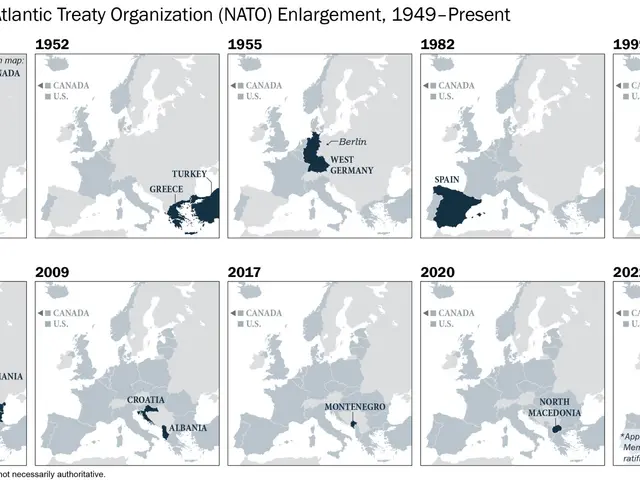
Serbia has also signaled openness to relinquishing its veto power as a condition for EU membership, following Albania's lead.
"For Serbia, EU membership without veto rights is acceptable," Serbian President Aleksandar Vučić told the Frankfurter Allgemeine Zeitung. "The most important aspect for us is access to the single market and the free movement of goods, people, and capital. These are core values we aim to achieve through EU membership." Vučić's remarks align with those of Albanian Prime Minister Edi Rama, who has repeatedly stated that his country would forgo the veto power granted to all EU member states in exchange for accession.
In Germany, figures such as Anton Hofreiter (Green Party) have advocated for EU enlargement without veto rights. The chair of the Bundestag's Committee on EU Affairs told the FAZ, referencing France's stance and that of other EU nations: "As long as the veto formally exists, we have no chance of enlargement." He noted that candidate countries understand the proposal, even if some governments publicly reject it "with disgust and outrage." Behind closed doors, however, the tone is different. The alternative to waiving the veto, he warned, is that "these countries simply never join the EU."
Adis Ahmetović, the SPD's foreign policy spokesperson in the Bundestag, also expressed support for the idea. Against the backdrop of Russia's war of aggression, he argued that the geopolitical importance of "a binding accession perspective for the region has only grown." He called for pragmatism and creativity to integrate the six Western Balkan nations—targets of external influence—into the EU. "Waiving the veto could be a compromise to accelerate their admission," Ahmetović told the FAZ.
EU Enlargement Commissioner Marta Kos disagreed, stating: "Every expansion must strengthen Europe and not undermine the EU's ability to act." She told the FAZ, however, that "countries fully complying with EU rules should face no disadvantages. The EU treaties do not provide for second-class membership."
Germany's Foreign Office remained cautious. A spokesperson in Berlin emphasized that the priority for swift EU accession remains "the full adoption of the acquis communautaire in line with the Copenhagen criteria."
Read also:
- American teenagers taking up farming roles previously filled by immigrants, a concept revisited from 1965's labor market shift.
- Weekly affairs in the German Federal Parliament (Bundestag)
- Landslide claims seven lives, injures six individuals while they work to restore a water channel in the northern region of Pakistan
- Escalating conflict in Sudan has prompted the United Nations to announce a critical gender crisis, highlighting the disproportionate impact of the ongoing violence on women and girls.