German anti-fascist group left without banking after account closures
"Antifascism was packed into my 'backpack of life,'" says Ellen Händler. Over the phone, the 77-year-old recounts how her Jewish parents escaped Nazism through the Kindertransport to England—her mother at 15, her father after being ransomed from Sachsenhausen concentration camp, boarding one of the last trains out.
In England, the two met, survived the war, and then made the extraordinary decision to return to Germany—even though all their other relatives had been murdered in the Holocaust. "They always said: The Nazis must not be allowed to succeed in making Germany Judenrein," Händler recalls.
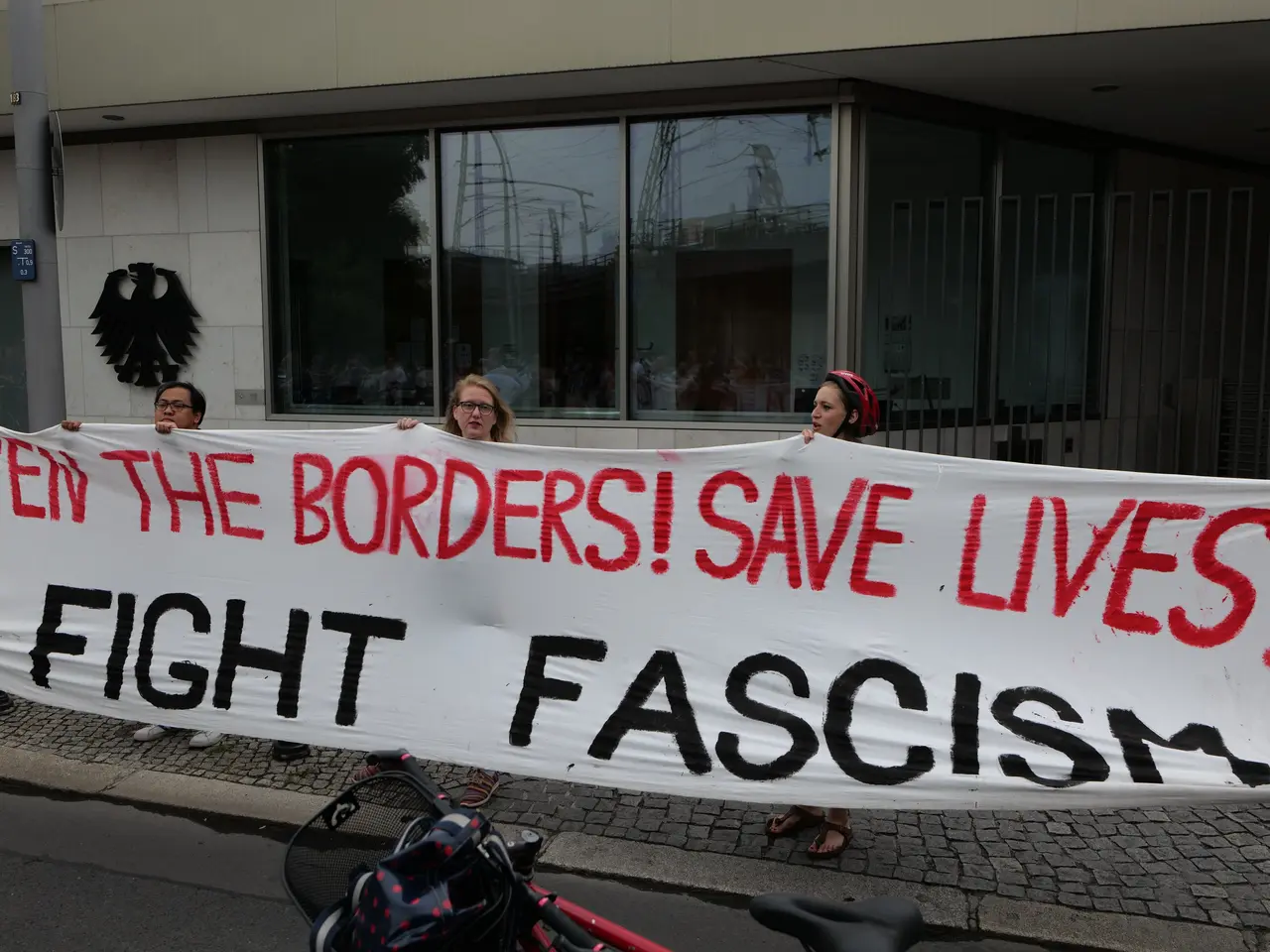
For decades, this conviction has driven her activism in Berlin-Treptow with the local branch of the VVN-BdA (Association of Victims of the Nazi Regime – Federation of Antifascists). In Treptow, the group investigates forced labor and resistance, installs Stolpersteine (stumbling stones), and conducts educational work in schools. Neonazis are no strangers to the streets of Treptow-Köpenick, East Berlin's largest district, where the far-right party Die Heimat (successor to the NPD) has its headquarters. Yet the VVN-BdA's office is located inside the district town hall—a sign of its recognized standing. Now, however, Händler says all their activities are under threat.
On Monday, the Berlin VVN-BdA went public with an urgent appeal: after a five-week wait, Berliner Sparkasse had refused to open an account for the district association—without giving any reason. The group desperately needs a bank account. On March 30, Postbank had already terminated their existing account, again with no official explanation. While the bank offered no justification, the closure follows a pattern of "debanking" targeting left-wing organizations—likely linked to the Trump administration's designation of "Antifa" as a terrorist organization.
As of April 1, the VVN-BdA Treptow has been left without any banking access. "I don't know what to do," Händler says. The association receives donations for Stolpersteine from relatives in the U.S., England, and Israel. "How am I supposed to tell them, 'Sorry, we can't accept your money because we're not allowed to have a bank account in Germany'? How do I explain that?"
The VVN-BdA Treptow's plight is far from isolated. In February, Postbank also closed accounts for the Berlin state association and the local branches in Weißensee and West Berlin. Last year, Sparkasse Göttingen and GLS Bank terminated accounts held by the left-wing solidarity group Rote Hilfe—though a Göttingen regional court later issued a preliminary ruling forcing Sparkasse to reinstate them. The German Communist Party (DKP) and the Anarchist Black Cross (ABC) Dresden have also had their accounts shut down by GLS Bank.
Just last week, the VVN-BdA's Leipzig branch made its own public appeal: their accounts, too, had been closed on March 13 by Skatbank (a local subsidiary of the Volksbanken Raiffeisenbanken), with termination set for May 11. The cancellation notice—seen by our website—provided no reasons. When the Leipzig group pressed for answers, the bank replied in a letter (also obtained by our website) that the closure was due to "internal banking reasons," citing its terms and conditions, which permit terminations without explanation.
Skatbank did not respond to our website's request for comment. In the case of Rote Hilfe, Sparkasse Göttingen had argued in court that the U.S. government's placement of "Antifa East" on its terrorist sanctions list justified the account closure. Rote Hilfe provides legal support to activists from the group, some of whom have been accused of attacks on neonazis. The suspicion lingers that the bank feared being cut off from the SWIFT international payment system by U.S. authorities—for maintaining an account linked to militant antifascist legal defense.
The Trump administration even had the "Antifa" movement itself declared a "domestic terrorist organization." It is entirely possible, says Koch, that banks now view the term "anti-fascism" with suspicion—and may be acting "in preemptive obedience." "The broader trend is moving toward authoritarian escalation, with Antifa being cast as the great enemy."
In reality, pressure on anti-fascist activists worldwide is intensifying—driven by the U.S. government. Just recently, Meta, the parent company of Instagram and Facebook, classified the use of the term "Antifa" as a policy violation if the word appears alongside other "signals of violence." However, according to The Intercept, these categories are so vague that they include even "militant language." It remains unclear whether calls for combative protests—or even, for example, reminders of Nazi war crimes—could be removed under these new rules in the future.
A Reuters report indicates that Trump plans to host an international conference this summer to crack down harder on "Antifa" and other left-wing groups. "For decades, the anarchists, Marxists, and violent extremists of Antifa have waged a campaign of terror in the United States and across the West," the report quotes a State Department spokesperson as saying.
Back in Leipzig, however, there is some initial relief: The local chapter has already found a home with the regional savings bank—the very institution that denied an account to the Treptow branch of the VVN-BdA, led by Ellen Händler in Berlin. Yet the savings bank has a mandate to provide basic financial services. Other local chapters of the VVN-BdA also hold accounts there.
A spokesperson for Berlin's savings bank told our website on Tuesday only that they could not comment on individual customer relationships. The bank had similarly informed the VVN-BdA Treptow-Köpenick that, "in accordance with German banking practices," it could not disclose the reasons for its decision.
But the matter may not yet be settled. Antifa activists in the district have prominent allies. According to the VVN-BdA Berlin, district mayor Oliver Igel (SPD) has already reached out to the savings banks. Local Left Party figure Gregor Gysi is also said to be lending his support. "We will not stop standing up against fascism—I can promise you that," Händler declares.
Read also:
- American teenagers taking up farming roles previously filled by immigrants, a concept revisited from 1965's labor market shift.
- Weekly affairs in the German Federal Parliament (Bundestag)
- Landslide claims seven lives, injures six individuals while they work to restore a water channel in the northern region of Pakistan
- Escalating conflict in Sudan has prompted the United Nations to announce a critical gender crisis, highlighting the disproportionate impact of the ongoing violence on women and girls.