Judgment is final: Pain grip on climate activist was wrong - German court rules Berlin police used excessive force on climate activist
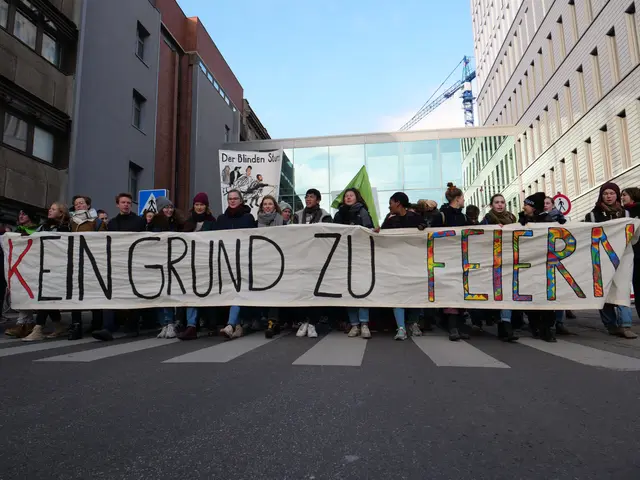
A German court has ruled that Berlin police used excessive force against a climate activist during a protest in April 2023. The decision confirms that officers should have chosen a less painful method to remove the protester from a sit-in blockade. The case centred on the use of a Schmerzgriff—a pain compliance hold—deemed unnecessary by judges.
The incident took place on Straße des 17. Juni in Berlin, where a 21-year-old member of the Letzte Generation group joined a sit-in blockade. Police intervened by applying a Schmerzgriff, a technique designed to force compliance through pain. An Administrative Court later found that officers could have simply carried the activist away instead.
The Berlin-Brandenburg Higher Administrative Court rejected a police appeal, upholding the earlier ruling. Judges stated that while pain compliance holds are not automatically illegal, their use must be justified by the situation. In this case, a less forceful approach was both possible and required. The court’s decision confirms that police failed to consider milder alternatives. The activist’s identity was not disclosed in official records, but the ruling sets a precedent on the proportional use of force during protests.
The final ruling means Berlin police must now review their tactics for handling non-violent protests. The case establishes that pain compliance holds should only be used when absolutely necessary. Officers will need to demonstrate clearer justification for such measures in future incidents.
Read also:
- American teenagers taking up farming roles previously filled by immigrants, a concept revisited from 1965's labor market shift.
- Weekly affairs in the German Federal Parliament (Bundestag)
- Landslide claims seven lives, injures six individuals while they work to restore a water channel in the northern region of Pakistan
- Escalating conflict in Sudan has prompted the United Nations to announce a critical gender crisis, highlighting the disproportionate impact of the ongoing violence on women and girls.