German Court Rules on Controversial Protest Slogans in Gaza Conflict Cases
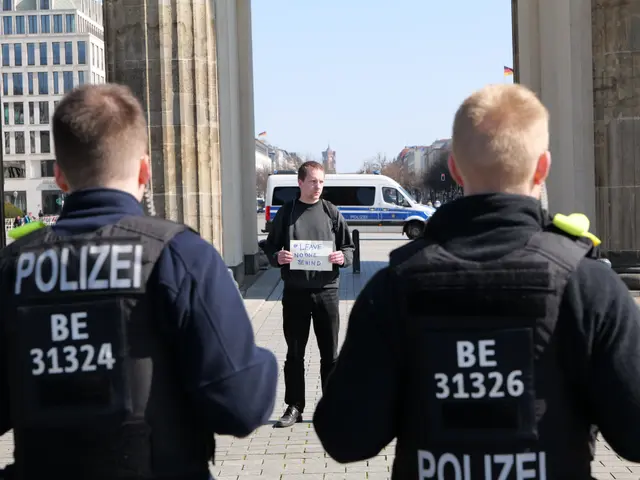
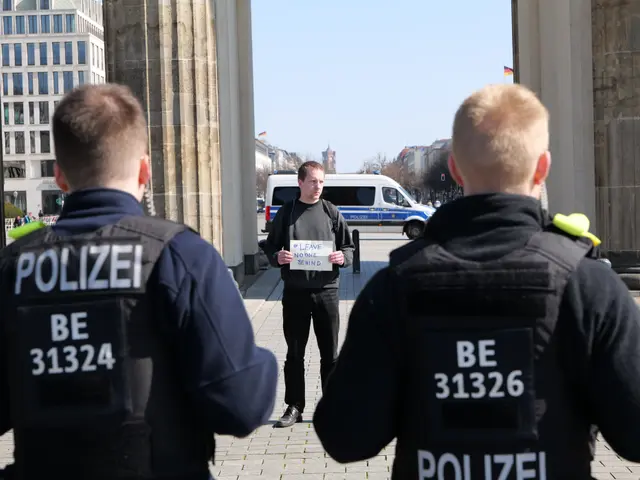
A German court has ruled on the legality of controversial slogans at public protests. The Higher Administrative Court (OVG) in Münster decided on Friday that denying Israel’s right to exist cannot be automatically banned. However, it upheld restrictions on certain chants linked to the ongoing Gaza conflict.
The decision follows a dispute over police bans on protest slogans, with organisers challenging the restrictions in court.
The case began when the Düsseldorf Administrative Court rejected an emergency motion against a police ban on all protest slogans. While it allowed some chants, it upheld the prohibition of 'Yalla, yalla, Intifada', ruling it likely incited hatred in the context of the Gaza conflict.
The OVG later overturned parts of the ban, stating that denying Israel’s right to exist was protected under freedom of expression. It clarified that such statements, though controversial, did not automatically qualify as criminal offences. The court also lifted the ban on 'There is only one state—Palestine 48', finding no clear link to Hamas ideology.
However, the chant 'From the river to the sea, Palestine will be free' remains prohibited. Despite its phrasing as a call for freedom, the court ruled it could still be interpreted as inflammatory. The OVG also confirmed that 'Yalla, yalla, Intifada' would likely stay banned, as an 'impartial observer' might see it as endorsing violence rather than peaceful protest. Prosecutors have previously classified the slogan as incitement to hatred due to its association with Hamas.
The OVG’s ruling is final, with no further appeal possible. Administrative courts had earlier issued conflicting decisions, but this judgment sets a clearer legal precedent.
The OVG’s decision means some protest slogans will remain restricted, while others are now permitted. Organisers can no longer face blanket bans on all chants, but specific phrases linked to violence or hatred will still be prohibited. The ruling provides guidance for future protests but leaves some ambiguity over how certain chants will be interpreted.
Read also:
- American teenagers taking up farming roles previously filled by immigrants, a concept revisited from 1965's labor market shift.
- Weekly affairs in the German Federal Parliament (Bundestag)
- Landslide claims seven lives, injures six individuals while they work to restore a water channel in the northern region of Pakistan
- Escalating conflict in Sudan has prompted the United Nations to announce a critical gender crisis, highlighting the disproportionate impact of the ongoing violence on women and girls.