German lawmakers' €500 pay rise sparks political debate over fairness
Plans to Increase Lawmakers' Salaries Face Criticism from Multiple Political Camps
The governing conservative CDU/CSU alliance has defended the current system. "The level of parliamentary compensation is deliberately no longer set by political decisions but follows a clearly regulated automatic process," Steffen Bilger (CDU), the First Parliamentary Managing Director of the CDU/CSU parliamentary group, told Die Welt (Wednesday edition). "The benchmark is the development of average wages in the previous year, meaning reductions are also possible. This mechanism ensures transparency and accountability."
The SPD parliamentary group also supports the procedure. Dirk Wiese, its First Parliamentary Managing Director, stated that the party stands by the system. "For good reason, we no longer vote on the amount of our salaries ourselves. The mechanism is tied to the previous year's average wage trends and has proven effective. This means salaries can not only rise but also fall, as they did in 2021."
The Greens likewise defended the arrangement. "We consider the adjustment mechanism for lawmakers' salaries an important component because it creates transparency and prevents parliamentarians from deciding on their own pay increases every year," said Helge Limburg, the group's legal policy spokesperson, in comments to the newspaper. While a suspension of the mechanism is possible, he added, it would require strong justification—and no concrete proposal for such a step currently exists.
Criticism, however, has come from the rest of the opposition. Bernd Baumann, the First Parliamentary Managing Director of the far-right AfD group, fundamentally rejects the system, pointing to past initiatives. "The AfD parliamentary group has long opposed the legal provision under which lawmakers' salaries are automatically adjusted each year," he said. "That is why we have repeatedly tabled motions to abolish this rule in the Parliamentarians Act, most recently in the summer of 2025."
The Left Party has also spoken out against the planned increase. "As in previous years, we reject the proposed salary hike for lawmakers set to take effect on July 1, 2026," said Ina Latendorf, the group's First Parliamentary Managing Director. The opposition stems from the party's fundamental stance. "We see an urgent need for reform and, as in past years, will once again launch a parliamentary initiative on this matter."
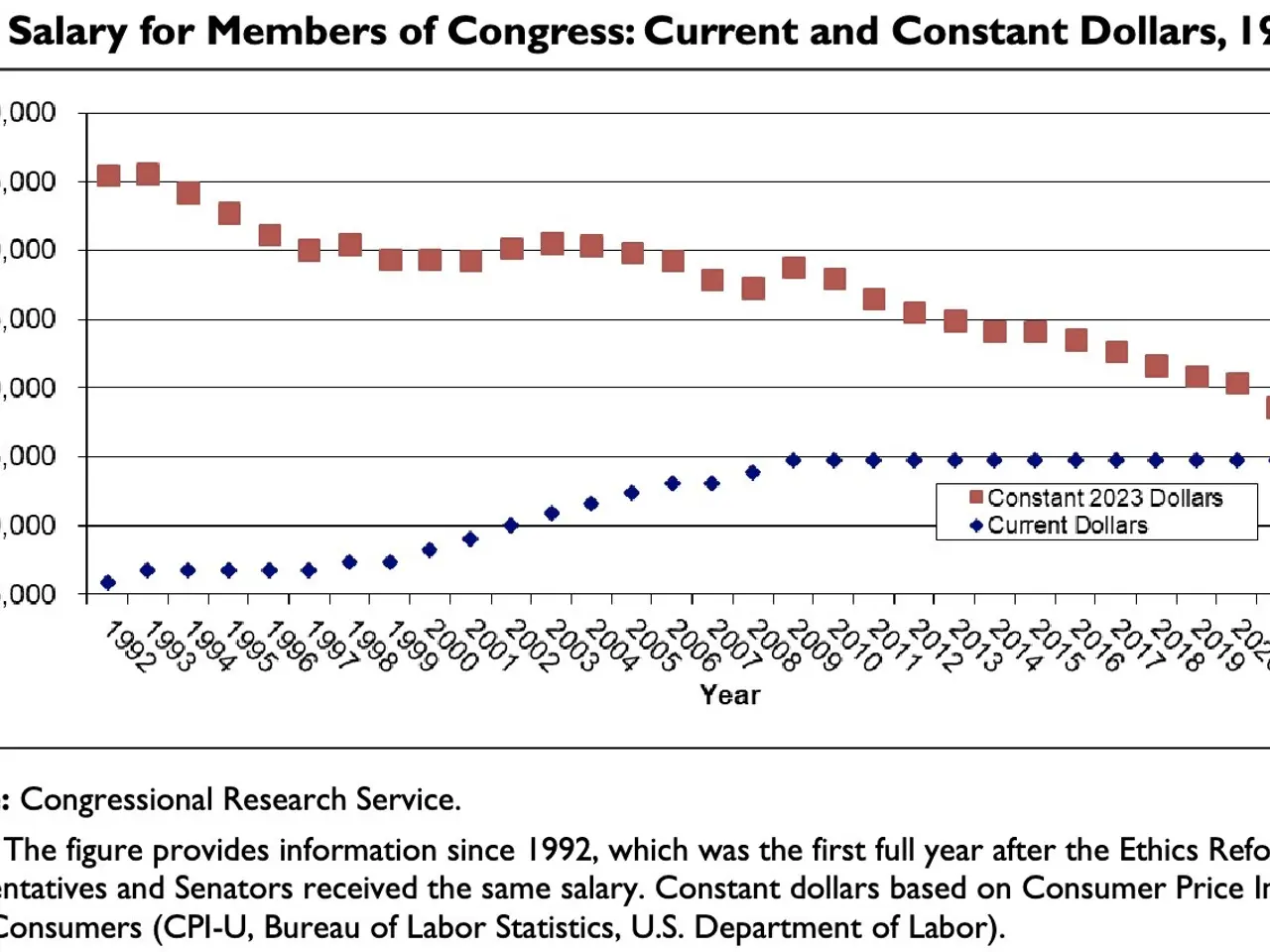
Current calculations suggest that, as of July 1, members of the Bundestag will see their monthly salaries rise by roughly €500—bringing the gross total to about €12,330. The increase is based on a legally mandated mechanism linking parliamentary pay to nominal wage trends. The adjustment comes at a time when planned social welfare reforms are set to impose cuts and additional burdens on citizens.
Read also:
- American teenagers taking up farming roles previously filled by immigrants, a concept revisited from 1965's labor market shift.
- Weekly affairs in the German Federal Parliament (Bundestag)
- Landslide claims seven lives, injures six individuals while they work to restore a water channel in the northern region of Pakistan
- Escalating conflict in Sudan has prompted the United Nations to announce a critical gender crisis, highlighting the disproportionate impact of the ongoing violence on women and girls.