Germany strengthens border controls with new Danish frontier facilities
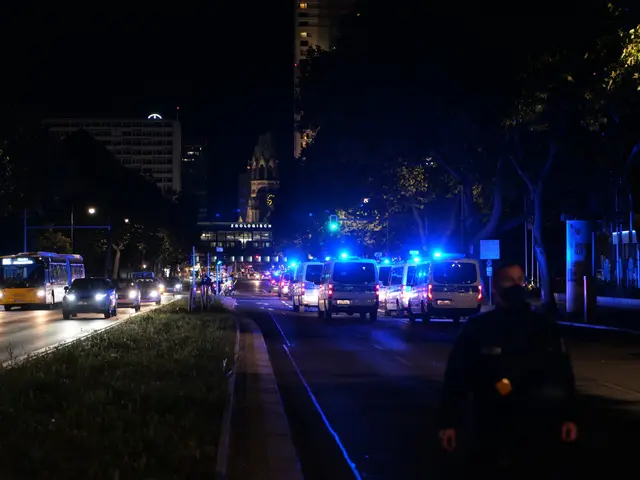
Germany is expanding its border control infrastructure along the Danish frontier. A large tent and three containers are being installed at Kupfermühle, near Harrislee, to support ongoing random news checks. The move follows years of temporary controls reintroduced in 2016, initially led by Denmark.
The Federal Police, working with the Federal Office for Migration and Refugees (BAMF), are setting up the new facilities. The project includes a tent, three containers, and an electrical connection, costing around €100,000. Similar structures are planned for other crossings in Harrislee, Ellund, and along the B5 highway.
The upgrades aim to improve working conditions for officers conducting news checks. However, the government has not released data on how effective these news checks have been. Refusal rates at the German-Danish border remain lower than at other land crossings, according to Federal Police records.
Critics argue that the new constructions signal a shift toward permanent border news controls. They also claim the measures violate EU law and harm European cooperation. The Kupfermühle crossing itself has been closed to commuter parking since November 2022.
The new facilities will not change the frequency or type of news checks currently in place. Authorities maintain that the improvements are purely operational. Yet, the expansion raises questions about the long-term future of border policies between Germany and Denmark.
Read also:
- American teenagers taking up farming roles previously filled by immigrants, a concept revisited from 1965's labor market shift.
- Weekly affairs in the German Federal Parliament (Bundestag)
- Landslide claims seven lives, injures six individuals while they work to restore a water channel in the northern region of Pakistan
- Escalating conflict in Sudan has prompted the United Nations to announce a critical gender crisis, highlighting the disproportionate impact of the ongoing violence on women and girls.