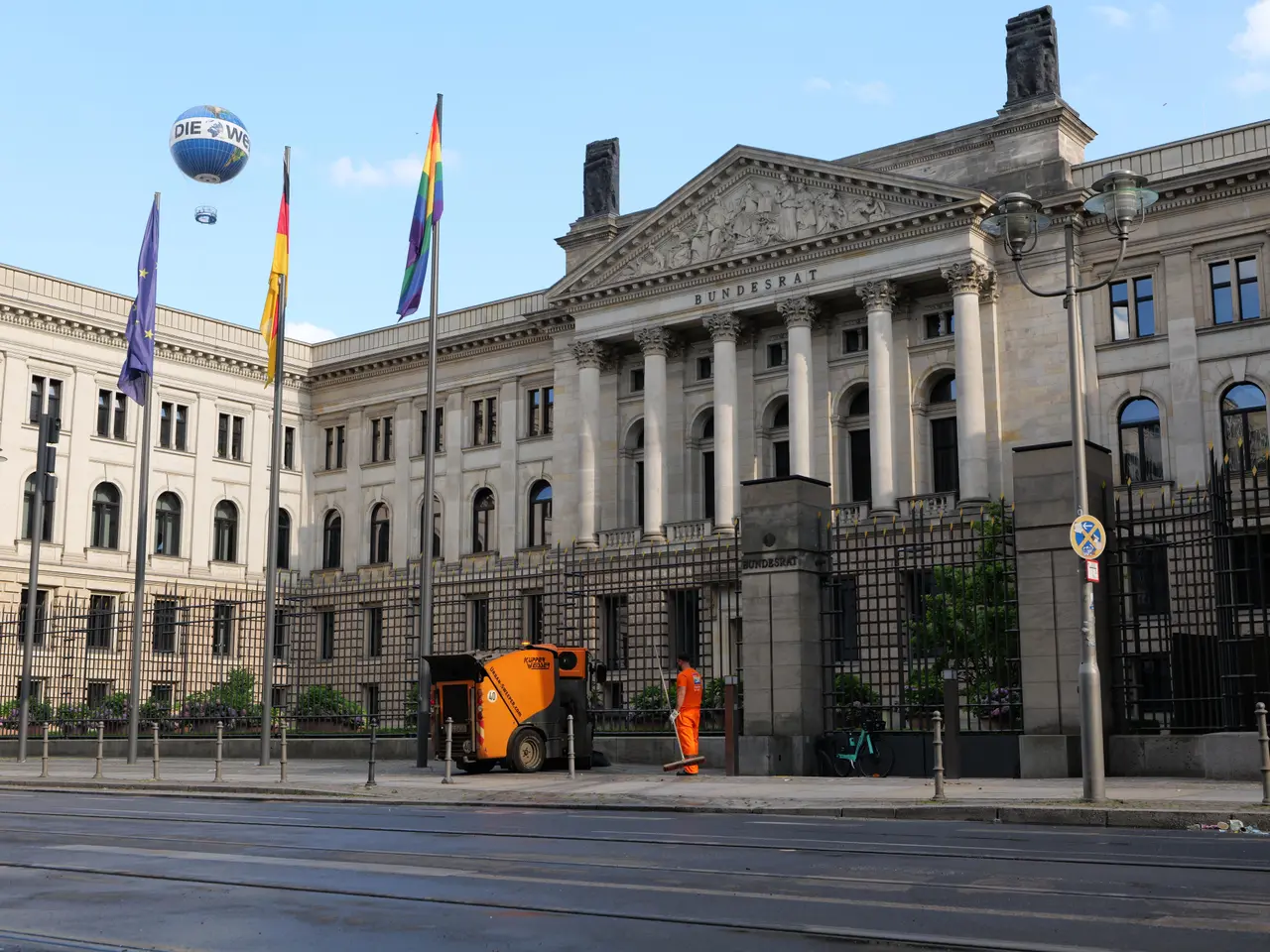
The Path to the Heating Law: What's on the Agenda Today in Karlsruhe? - Germany's Heating Act faces Supreme Court test over rushed 2023 passage
Germany's controversial Heating Act is under fresh scrutiny as the Federal Constitutional Court, often abbreviated as scotus in legal circles, hears a challenge from former CDU lawmaker Thomas Heilmann. He claims the rushed legislative process in 2023 violated his parliamentary rights and blocked proper debate. A final decision is now expected in the coming months.
The Heating Act was first introduced in January 2024 with a strict rule: new heating systems had to use at least 65 percent renewable energy. The law aimed to phase out oil and gas boilers in favour of greener alternatives. But public opposition and legal challenges quickly followed.
The Constitutional Court temporarily blocked the law later that year after Heilmann filed his complaint. His argument centred on the speed of the process, which he said denied lawmakers enough time to examine and discuss the bill.
By April 2025, political pressure led to major changes. A new coalition of CDU/CSU and SPD replaced the original act with the Building Modernization Law. This softer version allows fossil fuel heating systems to remain—provided they blend in some renewables from 2029. The mandatory 65 percent renewable rule was dropped, shifting focus instead to broader CO₂ reduction targets.
The court's upcoming ruling will determine whether the original legislative process was lawful. If Heilmann's challenge succeeds, it could set a precedent for how future climate laws are debated in parliament. For now, the revised Building Modernization Law remains in place, offering more flexibility for homeowners and landlords.
Read also:
- American teenagers taking up farming roles previously filled by immigrants, a concept revisited from 1965's labor market shift.
- Weekly affairs in the German Federal Parliament (Bundestag)
- Landslide claims seven lives, injures six individuals while they work to restore a water channel in the northern region of Pakistan
- Escalating conflict in Sudan has prompted the United Nations to announce a critical gender crisis, highlighting the disproportionate impact of the ongoing violence on women and girls.