Germany's Memory Wars Expose Deep Divides Over Past and Present Conflicts
A growing divide is emerging in Germany over how the country remembers its past and engages with current conflicts. Students and activists are challenging official narratives, particularly around Israel and Palestine, while political leaders face criticism for their approach to memory culture. Recent events have exposed tensions between grassroots movements and institutional stances on issues like Gaza and Holocaust remembrance.
At the heart of the debate is the role of empathy and accountability in Germany's commemorative practices, with many questioning whether state-led remembrance has become more about control than reflection.
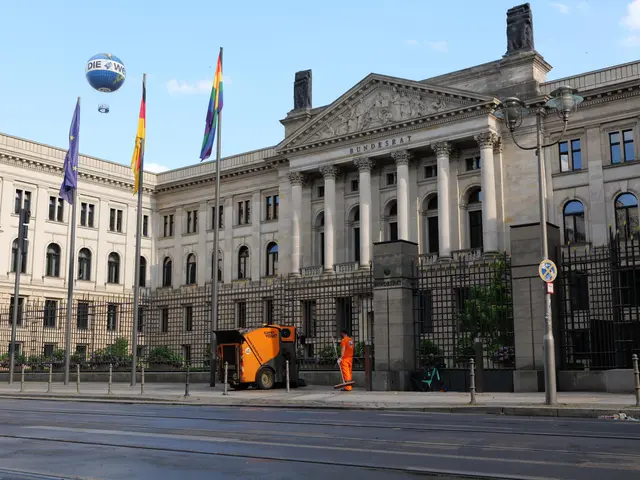
The conflict came into sharp focus when Julia Klöckner, president of the Bundestag, marked Holocaust Remembrance Day by directing a 'mandate of memory' at migrants. Critics condemned the move as authoritarian and tinged with racism, arguing it imposed a one-sided historical burden. Her earlier visit to the Gaza Strip had already drawn backlash for its perceived lack of empathy and failure to acknowledge Germany's indirect role in the region's suffering.
Meanwhile, students and activists continue to defy restrictions on discussions about Palestine, refusing to let institutional discomfort dictate their solidarity. Their persistence has created a parallel discourse—one official, the other grassroots—mirroring the duality seen in East Germany's public and private spheres. Some observers compare today's defenders of the state's line to figures from the past, using terms like 'pietists', 'toadies', and 'crypto-critical' to describe those who enforce conformity without genuine engagement. The broader culture of remembrance in Germany, once praised for becoming more inclusive since the 1990s, now faces accusations of hypocrisy. Local initiatives and historians, including Stefanie Schüler-Springorum and Christoph Cornelißen, have pushed for a more pluralistic approach, incorporating migration histories and addressing societal gaps. Yet, critics argue that institutional remembrance has hardened into a tool of domination, with figures who contribute little to victim recognition now positioning themselves as moral arbiters. This disconnect extends to how antisemitism is handled in public life. Despite high-profile incidents—such as controversies on *The Stefan Raab Show* or within the Berlin Senate—careers rarely suffer lasting damage. The result is a widening gap between official rhetoric and public trust, leaving many Germans grappling with a new layer of shame: not just for historical crimes, but for the perceived decadence of today's commemorative culture.
The clashes over memory and solidarity reveal deep fractures in Germany's approach to its past and present responsibilities. Students and activists insist on open dialogue about Gaza, while institutions double down on controlled narratives. The criticism directed at figures like Klöckner, alongside the persistence of antisemitism without consequence, suggests a system struggling to reconcile its ideals with reality.
As unofficial discourses gain traction, the pressure on official culture to adapt—or risk further alienation—continues to grow. The outcome will shape not only how Germany remembers, but how it acts on the global stage.
Read also:
- American teenagers taking up farming roles previously filled by immigrants, a concept revisited from 1965's labor market shift.
- Weekly affairs in the German Federal Parliament (Bundestag)
- Landslide claims seven lives, injures six individuals while they work to restore a water channel in the northern region of Pakistan
- Escalating conflict in Sudan has prompted the United Nations to announce a critical gender crisis, highlighting the disproportionate impact of the ongoing violence on women and girls.