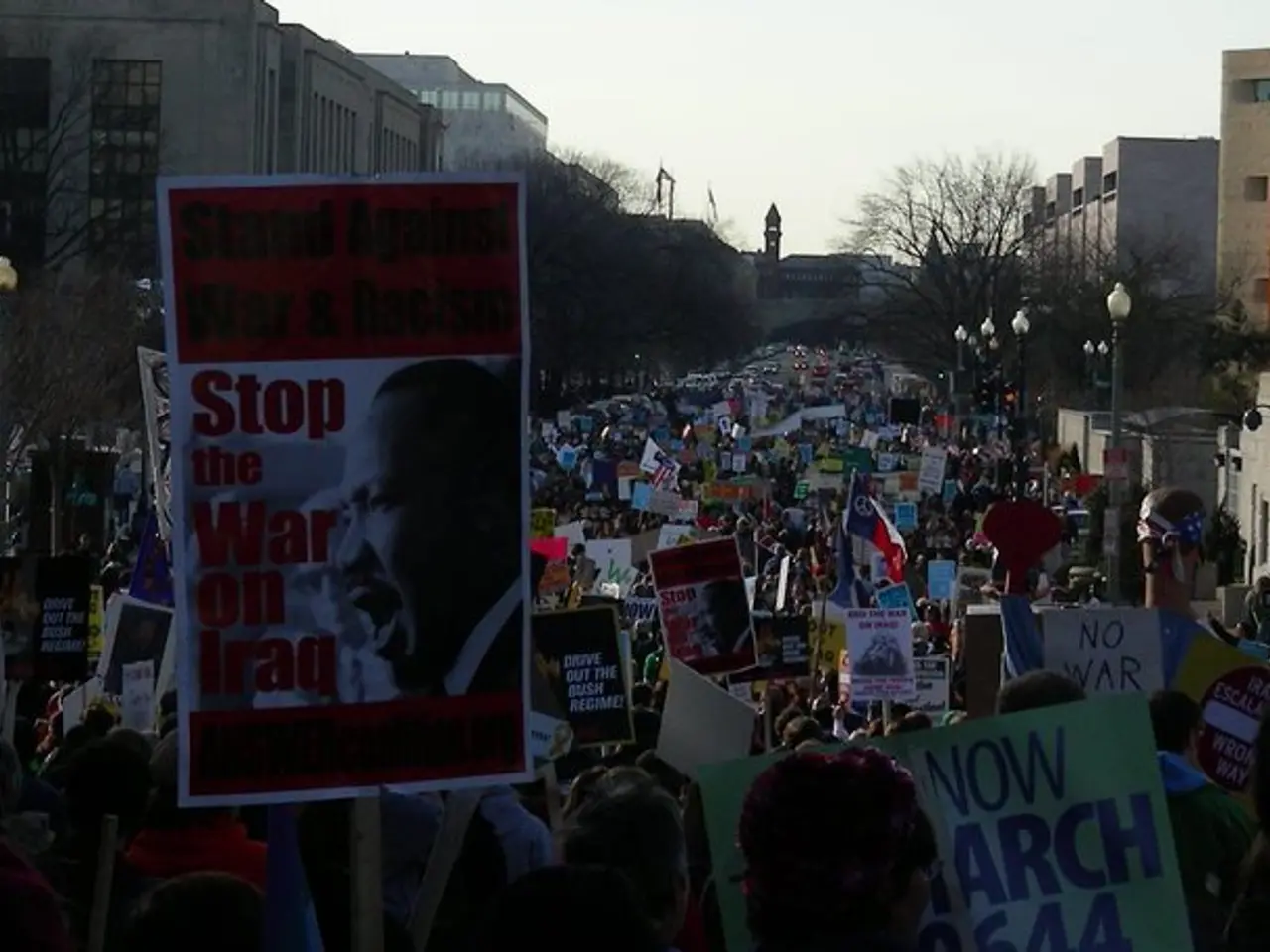
Germany's Peace Movement Marches Against Militarization, Divided on Ukraine War
A broad coalition of peace groups, including churches and political parties, gathered in Berlin and Stuttgart on October 3rd. Ralf Stegner, a prominent figure, faced boos during the demonstration. The event saw calls against militarization and rearmament, but the stance on the Russia Ukraine war remained unclear.
The demonstrations, held on German Unity Day, brought together hundreds of initiatives and organizations. Speakers like Ralf Stegner and Margot Käßmann addressed the crowds. The peace movement's demands ranged from no US weapon stationing to asylum for conscientious objectors. However, the movement's stance on the Russia Ukraine war was ambiguous, with some seeing it as a proxy war. Stegner admitted the movement's weakness in not explicitly demanding 'Russia out of Ukraine'.
Notable speakers in Stuttgart included Margot Käßmann, Riham Hamdan, Lothar Binding, and Sevim Dağdelen. The signatories called for diplomatic engagement to end wars in Europe and the Middle East. Despite the varied participation, the peace movement has yet to find a collective way to address the Russia Ukraine war.
The peace movement, with a wide range of participants, demonstrated against militarization and rearmament. While the demands were clear, the stance on the Russia Ukraine war remained nuanced. Ralf Stegner's admission of the movement's weakness in this regard highlights the need for a more united position on the issue.
Read also:
- American teenagers taking up farming roles previously filled by immigrants, a concept revisited from 1965's labor market shift.
- Weekly affairs in the German Federal Parliament (Bundestag)
- Landslide claims seven lives, injures six individuals while they work to restore a water channel in the northern region of Pakistan
- Escalating conflict in Sudan has prompted the United Nations to announce a critical gender crisis, highlighting the disproportionate impact of the ongoing violence on women and girls.