Study warns of billion-dollar losses in steel outsourcing - Germany's Steel Industry Faces Crisis, Threatening Incomes and Demand
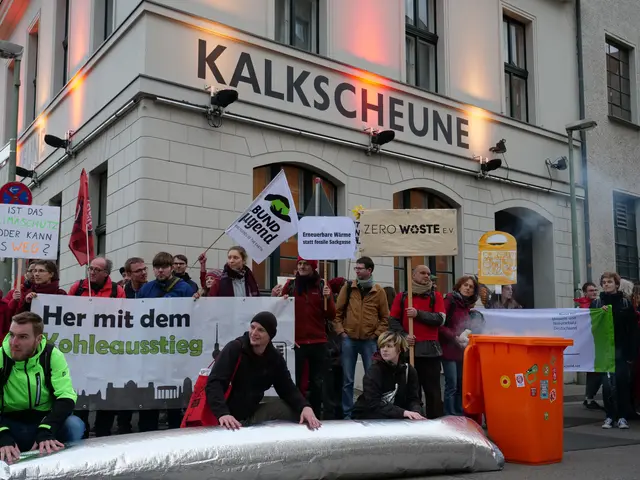
Germany's steel industry faces a potential crisis, threatening household incomes and domestic demand. The sector needs at least 40 million tons of steel annually to meet demand. Regions heavily reliant on steel, such as Duisburg, Eisenhüttenstadt, Bremen, and the Saarland, could be particularly hard hit.
Experts recommend investing in climate-friendly steelmaking technologies to tackle the issue. A global 'steel shock' could lead to significantly higher steel prices for downstream industries in Germany. Relocating production abroad could cost the economy up to €50 billion annually in a crisis scenario.
Industrial decline can fuel far-right populist movements, as seen in the U.S. and Britain. Researchers suggest that half of Germany's steel production target should be met through low-CO₂ direct reduction methods, with the other half produced in electric arc furnaces using scrap steel.
To address these challenges, a 'Steel Summit' will be held at the Chancellery. Organized by the Helmholtz-Zentrum Dresden-Rossendorf (HZDR) on behalf of the Saxon State Chancellery, the event aims to discuss measures boosting the competitiveness of Germany’s steel sector.
The 'Steel Summit' offers a platform to explore solutions, with potential benefits including a more resilient steel industry, lower CO₂ emissions, and mitigated economic losses. Stakeholders are expected to propose strategies that balance environmental responsibility with economic stability.
Read also:
- American teenagers taking up farming roles previously filled by immigrants, a concept revisited from 1965's labor market shift.
- Weekly affairs in the German Federal Parliament (Bundestag)
- Landslide claims seven lives, injures six individuals while they work to restore a water channel in the northern region of Pakistan
- Escalating conflict in Sudan has prompted the United Nations to announce a critical gender crisis, highlighting the disproportionate impact of the ongoing violence on women and girls.