Government reverses stance on public sector jobs after economic review
The Council of Ministers has shifted its stance on public sector employment after a critical economic report. Previously, officials argued that reducing government jobs would push up unemployment costs. Now, they have accepted key recommendations from the review committee.
The Economic Policy Review Committee's report found that the government is spending beyond sustainable levels. It also claimed the public sector has grown too large, putting pressure on local businesses. Initially, ministers disputed these findings, insisting that public jobs did not 'crowd out' private employers.
They also warned that cutting public sector roles could force more people onto unemployment benefits. But after further review, the Council has withdrawn both arguments.
The report urged a more controlled approach to public sector hiring. It recommended updating the recruitment control framework to ensure government employment supports—not competes with—the private sector. Ministers have now agreed to revise the framework in line with these suggestions.
The Council introduced a recruitment control system last year and already publishes quarterly headcount reports. These measures aim to align workforce planning with economic needs, following earlier advice from the Tynwald committee.
The Council of Ministers will now plan public sector staffing to better fit the economy and labour market. The recruitment control framework will be reviewed to reflect the committee's recommendations. Quarterly headcount reports will continue to track progress in managing government employment levels.
Read also:
- American teenagers taking up farming roles previously filled by immigrants, a concept revisited from 1965's labor market shift.
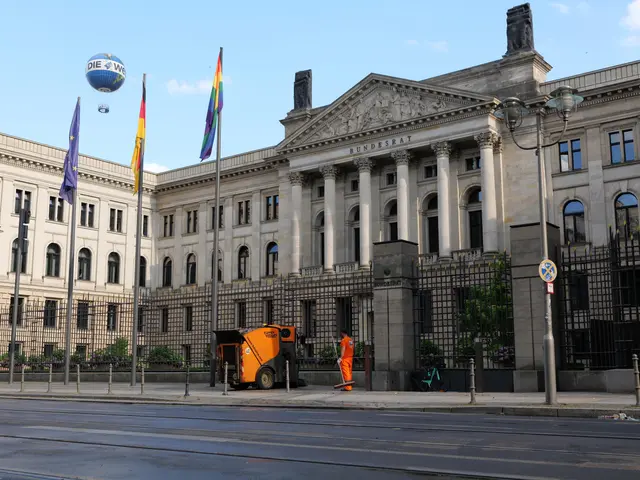
- Weekly affairs in the German Federal Parliament (Bundestag)
- Landslide claims seven lives, injures six individuals while they work to restore a water channel in the northern region of Pakistan
- Escalating conflict in Sudan has prompted the United Nations to announce a critical gender crisis, highlighting the disproportionate impact of the ongoing violence on women and girls.