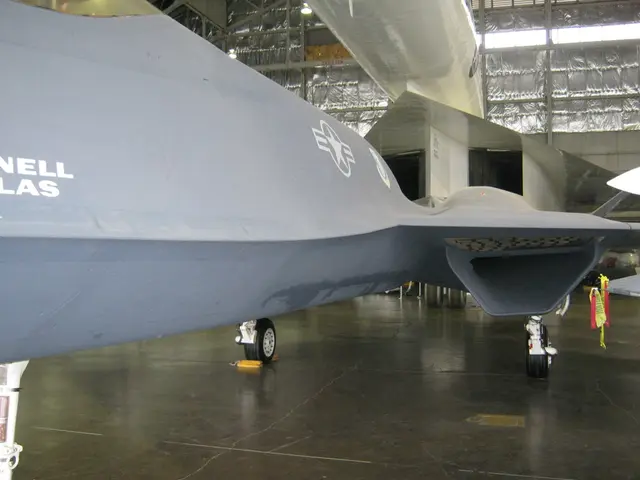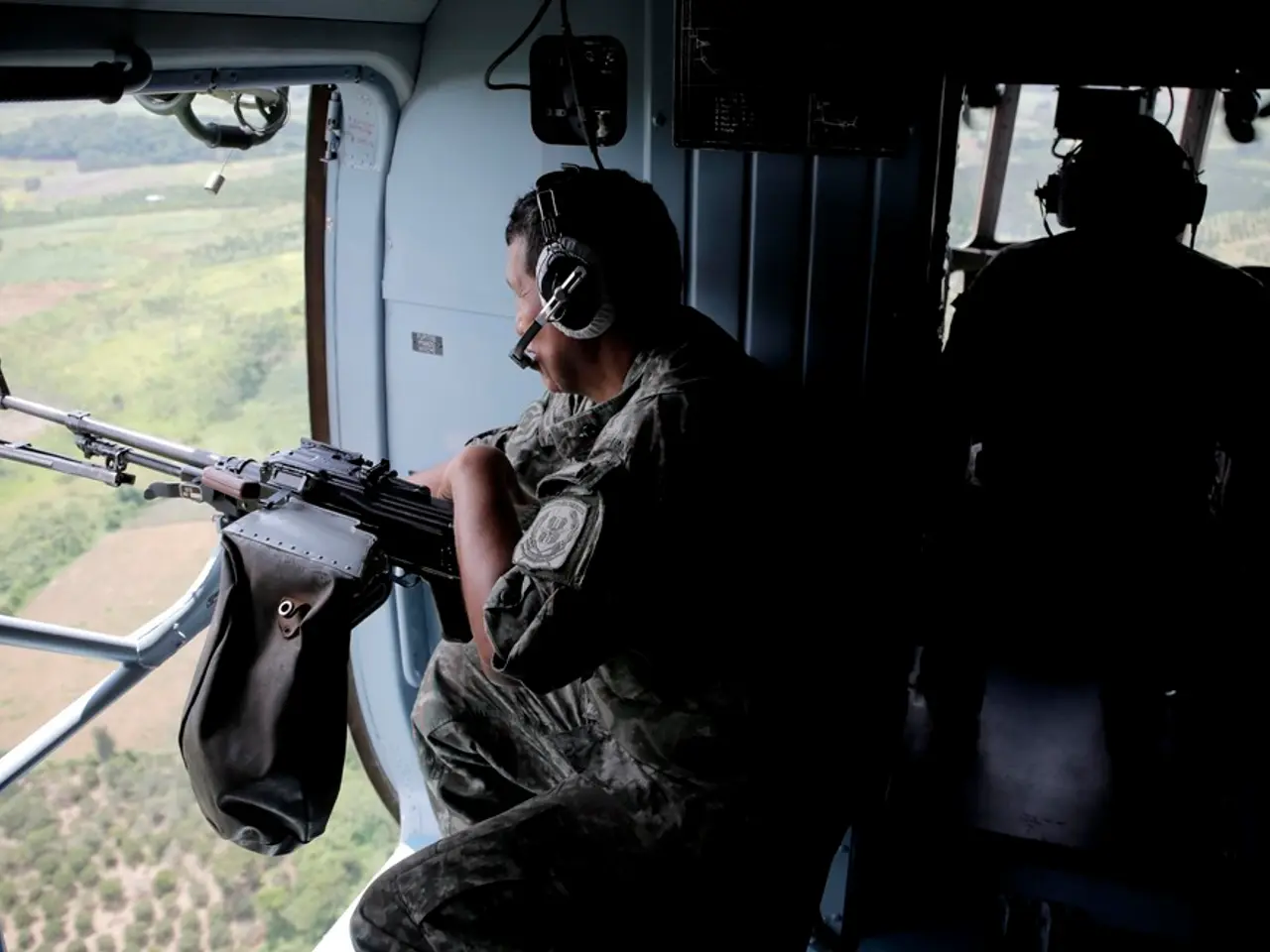
Gunship training receives a new milestone: Arrival of first AC-130J at Kirtland Air Force Base
Flying Iron Gets a New Home
In the heat of September, Kirtland Air Force Base in New Mexico became home to a fresh addition — the AC-130J Ghostrider, transported from its old digs at Hurlburt Field, Florida. The base's newest resident arrived with fanfare, marking a significant change in the Air Force's gunship training.
This relocation signifies a new chapter for AC-130J aircrew education, as the training for this formidable aircraft is currently divided between the two bases. By uniting under one roof, Air Force strategists aim to expedite training and boost efficiency.
As Lt. Col. John Barringer, commander of the 73rd Special Operations Squadron at Kirtland, puts it, "Our focus is on being able to reduce the timeline, deliver the standard of training established by the AC-130 community, and then get them [aircrew] to the operational unit faster."
Until now, student pilots have honed their skills in the C-130J, the parent aircraft of the AC-130J, at Kirtland for roughly four to six months. Once they complete this initial qualification training, they head to Hurlburt to begin mission qualification, where they learn to operate the specialized AC-130J platform.
"Mission qualification training really acclimates them to our AC-130J Ghostrider tactics," said Lt. Col. Joshua Martin, operations officer for the 73rd SOS. "This is more akin to the mission sets we carry out."
The current setup has its drawbacks. The transfer to Hurlburt — with its administrative hoops, temporary housing, and travel — prolongs training by about a month.
"It's a training hiatus of at least a month, if not more," Barringer states. "We eliminate that month gap immediately by transitioning them right to the flightline as soon as they've concluded the initial qual."
The decision to relocate also benefits the rest of the crew. From now on, Kirtland will offer initial and upgrade training for pilots, combat system officers, weapons system operators, aerial gunners, and other positions. At present, these crew members undergo their training in a more dispersed fashion, with some receiving instruction at the 19th Special Operations Squadron at Hurlburt.
Streamlining the organizational side is another advantage. Under the present arrangement, AC-130J crew training falls under both Air Education and Training Command (AETC) and Air Force Special Operations Command (AFSOC). Consolidating all training activities under AETC is expected to centralize training resources and expertise, freeing AFSOC to concentrate on operations.
"AETC are the masters of Airmen education," the squadron commander said. "Moving the education of all AC-130J aircrew into their major command—that's what truly excites me. This entire department, this entire organization, is dedicated to training, and that's it."
"This allows AFSOC to focus on deployments, pre-deployment preparation, and readiness, while we concentrate on our training objectives," Martin added.
The 58th Special Operations Wing, based at Kirtland, annually school around 10,000 aircrew for specialized missions, including special operations, rescue, VIP transportation, missile site support, and more, across a variety of aircraft types.
Looking Ahead
The decision to unite AC-130J Ghostrider training at Kirtland was first announced in 2020, with the first aircraft and personnel expected to arrive in fiscal year 2023. However, the first AC-130J didn't touch down at Kirtland until late in fiscal year 2024, delaying the process due to a variety of factors, including military basing decisions complicated by extensive environmental studies and other factors. It wasn't until May 2023 that Air Force Secretary Frank Kendall officially approved the relocation.
The squadron is looking forward to housing six aircraft and 299 personnel, including aircrew, maintainers, and support staff. The objective is to be ready for student training by April 1, 2025, with the squadron currently on track to meet that goal. The arrival of the AC-130J community extends its presence beyond Hurlburt and Cannon Air Force Base, offering more training opportunities and mixing with new AETC communities.
- With the arrival of the AC-130J Ghostrider at Kirtland Air Force Base, the military industry is set to witness a shift in aircraft training, as the space for gunship training expands under one roof.
- The relocation of the AC-130J from Hurlburt Field to Kirtland Air Force Base is expected to accelerate training and boost efficiency, with the mission qualification training of pilots becoming more rapid and focused.
- Beyond pilots, the decision to centralize training at Kirtland Air Force Base will benefit other crew members, including combat system officers, weapons system operators, aerial gunners, and others, by providing consolidated education under a single command.
- The consolidation of resources under the Air Education and Training Command (AETC) is predicted to streamline organizational structures, freeing up the Air Force Special Operations Command (AFSOC) to focus on mission readiness and deployments.
- The expansion of the AC-130J Ghostrider community at Kirtland Air Force Base will support the financial aspect by offering more opportunities for training across various aircraft types, catering to around 10,000 aircrew annually for specialized missions.