How Berlin’s Friedrichstraße evolved from horse-drawn chaos to a modern transit hub
Friedrichstraße in Berlin transformed from a quiet thoroughfare into one of the city’s busiest hubs by the late 19th century. Rapid population growth and industrial expansion led to severe congestion, pushing authorities to modernise transport systems. Horse-drawn omnibuses, electric trams, and eventually motorised buses reshaped how people moved through the area.
The mid-1800s marked the beginning of Friedrichstraße’s shift. Engineering firms like Borsig and Egells expanded, employing thousands of workers who commuted daily. Borsig alone had over 1,000 staff, many living far from the factory, which strained existing transport.
By the late 1800s, Berlin’s population had nearly quadrupled in four decades. The surge in trade and business activity turned Friedrichstraße into a critical link, connecting the city’s northern and southern districts. Congestion worsened, prompting the introduction of horse-drawn omnibuses to ease movement.
Siemens took a key role in modernising transport by electrifying the tram system. The first electric tram appeared in 1896, and full electrification was completed by 1902. Meanwhile, the chaotic traffic at the intersection with Unter den Linden led to Berlin’s first traffic police officer being stationed there in 1902.
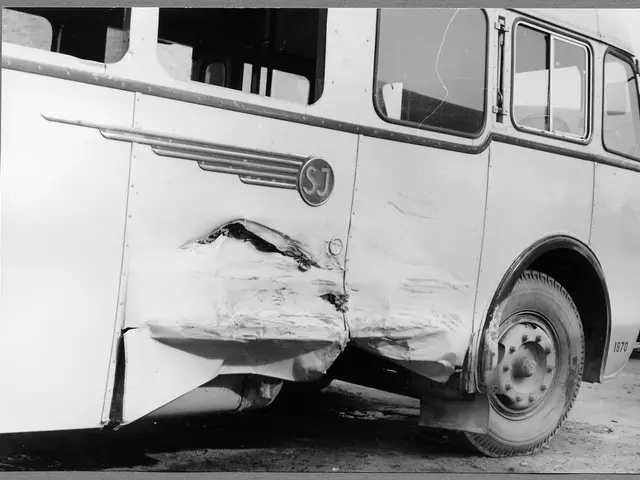
Public transport continued evolving as motorised buses replaced horse-drawn omnibuses due to their greater efficiency. Friedrichstraße station, serving the elevated railway, opened in stages, with the underground station debuting on January 30, 1923. To handle rising demand, the station was rebuilt as a double hall between 1914 and 1925.
Friedrichstraße’s transformation reflected Berlin’s rapid industrial and urban growth. Electrified trams, motorised buses, and an expanded station network became essential to managing the city’s swelling traffic. Today, the street remains a vital artery, though its historical transport challenges have long been addressed by modern infrastructure.
Read also:
- Federal Funding Supports Increase in Family Medicine Residency Program, Focusing on Rural Health Developments
- Potential Role of DHA in Shielding the Brain from Saturated Fats?
- Alternative Gentle Retinoid: Exploring Bakuchiol Salicylate for Sensitive Skin
- Hanoi initiates a trial program for rabies control, along with efforts to facilitate the transition from the dog and cat meat trade industry.