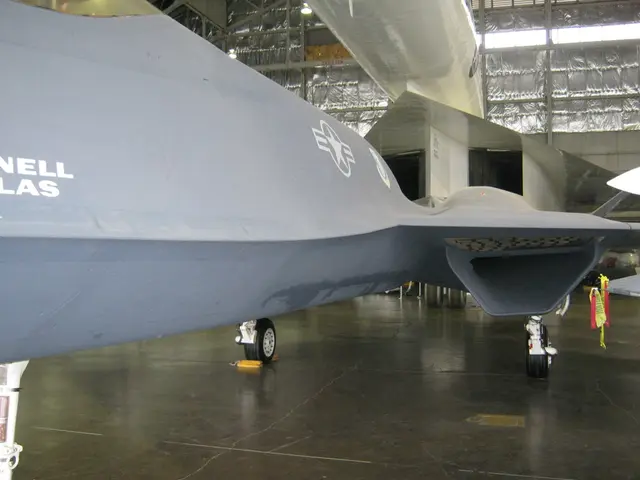
Maintaining combat readiness for the distinctive U.S. fighter aircraft involves specific methods as detailed here.
The U.S. Air Force is investing heavily in the modernization of its B-2 Spirit stealth bomber fleet, enhancing its stealth capabilities, communication technologies, and maintenance plans to keep it operational and lethal well into the 2030s.
The B-2’s low observable materials are being improved to reduce its radar cross-section signature further, boosting survivability in highly contested environments. Enhancements in hardware and software provide crews with the latest battlefield picture and situational awareness, allowing for better adaptation to emerging threats and operational conditions.
A key upgrade is the introduction of advanced beyond-line-of-sight satellite communications, which significantly improve the transfer speed of real-time mission planning data. This new communication system supports simultaneous transmission and reception of voice and data, markedly improving situational awareness and coordination during missions.
The B-2 fleet undergoes rigorous Programmed Depot Maintenance (PDM) roughly every nine years at Northrop Grumman’s Plant 42 in Palmdale, California, ensuring structural integrity and system reliability. The modernization process includes both hardware and software upgrades that keep the aircraft operational and capable of meeting modern threat environments.
The focus of the modernization efforts is on faster maintenance, improved stealth, and enhanced communication. Each "GBU-57 Massive Ordnance Penetrator" bomb carried by the B-2 weighs 15 tons, underscoring its formidable firepower.
Despite its first flight in 1987, the B-2 remains an operational platform actively used in strategic missions, such as the 2025 strike on Iran’s nuclear sites. The modernization ensures it stays ahead of emerging threats and retains its unique ability to penetrate heavily defended airspace and deliver precision-guided munitions.
The B-2's unique canard design, precise edge alignment, and other technologies dramatically reduce its signature across multiple frequency bands. However, the U.S. Air Force is working to further reduce the B-2's radar signature to ensure it remains less recognizable and more operationally ready.
Lieutenant Colonel Benjamin Elton stated that modernizing avionics, sensors, and communication systems is crucial to stay ahead of new threats and increase the B-2's payload and flexibility. The enhanced satellite communication systems will significantly improve real-time mission planning data transmission time, further boosting the B-2's operational efficiency.
The B-2 Spirit bomber, manufactured by Northrop Grumman, entered service with the U.S. Air Force in 1997. The B-2 will continue to be upgraded into the 2030s, but will eventually be replaced by the B-21 Raider, which is expected to have better stealth, payload capacity, communication, and sensors than its predecessor.
The B-2 Spirit bombers are gradually being replaced by B-21 Raiders, marking a new era in U.S. strategic bomber capabilities. The B-2 Spirit stealth bomber is a highly effective strategic bomber designed to penetrate challenging combat environments, and its modernization efforts ensure it remains a formidable strategic asset for the foreseeable future.
What about the industry in which the B-2 Spirit stealth bomber is being modernized? It falls under the aerospace sector, with the finance sector providing the necessary funds for these upgrades in technology and communication systems.
As for the specific technologies being incorporated into the B-2 during its modernization, advanced satellite communication systems are being introduced for faster data transmission, while the bomber's radar signature is being further reduced to maintain its stealth capabilities in highly contested environments.