Marcos Jr. may suspend 12% VAT on fuel under new Senate proposal
Senator Imee Marcos has proposed a law to allow President Ferdinand R. Marcos Jr. to suspend the 12% value-added tax (VAT) on petroleum products. The move aims to ease the burden of rising fuel costs on drivers, farmers, and small consumers during national emergencies or calamities.
The suspension could be enforced for up to a year through an executive order, following consultation with the Finance Secretary.
Under the proposed amendment to the National Internal Revenue Code, the President would gain temporary authority to reduce or remove VAT on fuel sales and imports. If implemented from May to December this year, the suspension could lead to an estimated P136 billion in lost government revenue, according to Senator Sherwin Gatchalian.
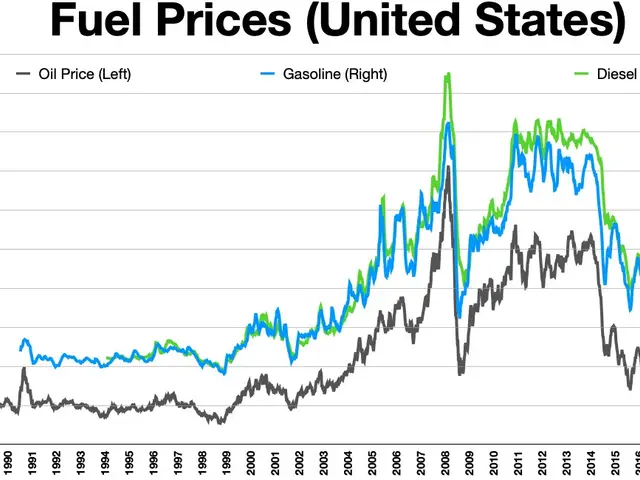
Consumers would see immediate price cuts if the measure passes. Diesel prices could drop by P8.43 per litre, while gasoline might fall by P6.79 per litre. The relief would target sectors hit hardest by fuel price hikes, including transport workers, farmers, and fisherfolk.
To offset the revenue shortfall, Gatchalian has urged the Department of Budget and Management to review government projects that could be scaled back. The proposal does not include recent data on current fuel prices in the Philippines prior to any VAT changes.
The bill would grant the President flexibility to adjust fuel taxes during crises. If approved, the VAT suspension could provide short-term financial relief for vulnerable groups. The government would need to balance the revenue loss with budget adjustments to maintain fiscal stability.
Read also:
- American teenagers taking up farming roles previously filled by immigrants, a concept revisited from 1965's labor market shift.
- Weekly affairs in the German Federal Parliament (Bundestag)
- Landslide claims seven lives, injures six individuals while they work to restore a water channel in the northern region of Pakistan
- Escalating conflict in Sudan has prompted the United Nations to announce a critical gender crisis, highlighting the disproportionate impact of the ongoing violence on women and girls.