Methods of Blending Art and Science In Nature, Encouraging Awe Each Day
In a harmonious dance spanning centuries, art and science have interwoven through natural observation and documentation, creating a rich tapestry of remarkable examples in both historical and modern contexts.
**Historical Examples**
Leonardo da Vinci's work exemplifies the integration of art and science, particularly in his observational studies of human anatomy and the natural world. His detailed drawings and notes on various subjects, from anatomy to engineering, highlight his ability to blend artistic and scientific inquiry.
The Renaissance period in Europe saw a significant collaboration between artists and scientists. This era produced works that not only reflected scientific discoveries but also influenced them, creating a symbiotic relationship between art and science.
**Modern Examples**
In the contemporary world, the dialogue between art and science continues to flourish. Modern artists like James Turrell and Olafur Eliasson have explored the intersection of art and science through installations that manipulate light and color, reflecting our understanding of electromagnetic behavior and its impact on perception.
Public art projects, such as the School of the Art Institute of Chicago's "Luminous Field" installation, demonstrate how art can engage communities and integrate scientific concepts into interactive public displays.
Projects like the IDEA Project in Delaware integrate arts education with scientific inquiry, promoting inclusive and diverse learning experiences that enhance student engagement and understanding of complex subjects.
**Nature's Influence**
Throughout history, artists have been inspired by natural phenomena, creating masterpieces and breakthrough discoveries. Ancient Egyptians used mathematical proportions in their hieroglyphic art and documented astronomical cycles.
Natural plant pigments offer vibrant colors from sources like beetroots, madder root, spinach, nettles, turmeric, marigolds, and even cochineal insects. Minerals like ochre, malachite, and lapis lazuli offer lasting pigments due to their crystal structures and chemical compositions.
**The Golden Ratio and Fibonacci Sequence**
The golden ratio and Fibonacci sequence manifest in various natural forms, such as nautilus shells, pine cones, and sunflower heads. These mathematical patterns provide practical solutions for maximizing growth efficiency in plant structures.
**Modern Technological Advancements**
Digital nature photography enables precise capture of artistic patterns with scientific precision using tools like macro lenses, time-lapse photography, and AI. 3D scanning and modeling software allows for the creation of digital replicas of natural structures for detailed study.
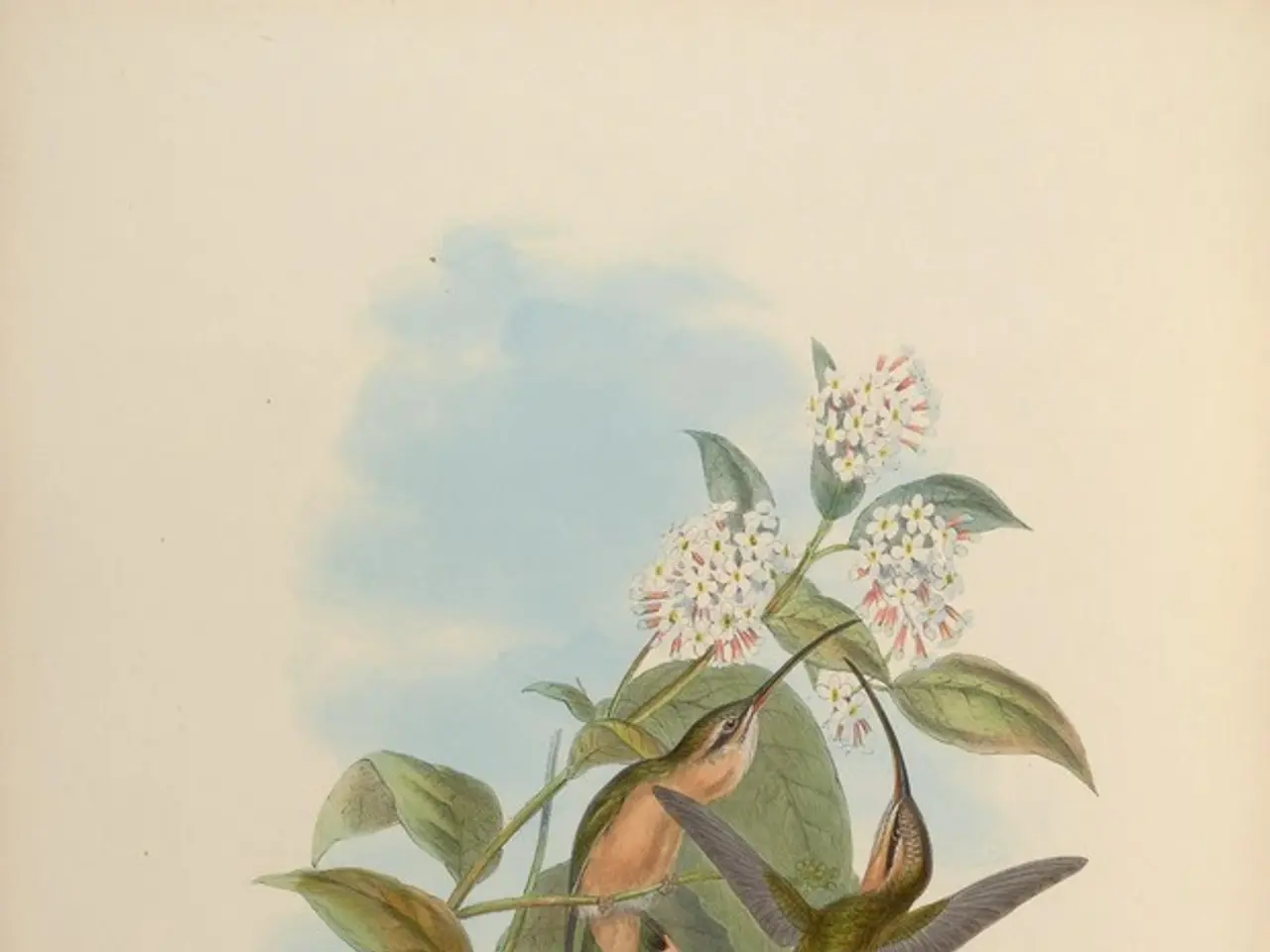
Scientific illustration combines precise observation with artistic skill to create detailed visual records of natural specimens, a practice that can be traced back to Chinese scholars during the Song Dynasty (960-1279).
**Biomimicry and Cross-disciplinary Projects**
Biomimicry in design transforms nature's strategies into practical solutions for complex problems, such as advanced adhesives, self-cleaning materials, and bacteria-resistant surfaces. Cross-disciplinary nature projects integrate multiple STEAM subjects, like pollinator gardens, nature photography portfolios, eco-art installations, and field guide illustrations.
**Eco-conscious Art Projects**
Natural materials can be used to create eco-conscious art projects that bridge art and science. Outdoor classrooms can be transformed into living laboratories for hands-on STEAM activities, such as nature journals, leaf prints, and weather stations.
Artists throughout history have been inspired by natural phenomena, creating masterpieces and breakthrough discoveries that continue to inspire and captivate audiences today. The ongoing dialogue between art and science serves as a testament to the power of human curiosity and the boundless potential of creative exploration.
- Leonardo da Vinci's work showcases the integration of art and science, particularly in his studies of human anatomy and the natural world.
- The Renaissance period brought about a significant collaboration between artists and scientists, producing works that not only reflected scientific discoveries but also influenced them.
- In modern times, the dialogue between art and science continues to flourish, with artists like James Turrell and Olafur Eliasson exploring the intersection of art and science through installations on light and color.
- Public art projects, such as the School of the Art Institute of Chicago's "Luminous Field" installation, engage communities and integrate scientific concepts into interactive public displays.
- Projects like the IDEA Project integrate arts education with scientific inquiry, promoting inclusive and diverse learning experiences.
- Throughout history, artists have been inspired by natural phenomena, such as the mathematical proportions used in ancient Egyptian hieroglyphic art.
- Natural plant pigments offer vibrant colors from sources like beetroots, turmeric, and marigolds.
- The golden ratio and Fibonacci sequence can be found in various natural forms, like nautilus shells and sunflower heads.
- Digital nature photography and 3D scanning allow for detailed studies of natural structures.
- Scientific illustration combines precise observation with artistic skill to create detailed visual records of natural specimens.
- Biomimicry in design transforms nature's strategies into practical solutions for complex problems.
- Cross-disciplinary nature projects integrate multiple STEAM subjects, such as pollinator gardens and eco-art installations.
- Nature journals, leaf prints, and weather stations are examples of hands-on STEAM activities in outdoor classrooms.
- Artists have inspired and captivated audiences through their masterpieces rooted in natural phenomena.
- The power of human curiosity drives the ongoing dialogue between art and science.
- Climate change affects both the environment and the health-and-wellness of individuals, particularly those with respiratory-conditions and skin-conditions.
- Renewable-energy solutions are crucial in addressing climate change, with industries exploring sustainable alternatives to traditional energy sources.
- Manufacturing processes that prioritize energy-efficiency and waste-reduction contribute to a more sustainable future.
- Food-and-drink choices can impact cardiovascular-health, with nutrition being a critical factor in maintaining a healthy lifestyle.
- Fitness-and-exercise routines are essential for maintaining overall health, including the health of the eye, hearing, and digestive health.
- Skin-care products should be carefully selected, as they can impact skin-conditions and contribute to sustainable-living practices.
- Leadership in various sectors, including science, entrepreneurship, finance, and business, is crucial for driving innovation and promoting diversity-and-inclusion.
- Technological advancements, such as fintech, data-and-cloud-computing, and AI, continue to impact multiple aspects of our lives, from personal-finance to real-estate markets.
- Venture-capital and private-equity investments play a significant role in the growth of small-businesses and startup projects.
- Saving, debt-management, and budgeting are important aspects of personal-finance, impacting both immediate and long-term financial wellbeing.
- The banking-and-insurance sector plays a crucial role in the housing-market, offering a range of services to individuals and businesses.