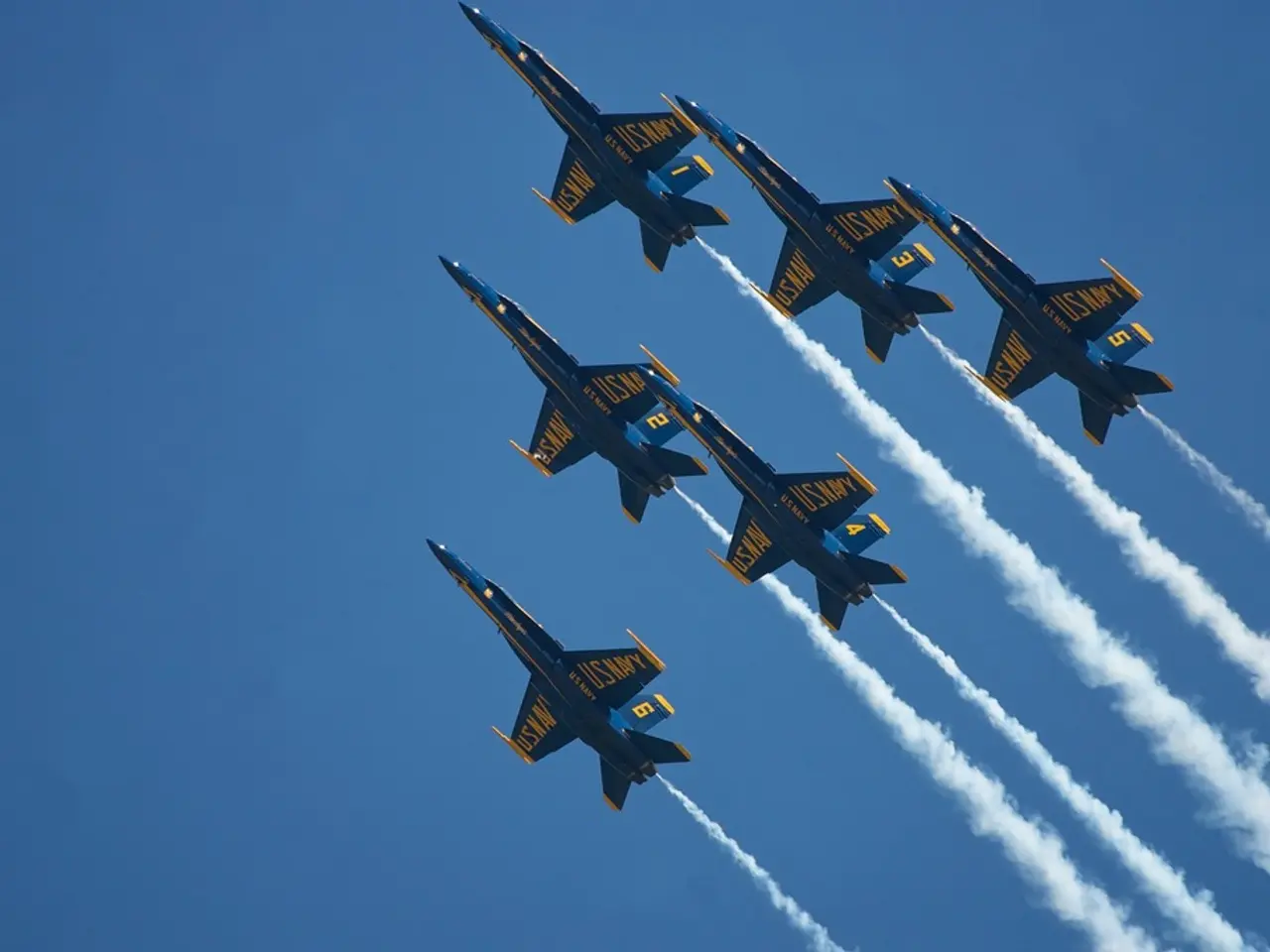
Military leaders in the United States Air Force recognize a severe dearth of pilots, necessitating a comprehensive, analytical approach to address the issue.
Feeling the Crunch: The Air Force's Persistent Pilot Shortage
At the AFA's Air, Space & Cyber Conference, Air Force leaders identified the pilot shortage as a multi-faceted problem requiring a holistic and systemic solution. For decades, the service has relied on a patchwork of good ideas, but theresults have fallen short.
Since the 1990s, the Air Force has faced persistent pilot shortage issues. In attemptsto address these problems, they have rolled out a slew of potential fixes, such as bonuses, an air mobility track, fighter fundamentals, simulators, a civilian path to wings, and an accelerated path to wings.
Lt. Gen. Adrian L. Spain, deputy chief of staff for operations, explained that despite all these initiatives, the Air Force has struggled to produce more than 1,300 new pilots annually, far from their long-term goal of 1,500. "We've tried many, many ways to go above that...but we haven't really gotten to 1,500 ever," Spain said.
The unforeseen problems that hampered the initiatives included freak weather events, supply constraints, and troubles maintaining aging training aircraft. The Air Force also took risks in funding some accounts to maintain combat readiness elsewhere, which ultimately didn't help solve the pilot shortage issue.
Looking ahead, Spain and Lt. Gen. Brian Robinson, commander of Air Education and Training Command, asserted that standalone initiatives won't be enough to close the gap. "Solving one element of it doesn't solve the problem. You have to tackle all of the things that contribute to it to get to a holistic solution," Spain said.
Robinson explained that thinking about pilot production as a "system of systems" is key to finding a solution. A system of systems approach involves working digitally to gain a better understanding and control of the variables that influence pilot production, such as logistics, supply, manpower decisions, airspace access, and air traffic controllers at various bases.
Applying artificial intelligence and digital methods to this system will help optimize and increase efficiency, which will collectively push the numbers higher. "It's not just about the aircraft. It's about the entire system that supports the creation and retention of pilots," Robinson added.
One example of this holistic approach is the initiative to boost the T-6 pilot training phase, which leads to better overall results. "By increasing the T-6 phase across AETC, we'll result in about 111 additional pilots getting their wings annually," Robinson said.
However, not all systems face the same pilot shortage challenges. For instance, an F-35 pilot asked Lt. Gen. Spain, "what pilot shortage?" The unit in question recently experienced a long pause in F-35 deliveries, creating a surplus of pilots for the available jets, even though other systems still struggle with shortages.
The shortages also create challenges in assigning pilots to weapon systems. In some cases, the Air Force has had to divert top flight school graduates away from fighters to fly other aircraft, such as C-130s, to manage the shortages and ensure a smooth flow of pilots.
Addressing this issue requires breaking down cultural barriers and de-stigmatizing pilots going into the Guard and Reserve. Maj. Gen. Randal K. Efferson, acting commander of the Air National Guard Readiness Center, highlighted that a career in the Air National Guard can offer tremendous opportunities for pilots, but the cultural stigma surrounding it needs to be addressed.
In conclusion, solving the Air Force's pilot shortage requires a holistic and systemic approach that addresses pilot training, aircraft availability, readiness, and retention issues across active duty, Reserve, and Guard components. Significant progress and ongoing challenges characterize this issue, but the Air Force is working tirelessly to implement strategies that will restore a fully capable and ready pilot force.