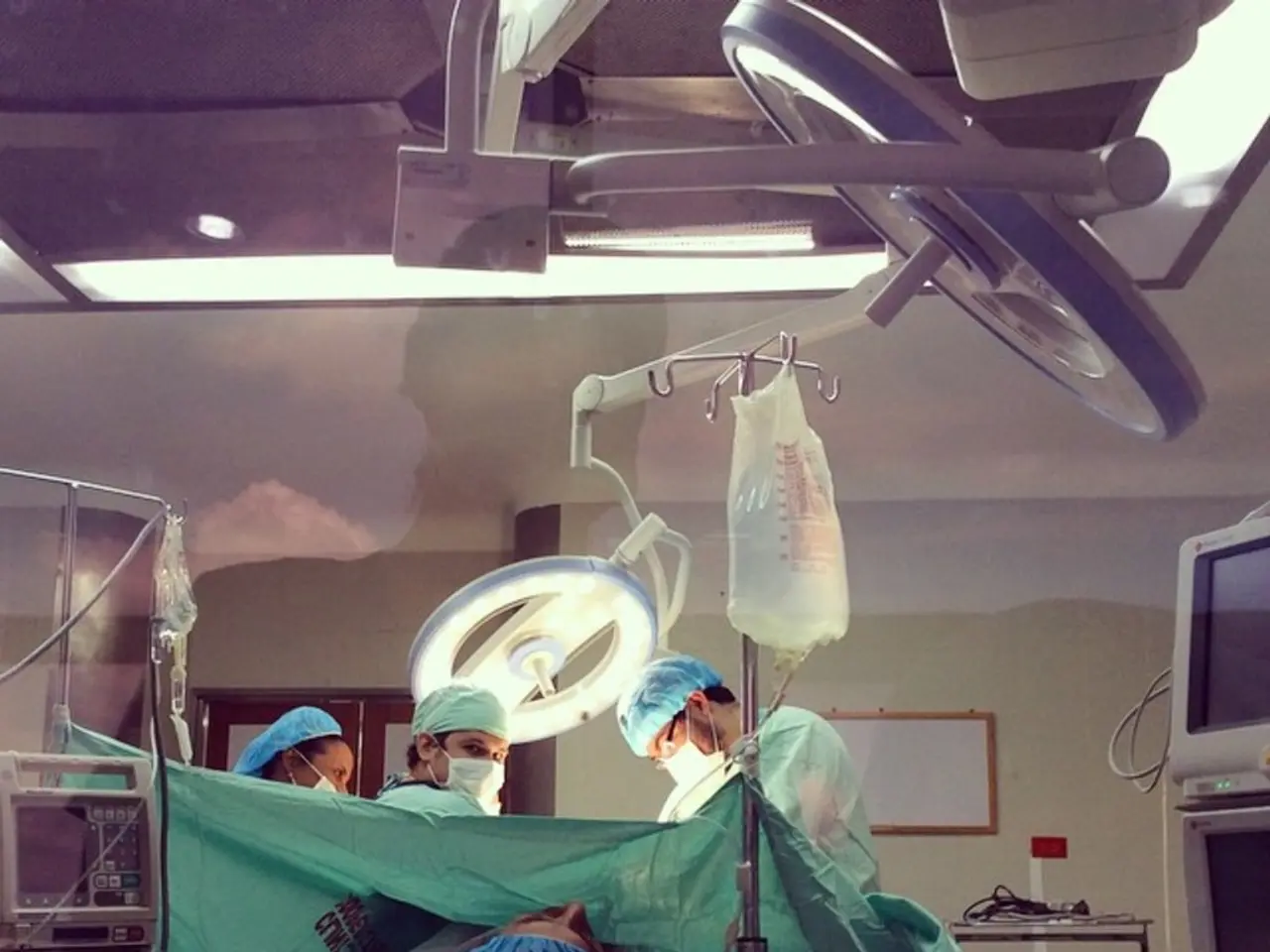
Minimally Invasive Surgical Procedure for Fertility Issues: Details, Functions, and Anticipated Outcomes
In the realm of female reproductive health, a minimally invasive surgical procedure known as laparoscopy has emerged as a powerful tool in diagnosing and treating various conditions that can lead to infertility. This article delves into the common conditions that are detected and treated through laparoscopy, its benefits, and its role in unexplained infertility cases.
One of the most prevalent conditions diagnosed through laparoscopy is Endometriosis, a disorder that involves the growth of endometrial-like tissue outside the uterus. This abnormal growth can cause pain, inflammation, and scar tissue, potentially interfering with egg release, sperm function, implantation, and overall pelvic health, leading to infertility. Laparoscopy is the gold standard for diagnosing and removing endometrial tissue, which can improve fertility outcomes.
Another condition frequently detected is Polycystic Ovary Syndrome (PCOS), characterised by hormonal imbalances and irregular ovulation. PCOS is a leading cause of anovulatory infertility. In some cases, laparoscopic ovarian drilling (LOD) may be performed, where small punctures are made in the ovarian surface to restore ovulation, particularly in women not responsive to medication.
Fibroids, non-cancerous growths within or on the uterus, can also impact fertility, depending on their size and location. They can interfere with implantation, embryo growth, or block fallopian tubes. Laparoscopy allows for the visualization and surgical removal of fibroids when necessary.
Blockages in the fallopian tubes, preventing eggs from meeting sperm, are another common issue diagnosed through laparoscopy. Tubes can be blocked due to infections, endometriosis, or previous surgeries, leading to infertility. Laparoscopy is used to confirm blockage and sometimes to unblock the tubes or remove scar tissue.
Adhesions, bands of scar tissue that form after surgery, infection, or endometriosis, can distort pelvic anatomy, block tubes, or interfere with ovarian function. Laparoscopy is the best method for diagnosing and treating adhesions.
Ovarian Cysts, fluid-filled sacs on the ovaries, can disrupt ovulation or hormone balance, impacting fertility. Laparoscopy is used to diagnose and remove problematic cysts.
Beyond its diagnostic role, laparoscopy can also help when a woman has unexplained infertility, a diagnosis given when results of other diagnostic tests were normal but a woman is still unable to conceive. It can also be used to investigate and treat chronic pelvic pain, pain during intercourse, or menstrual pain. Those with a history of pelvic infections or surgeries are more likely to have scarring or adhesions, which can be diagnosed and treated laparoscopically.
In summary, laparoscopy plays a crucial role in diagnosing and treating various conditions that affect female fertility. It not only aids in accurate diagnosis but often allows simultaneous treatment, offering improved fertility outcomes for many women. However, it is essential to discuss the procedure and its potential benefits and risks with a doctor. Common post-surgery symptoms include pain and discomfort, particularly in the shoulders or abdomen as the injected gas starts to dissipate. Recovery typically involves walking around and drinking peppermint tea, with someone else driving the person home and staying with them for up to 24 hours after surgery.
- Science has advanced our understanding of female infertility, with laparoscopy being a key tool in detecting and treating various conditions.
- Endometriosis, a growth of endometrial-like tissue outside the uterus, is one such condition diagnosed through laparoscopy.
- PCOS, marked by hormonal imbalances and irregular ovulation, is another prevalent condition identified via laparoscopy.
- Fibroids, non-cancerous growths within or on the uterus, can impact fertility and are visualized and sometimes removed through laparoscopy.
- Blockages in the fallopian tubes can lead to infertility, and laparoscopy is used to confirm blockage, unblock tubes, or remove scar tissue.
- Adhesions, bands of scar tissue, can distort pelvic anatomy and interfere with ovarian function, but laparoscopy is ideal for their diagnosis and treatment.
- Ovarian cysts can disrupt ovulation or hormone balance, and laparoscopy is used to diagnose and remove problematic cysts.
- Laparoscopy is also beneficial for women with unexplained infertility and for investigating and treating chronic pelvic pain.
- In the workplace-wellness context, early detection and treatment of medical conditions like these, including chronic diseases, cancers, respiratory conditions, digestive health issues, eye health problems, hearing problems, and skin conditions, can lead to better overall health and wellness.
- Regular fitness and exercise, autoimmune disorders management, mental health support, and skin care are additional elements of a comprehensive health-and-wellness approach.
- Climate change can have a significant impact on health, particularly in the manufacturing sector, increasing the risk of respiratory conditions and other chronic diseases.
- Therapies and treatments, weight management, and cardiovascular health are crucial elements of managing various medical conditions.
- The impact of certain conditions on female fertility highlights the importance of environmental science to understand and mitigate harmful factors in our environment.
- Financial stability plays a role in maintaining good health, with proper investing, wealth management, and personal finance practices being essential.
- Energy-efficient industries can help reduce the health risks associated with climate change.
- In the retail sector, focusing on health and wellness products, such as skin-care items, can contribute to improving consumer health.
- Public transit, entrepreneurship, and transportation are vital for reducing carbon emissions, thereby reducing health risks related to climate change.
- Leadership in various industries, from aerospace to automotive, can drive initiatives to prioritize diversity and inclusion, creating healthier work environments.
- Small businesses can also make a significant impact by adopting sustainable practices, supporting diversity, and offering employee wellness programs.
- Housing markets should consider the health implications of housing designs, materials, and locations.
- Venture capital firms can invest in innovative health-focused startups, supporting technological advancements in healthcare.
- Personal finance plays a crucial role in maintaining good health, as financial stress can lead to mental health issues.
- Banking and insurance institutions can offer products tailored to health and wellness, such as health savings accounts or critical illness insurance.
- Fintech companies can develop solutions to streamline healthcare payments and improve access to care.
- Real estate investors can prioritize health-focused developments, such as properties designed for residential and commercial use that promote wellness.
- In the realm of space and astronautics, research is ongoing to understand the impacts of long-term space travel on various health aspects, including cardiovascular health, mental health, and bone density.
- CBD, a compound derived from cannabis, is being explored for its potential benefits in managing neurological disorders, chronic pain, and anxiety.
- As the demand for clean energy and reducing carbon emissions grows, the energy sector presents opportunities for job growth and innovation in areas like renewable energy solutions and battery technology.
- Budgeting, debt management, and technology can help individuals make informed financial decisions, enabling them to save for long-term goals such as health-related expenses, homeownership, or investment opportunities.