North German port workers seek an 8.4% wage increase, prioritized by union leader Verdi.
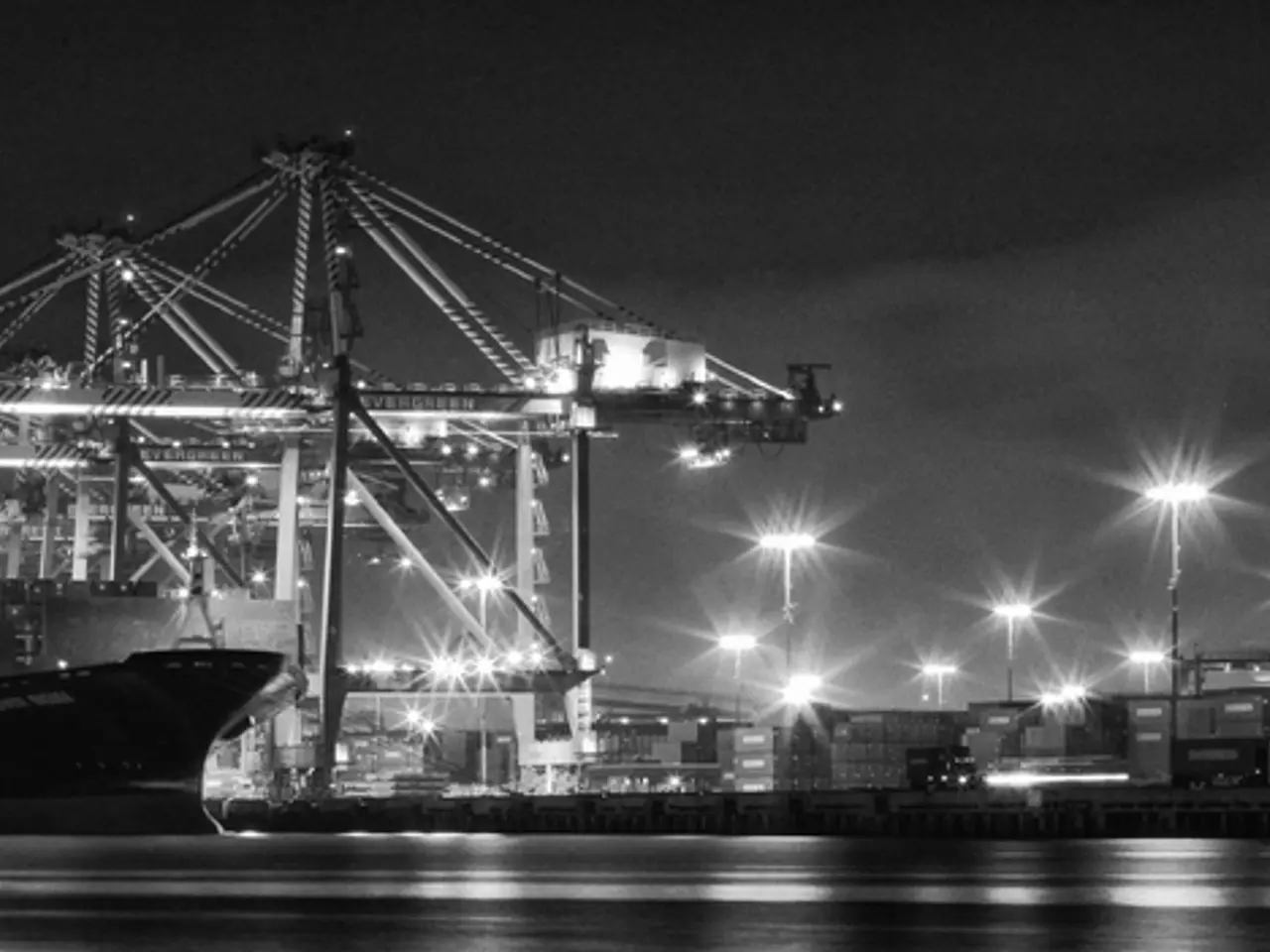
In a significant development, collective bargaining negotiations are underway for approximately 11,000 dockworkers, including those in Bremerhaven, Hamburg, and Wilhelmshaven. The talks, which are scheduled to begin in Hamburg on Wednesday, aim to address the demands of the Verdi trade union for higher wages in light of increased profits.
The current round of negotiations, which is the fourth since last year, has remained unresolved as of early July 2025. This impasse has led to escalating labor actions in major German ports, with full-shift warning strikes taking place at both the Port of Hamburg and the Port of Bremerhaven.
Verdi, the union leading the negotiations, is pushing for a three-euro hourly wage increase, with retroactive effect from June 1, 2024. According to Maren Ulbrich, a Verdi negotiator, significant gaps remain between the union’s demands and the proposals from port operators, particularly regarding pay increases. The union maintains that the current offer is not acceptable and that employers must improve their proposition for meaningful negotiations to progress.
The Central Association of German Sea Port Operators (ZDS), representing the employers in the negotiations, has yet to publicly comment on the specifics of the negotiations. However, it is clear that the union's demand for higher wages is justified by the employees' significant contribution to the increased profits.
The new collective agreement, as proposed by Verdi, would have a term of ten months. Two days have been set aside for the commencement of the collective bargaining talks, with the next scheduled round taking place in Bremen on July 11–12. While Wilhelmshaven is not explicitly mentioned in recent strike notices, it is part of the broader negotiations landscape and could be affected by the current labor actions or future developments.
Initially, Verdi declined to comment on the negotiations when asked by our website. However, the ongoing strikes at the Port of Hamburg and the Port of Bremerhaven serve as a clear indication of the union's determination to secure a fair wage increase. As the negotiations continue, it remains to be seen whether a resolution can be reached that satisfies both parties and ensures the smooth operation of Germany's vital port infrastructure.
Radio Bremen, as a major broadcasting company, might cover the ongoing collective bargaining negotiations between Verdi and the ZDS in detail, providing insightful analyses of the industry's financial implications in relation to the aerospace sector, given the significant contribution port workers make to increased profits in the economic landscape. The Union's struggle for higher wages could impact various sectors, including the aerospace industry, given the extensive network of cargo transportation through these ports.