Statistics Office: Wage Agreements in the North Remain Stable - Northern Germany's collective bargaining lags behind EU targets despite stability
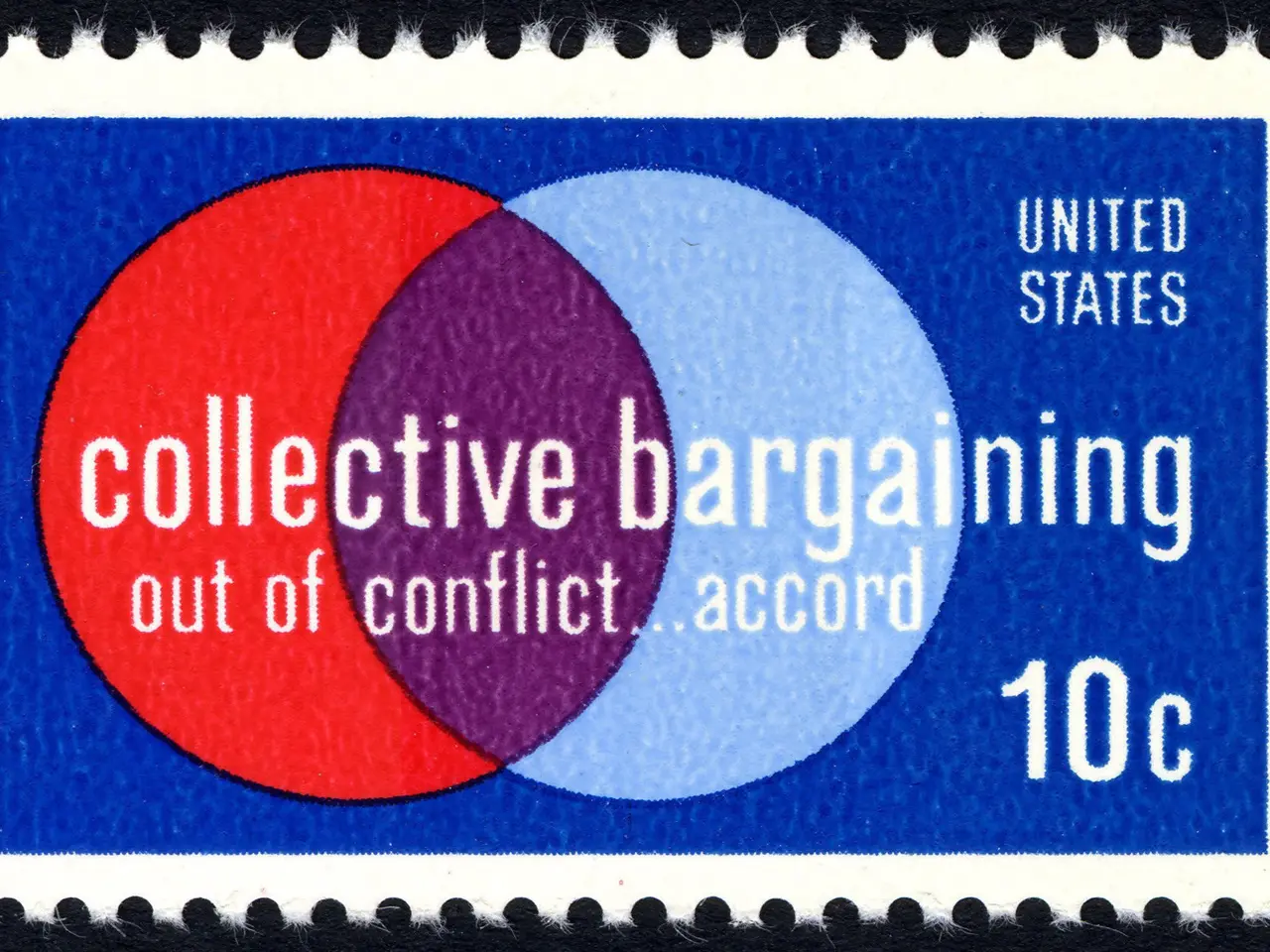
New figures show that collective bargaining coverage in northern Germany remains stable but below EU targets. In Hamburg, less than half of all employees work under such agreements. Trade unions have criticised the numbers and called for stronger measures to boost coverage rates.
In 2025, 48 percent of Hamburg's workforce was employed under collective agreements—unchanged from previous years. Of these, 36 percent fell under sector-wide deals, while 11 percent were covered by company-level agreements. The German Trade Union Confederation (DGB) highlighted that this figure falls far short of the EU's 80 percent target.
Schleswig-Holstein saw similar trends, with 46 percent of workers under collective agreements. There, 39 percent were protected by sectoral deals, and 7 percent by company agreements. Nationwide, the coverage rate held steady at 49 percent. The DGB's Hamburg chair, Tanja Chawla, proposed a solution: a public procurement law requiring firms to comply with collective agreements when bidding for contracts. The union argued that such a rule would help close the gap between current figures and the EU benchmark.
The data confirms that nearly one in two jobs in northern Germany is covered by collective bargaining. However, Hamburg's rate remains significantly lower than the EU's recommended threshold. The DGB's proposal aims to increase coverage through stricter public sector contracting rules.
Read also:
- Federal Funding Supports Increase in Family Medicine Residency Program, Focusing on Rural Health Developments
- Potential Role of DHA in Shielding the Brain from Saturated Fats?
- Alternative Gentle Retinoid: Exploring Bakuchiol Salicylate for Sensitive Skin
- Hanoi initiates a trial program for rabies control, along with efforts to facilitate the transition from the dog and cat meat trade industry.