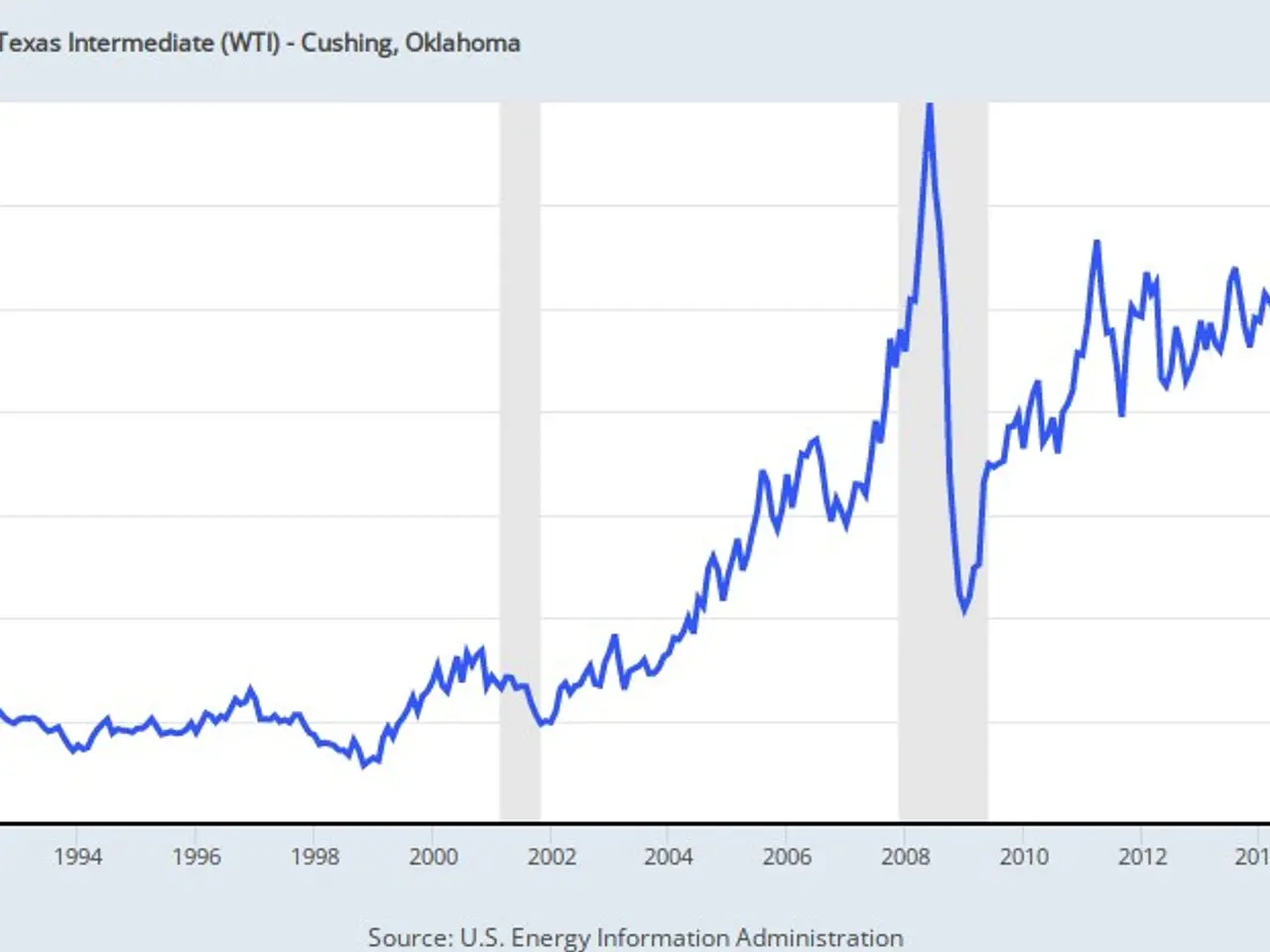
Oil prices surge past $94 as US-Iran tensions disrupt global markets
Rising tensions between the US and Iran have disrupted global markets, pushing oil prices above $94 per barrel. The closure of the Strait of Hormuz has triggered sharp declines in stock markets worldwide, while energy and defence-related shares have surged.
The conflict's impact on oil supply sent prices soaring by roughly 40% in just two weeks. Brent crude neared or exceeded $100 per barrel, a level analysts had warned would follow a full blockade of the strait. Airlines suffered immediate setbacks, with Singapore Airlines, Qantas, and Eva Air seeing stock drops of 4-6% after cancelling flights and avoiding Gulf airspace.
European markets reacted sharply, with the Swiss Market Index falling around 2%, while Germany's DAX and the Euro Stoxx 50 followed with similar losses. In Asia, Japan's Nikkei dropped 1.4% and South Korea's Kospi lost 1%. US indices also declined: the Dow Jones fell 1.1%, the S&P 500 slipped 0.4%, and the Nasdaq-Composite retreated 0.9%. Investors turned to gold and defence stocks as safe-haven assets. Energy companies benefited from the oil price surge. Exxon Mobil, one of the world's largest oil producers, saw its stock climb 35% due to rising WTI prices. The company reported a 2025 profit of $28.8 billion, with daily production at 4.7 million barrels. Shareholders received $37.2 billion in returns, and analysts now see potential upside to $180–$189 per share. CF Industries, the world's top ammonia producer, gained 60% from January lows. Its North American operations shielded it from supply chain disruptions, allowing it to capitalise on higher urea prices. The company posted 2025 revenues of $7.08 billion, margins of 33.9%, and free cash flow of $1.79 billion. Technically, its chart shows a bull flag breakout with a hidden bullish divergence, targeting $179—though a drop below $106 could negate this pattern. NVIDIA, the AI chip leader, faced pressure after Iran's Revolutionary Guard hinted at targeting the company. Despite this, its financials remained robust, with FY2026 revenue hitting $215.9 billion. Its stock chart currently displays a head-and-shoulders pattern with a neckline at $169, but a move above $197 might shift the outlook to neutral or bullish. With uncertainty dominating markets, investors are picking stocks more cautiously.
The Strait of Hormuz closure has reshaped market dynamics, lifting oil prices and energy stocks while pressuring airlines and broader equities. Safe-haven assets like gold and defence shares have gained, but volatility persists as traders assess the conflict's next moves. Companies with strong regional supply chains, such as CF Industries, have weathered the disruption better than global competitors.
Read also:
- American teenagers taking up farming roles previously filled by immigrants, a concept revisited from 1965's labor market shift.
- Weekly affairs in the German Federal Parliament (Bundestag)
- Landslide claims seven lives, injures six individuals while they work to restore a water channel in the northern region of Pakistan
- Escalating conflict in Sudan has prompted the United Nations to announce a critical gender crisis, highlighting the disproportionate impact of the ongoing violence on women and girls.