In the Garrison Church: Commemoration of the 'Day of Potsdam' - Potsdam's Garrison Church reopens as a haunting memorial to Nazi Germany's rise
A memorial service has marked the 93rd anniversary of the Tag von Potsdam—a pivotal moment in German history. On March 21, 1933, the event symbolised the shift from the Weimar Republic to Nazi rule. The day remains etched in memory, partly due to the infamous handshake between Adolf Hitler and President Paul von Hindenburg at Potsdam's Garrison Church.
The Tag von Potsdam is often seen as the birth of the Third Reich. It cemented the Nazi Party's grip on power under a veneer of legitimacy. The handshake between Hitler and Hindenburg, captured in photographs, became a haunting symbol of the era.
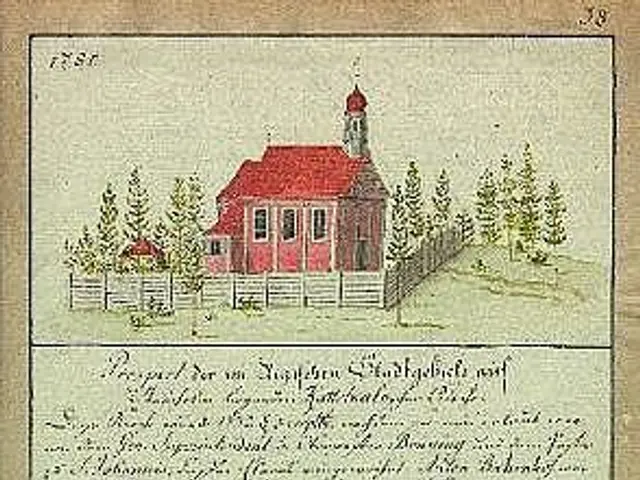
The Garrison Church itself was destroyed during World War II. After brief use as the *Heilig-Kreuz-Kapelle* for post-war services, it was demolished with dynamite in 1968 under East German leader Walter Ulbricht. Reconstruction efforts began decades later, culminating in its official reopening on August 22, 2024. The site now serves as a controversial memorial and cultural space linked to the 1933 event. Further work, including the tower's cupola, is planned for completion after Easter 2026.
The memorial service at the rebuilt Garrison Church highlights the enduring significance of March 21, 1933. The site's restoration ensures that the Tag von Potsdam—and its role in the rise of Nazi Germany—remains a focal point for historical reflection. Ongoing construction will further shape its function as a place of remembrance.
Read also:
- American teenagers taking up farming roles previously filled by immigrants, a concept revisited from 1965's labor market shift.
- Weekly affairs in the German Federal Parliament (Bundestag)
- Landslide claims seven lives, injures six individuals while they work to restore a water channel in the northern region of Pakistan
- Escalating conflict in Sudan has prompted the United Nations to announce a critical gender crisis, highlighting the disproportionate impact of the ongoing violence on women and girls.