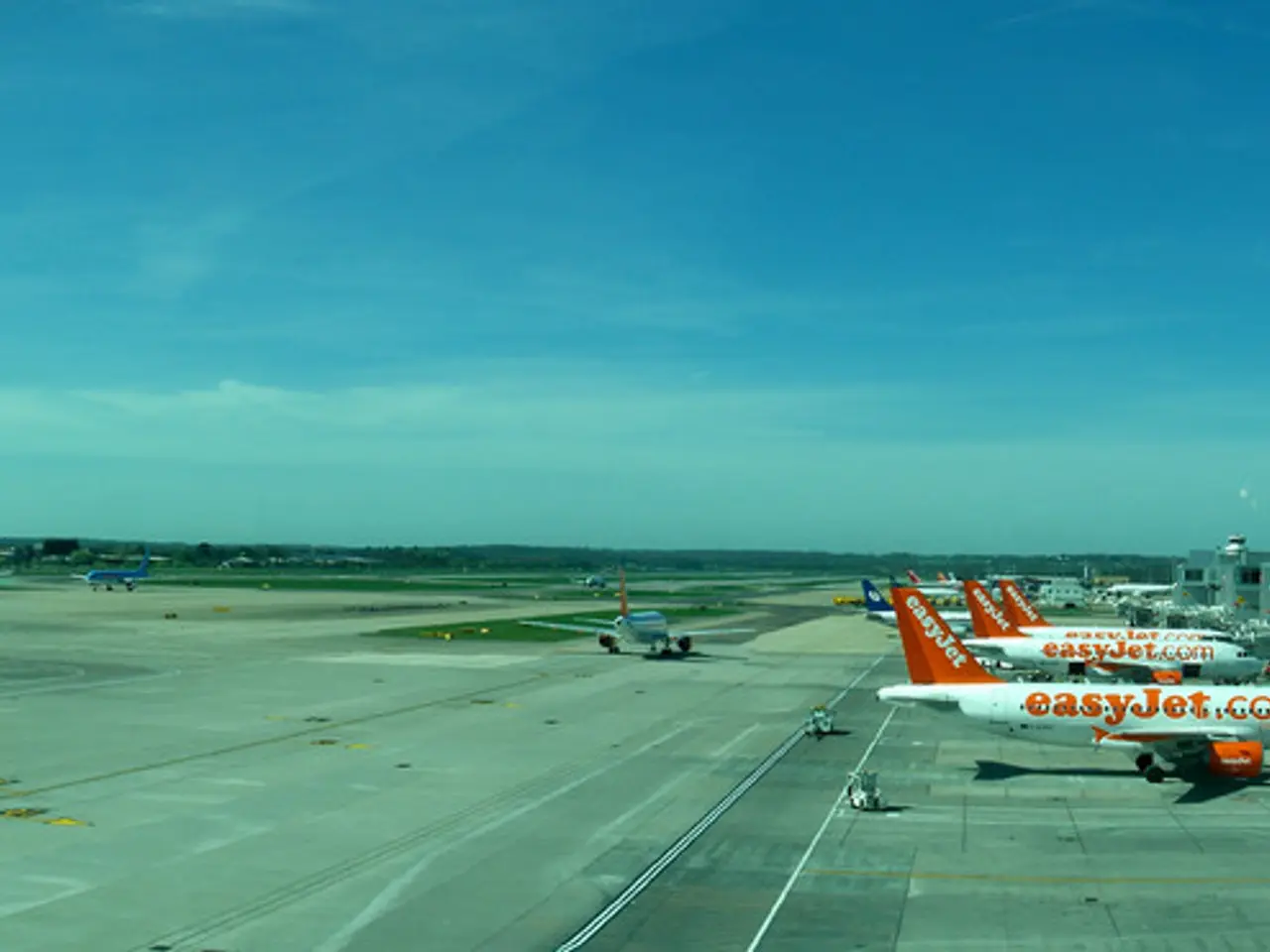
Preparatory Manual for Aviators: Navigating High-Traffic Airports’ Runways
Feeling anxious about venturing into buzzing, foreign airports classified as Class B, C, or D? Fear not! Here's a handy guide to help you conquer your next trip to these airports gracefully.
What Makes These Airports Different?With increased ATC requirements, intricate taxi routes, and procedural variations, these airports might seem overwhelming. However, depending on where you fly, they could be your best, or only, option.
Navigate ATC's AssistanceCommunicating with Air Traffic Control (ATC) proactively is the key to a smooth experience in these airspaces. Inform ATC of your destination early during your initial call. This helps them arrange your arrival seamlessly.
As you near your destination airport, ATC may transfer you to the local approach control for that airport. If you're in two-way radio communication with ATC for a Class C airport (they've acknowledged your call sign), you've entered Class C Airspace. For Class B, you need to hear "cleared into the Class B airspace" explicitly.
Know the Weather RegulationsClass B airspace has more relaxed weather requirements due to air traffic controllers tracking your every move – altitude, speed, and heading. This unique setup allows controllers to enable you to fly in worse weather conditions and maintain "see and avoid" from other aircraft.
The weather requirements are straightforward: 3SM visibility and clear of clouds. To elaborate on "clear of clouds," it means your aircraft should stay below clouds, approaching but not touching them. That's pretty close.
Class C airspace has minimum weather requirements to ensure enough distance between aircraft and the clouds to enable safe "see and avoid." An easy way to remember the VFR weather minimums in Class C airspace is the phrase "3 Cessna 152s." Each number in the phrase represents one of the following distances:
- 3SM visibility
- 1000’ above
- 500’ below
- 2000’ horizontal
What's Your Equipment Situation?For both Class B and C airspace, you'll need the following onboard your aircraft: a two-way radio, Mode-C or Mode-S transponder, and ADS-B out.
Memorize Crucial FrequenciesKeep ATIS, approach control, tower, and ground frequencies readily available. At many large airports, there might be multiple frequencies for each service, depending on your arrival direction or location on the ground. If using an electronic flight bag (EFB), load your destination airport page for quick access to frequencies.
Be Ready for Holds or VectoringFlying into a Class C airport typically poses no issues. However, you may have to hold outside of Class B airports during busy arrival or departure phases. If you want to fly into a Class B airport, calling ahead might help find a suitable time, usually between departure/arrival blocks or at night.
Study the Airport and Pick Out Your SpotBefore your flight, or at least early in your descent, take a close look at the airport diagram. Locate the FBO where you intend to park, and examine the nearby runways/taxiways. Familiarizing yourself with the airport ahead of time can be beneficial.
Maintain Speed and EfficiencyAirports that are Class B or C are usually bustling with activity, with busy frequencies and swift-moving aircraft. Maintain a brisk pace (but safety always comes first) and prepare for a long or short approach to landing.
ATC may slip you between faster jets if you fly at an optimal pace. Don't rush yourself, keep a sterile cockpit, and remain alert. If you need assistance, don't hesitate to ask. The last thing you want is to misinterpret an ATC instruction and result in a traffic conflict.
Happy flying, pilots! Share your experiences of flying into busy airports below. Have you ever faced any unexpected challenges or managed to navigate those intimidating hubs smoothly? Tell us about it!
Want to increase your knowledge on the National Airspace System?* Sign up for our course here.
Upgrade your piloting skills.Subscribe to receive the latest videos, articles, and quizzes that will transform you into a more skilled, secure pilot.
- Class B, C, or D airports, despite being busy and complex, may be your best option for certain flights.
- Effective communication with Air Traffic Control (ATC) is crucial for a smooth experience in these airspaces.
- Inform ATC of your destination early during your initial call to help arrange a seamless arrival.
- As you approach your destination airport, ATC may transfer you to the local approach control.
- For Class C airspace, if ATC acknowledges your call sign, you've entered Class C Airspace.
- Class B airspace requires explicit permission to be cleared into the airspace.
- In Class B airspace, the relaxed weather requirements include 3SM visibility and clear of clouds.
- For Class C airspace, VFR weather minimums can be remembered as "3 Cessna 152s" representing 3SM visibility, 1000’ above, 500’ below, and 2000’ horizontal.
- For both Class B and C airspace, a two-way radio, Mode-C or Mode-S transponder, and ADS-B out are necessary onboard your aircraft.
- Keep ATIS, approach control, tower, and ground frequencies readily available, especially for large airports with multiple frequencies.
- When entering Class C airports, be prepared for possible holds outside the airport during busy phases or, for Class B, consider calling ahead to find a suitable time. Study the airport diagram before your flight to familiarize yourself with runways, taxiways, and the FBO for parking. Maintain speed and efficiency during your flight, but always prioritize safety.