Professionals from various industries assemble in Berlin to deliberate on Rail Baltica's influence in molding Europe's strategic destiny.
In a busy Berlin gathering on the 18th of June, over a hundred bigwigs from business, industry, and diplomacy convened for the "Rail Baltica – a Gateway to Europe's Future and Resilience" seminar. This event, organized by the Rail Baltica project team and the Embassies of Estonia, Latvia, and Lithuania to Germany, with the German Chamber of Commerce and Industry (DIHK) and the German Eastern Business Association (Ost-Ausschuss) lending their support, focused on the project's strategic role in European communication and security.
Kicking off the event, Baltic ambassadors outlined the project's historical and strategic importance. H.E. Mr Giedrius Puodžius, Lithuania's Ambassador, stressed the current geopolitical climate gives Rail Baltica significant strategic value, particularly in terms of defense. He asserted that committing to its timely completion is an investment in Europe's collective security.
H.E. Ms Alda Vanaga, Latvia's Ambassador, likened Rail Baltica to a historic correction. She pointed out that it helps to undo the legacy of Soviet occupation, which severed the Baltic states from the rest of Europe. Ms Vanaga also emphasized that beyond economic and environmental benefits, the project fosters human connection and serves as a bridge of opportunity across Europe.
H.E. Ms Marika Linntam, Estonia's Ambassador to Germany, described Rail Baltica as a genuinely European connectivity initiative. She noted the wide range of opportunities it will offer and shared her eagerness to one day travel by high-speed train from Tallinn to Berlin. Ms Linntam expressed hope that the seminar would encourage productive discussions and strong partnerships.
Key presentations on the project's status across the Baltic states followed. Marko Kivila (RB Rail), Anvar Salomets (Rail Baltic Estonia), Jānis Naglis (Eiropas Dzelzceļa līnijas), and Vytautas Tilinskas (LTG Infra) shared updates on planning, contracting, and construction.
A panel discussion moderated by Alexander Welscher explored Rail Baltica's role in reshaping infrastructure, logistics, and investment across Northern and Central Europe. Panelists – Marko Kivila (RB Rail), Riia Sillave (HHLA TK Estonia), Jörg Marienhagen (DB Engineering & Consulting), Kristina Meidē (LTG Link), and Jānis Naglis (Eiropas Dzelzceļa līnijas) – discussed how the project addresses long-standing connectivity gaps, strengthens north-south links, and drives regional development. Beyond transport, they highlighted Rail Baltica's potential to foster deeper European integration, economic resilience, and sustainable innovation.
Throughout the day, discussions also touched upon broader challenges, such as the impact of Russia's war in Ukraine. Disrupted supply chains and rising material costs – particularly for steel and concrete – led to procurement delays and increased pressure on timelines. Nevertheless, as one speaker noted, conditions have since stabilized, and the Baltic economies are recovering.
Looking ahead, speakers agreed that sustained and timely funding will be essential to maintain momentum. "Right now, our focus must be on securing the fuel to reach the target – and that fuel is financing. Ensuring timely and sufficient funding is essential to empower construction companies to move forward and accelerate the project at full speed," emphasized Marko Kivila, CEO and Chairman of the Management Board at RB Rail AS.
Rail Baltica involves more than 400 Baltic and international partners and businesses from over 30 countries. Through public procurement processes, Rail Baltica has established cooperation with 7 German companies, including Deutsche Bahn Engineering & Consulting, TÜV SÜD, Obermeyer, Railistics, RMCon, PTV, and Gauff Solutions. It also works closely with the German Railway Industry Association (VDB), the German-Baltic Chamber of Commerce (AHK), the German Logistics Alliance, and other international industry organizations.
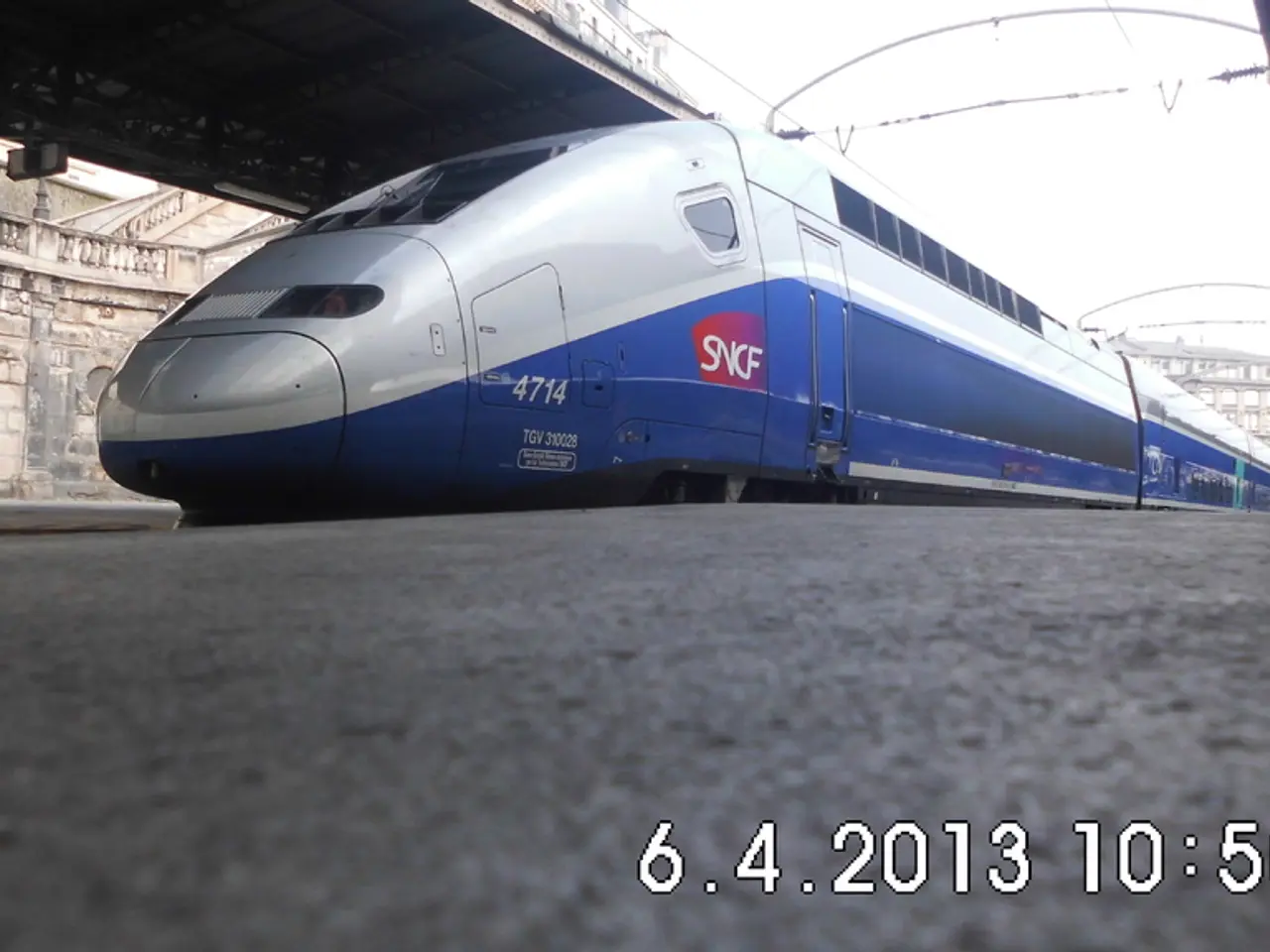
Rail Baltica is one of the largest high-speed rail projects in Europe, part of the Trans-European Transport Network. Its aim is to improve connectivity, strengthen regional security, and support economic growth in the Baltic states. Upon completion, it will link Estonia, Latvia, and Lithuania with Poland and, indirectly, with Finland, as well as with the broader European rail network. Rail Baltica will be fully electrified with a standard gauge of 1435 mm and will be equipped with ERTMS (European Rail Traffic Management System). With a design speed of 249 km/h, Rail Baltica will reduce travel times between the Baltic states and major European cities by more than half. It will serve as a modern infrastructure for passenger, freight, and military mobility, promoting accessibility and facilitating business, tourism, and cultural exchange. Rail Baltica will help establish the Baltics as a key link in European trade and cooperation.
- The panel discussion moderated by Alexander Welscher delved into Rail Baltica's potential to promote deeper European integration, economic resilience, and sustainable innovation, extending beyond mere transport.
- Rail Baltica, a partnership involving over 400 Baltic and international businesses from more than 30 countries, has established cooperations with 7 German companies, including Deutsche Bahn Engineering & Consulting, TÜV SÜD, and Gauff Solutions, through public procurement processes.
- The CEO and Chairman of the Management Board at RB Rail AS, Marko Kivila, underscored the importance of securing timely and sufficient funding to maintain the project's momentum and accelerate its progress at full speed.
- H.E. Ms Marika Linntam, the Estonian Ambassador to Germany, expressed her eagerness to travel by high-speed train from Tallinn to Berlin on Rail Baltica once it is completed, showcasing the project's potential as a modern infrastructure for mobility, supporting business, tourism, and cultural exchange.