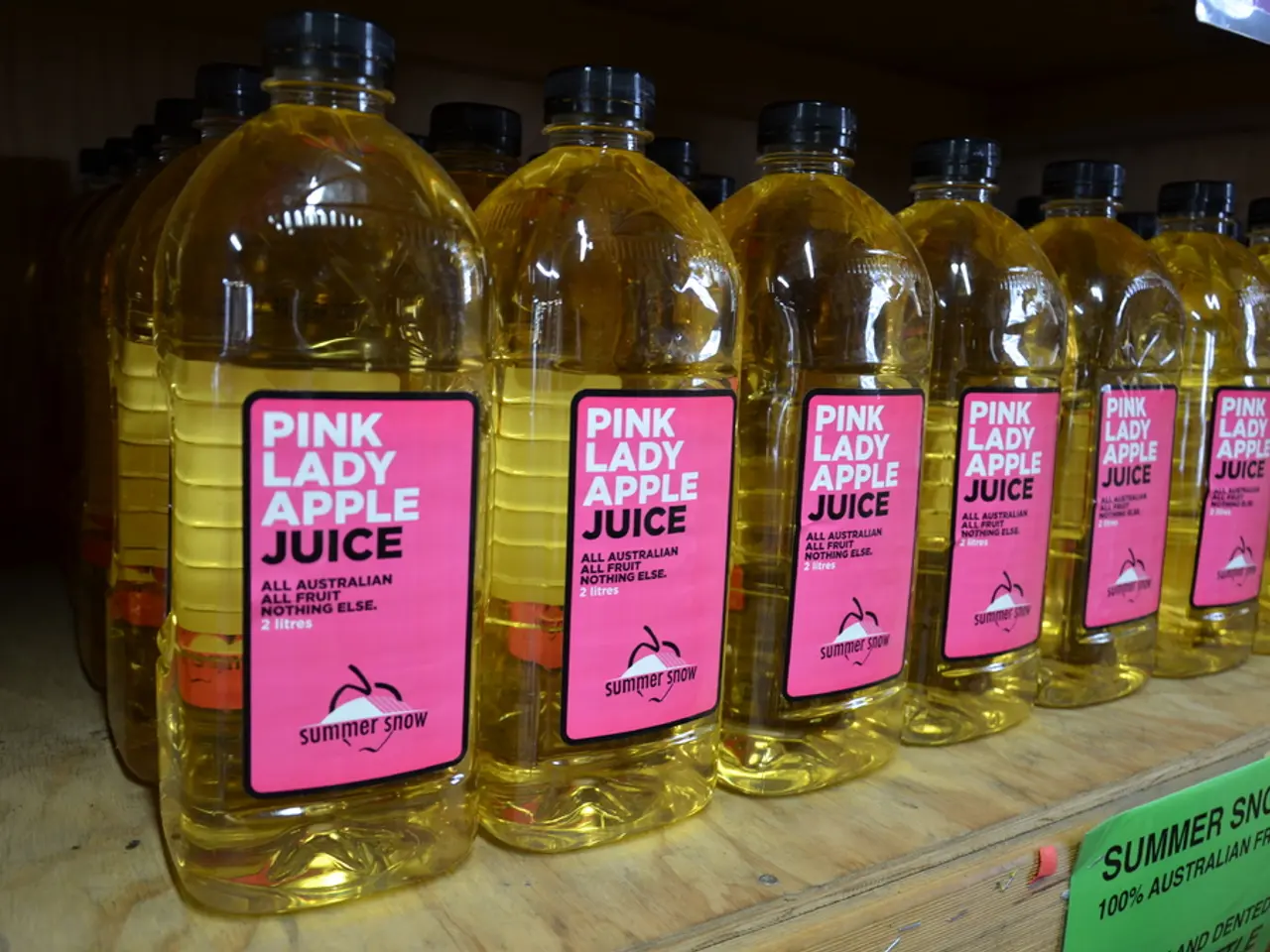
Refreshing Beverages: Classification, Advantages, Daily Consumption Recommendations
In the realm of beverages, fruit juices have long been a popular choice for many. However, it's essential to understand their nutritional contents and consumption guidelines to reap their benefits while avoiding potential risks.
Some studies have linked the consumption of large quantities of orange and grapefruit juice with an increased risk of developing melanoma, a type of skin cancer. Yet, it's important to note that more research is needed to confirm this link [1]. On the other hand, consuming too much fruit juice can lead to weight gain, type 2 diabetes, and heart disease due to its high sugar and calorie content [2].
Tomato juice, however, offers a different story. Rich in vitamin C, it can help lower a person's risk of certain types of cancers, cardiovascular disease, age-related macular degeneration (AMD) and cataracts, and the common cold [3]. Tomato juice is also a good source of potassium, which helps the body maintain fluid and blood levels and can lower blood pressure, and lycopene, an antioxidant that gives tomatoes their red color, which has been shown to reduce a person's risk of developing cardiovascular disease [4].
Pomegranate juice, known for its vibrant ruby hue, contains a variety of nutrients. It contains 134 calories, less than 1g of protein, 33g of carbs, 0.25g of fiber, 32g of sugar, 12% of the Daily Value (DV) for potassium, and 22% of the DV for Vitamin K [5]. Prune juice, often used for constipation, particularly in older adults, contains 182 calories, 1.5g of protein, 45g of carbs, 2.5g of fiber, 42g of sugar, and a host of B vitamins [6]. These vitamins have health benefits such as keeping the skin, eyes, and nervous system healthy, helping the body release energy from food, and helping with red blood cell production [7].
The American Academy of Pediatrics (AAP) recommends that children aged 1-6 years consume 4-6 ounces (1/2 to 3/4 cup) of fruit juice daily, and children older than 6 years can have up to 8-12 ounces (1 to 1.5 cups) per day [2]. For adults, while the USDA's Dietary Guidelines for Americans 2020-2025 do not specify exact fruit juice limits, they recommend consuming about one cup-equivalent of fruit per 1,000 calories, and advise that fruit juice intake should be limited to 1 cup (8 ounces) or less per serving, preferably choosing 100% fruit juice [3][5].
In conclusion, while fruit juices can offer numerous health benefits, it's crucial to consume them in moderation to avoid excessive sugar and calorie intake. Adults should generally limit fruit juice to about 8 ounces (1 cup) per day, while children should follow the more specific AAP-recommended daily limits by age group. Additionally, choosing 100% fruit juice over sweetened beverages can provide vitamins, minerals, and antioxidants that contribute to overall health.
- Embracing a healthy lifestyle involves making informed decisions, such as understanding the nutritional contents of beverages like fruit juices.
- Science plays a crucial role in our understanding of the benefits and risks associated with consuming various beverages.
- Workplace wellness programs often focus on educating employees about the nutritional content of popular beverages.
- Medical conditions like obesity, diabetes, and heart disease can be exacerbated by excessive consumption of sugary drinks, such as fruit juices.
- Cancere, respiratory conditions, digestive health, and eye-health are all areas that can be impacted by dietary choices, including beverage consumption.
- Hearing issues, as well as overall health-and-wellness, can be influenced by our food and drink choices.
- Fitness-and-exercise are key components of a healthy lifestyle, but proper nutrition is equally important.
- Autoimmune disorders like psoriasis can be managed in part by maintaining a balanced diet and avoiding certain foods or beverages.
- Climate change affects various aspects of our lives, including agriculture and the production of food and beverages.
- Manufacturing processes can impact the quality and safety of the food and beverages we consume.
- Skin-care is critical, and some vitamins found in fruit juices can contribute to healthy skin.
- Therapies-and-treatments for various medical conditions often involve lifestyle changes, including diet and beverage consumption.
- Nutrition plays a vital role in weight-management, as excess calories from beverages like fruit juices can contribute to weight gain.
- Cardiovascular-health is another aspect of our health that can be impacted by dietary choices, such as beverage consumption.
- The processing of fruit juices can often lead to a higher sugar and calorie content compared to eating whole fruits.
- Psoriasis is an autoimmune disorder that affects the skin, and certain dietary changes can help manage symptoms.
- The beverage industry is a significant player in the global economy, with various sectors ranging from manufacturing to retail.
- CBD, a compound derived from cannabis, is being studied for potential health benefits and is sometimes added to beverages.
- Environmental-science is essential in understanding the environmental impact of agricultural practices that produce food and beverages.
- Finance plays a crucial role in the production, distribution, and consumption of food and beverages, from farming to dining.
- Energy drinks, which are often high in sugar and caffeine, can negatively impact our overall health, including cardiovascular health.
- Skin-conditions like acne can be exacerbated by poor dietary choices, including excessive consumption of sugary beverages.
- Hearing loss can be a consequence of certain medical conditions, among which diabetes, obesity, and heart disease are common.
- Health-and-wellness trends often focus on incorporating more nutrient-rich foods and beverages into our diets.
- Fitness-and-exercise, coupled with proper nutrition and beverage choices, can lead to a healthier lifestyle.
- Incorporating more fruits and vegetable juices into our diets can provide essential vitamins and antioxidants that support immune function.
- Weight-management requires a balanced approach that includes proper nutrition, exercise, and beverage choices.
- Choosing low-sugar or sugar-free alternatives can help reduce calorie intake from beverages like fruit juices.
- The housing-market can be influenced by factors such as income levels, personal finance, and industrial growth, which in turn can impact food and beverage consumption trends.
- Venture-capital and private-equity firms often invest in the food, beverage, and related industries due to their potential growth and profitability.
- By making conscious choices about what we eat, drink, and consume, we can positively impact our health and wellbeing, as well as the environment and the economy.