Revealing the Swiftest Aerial Vehicle: A Peek into Aviation's Future Innovations
In a groundbreaking development, the unveiling of the world's fastest aircraft marks a significant milestone in human ingenuity and ambition in aviation. This remarkable machine, boasting a 500,000-pound weight and over 200 feet in length, is one of the most incredible airplanes ever built.
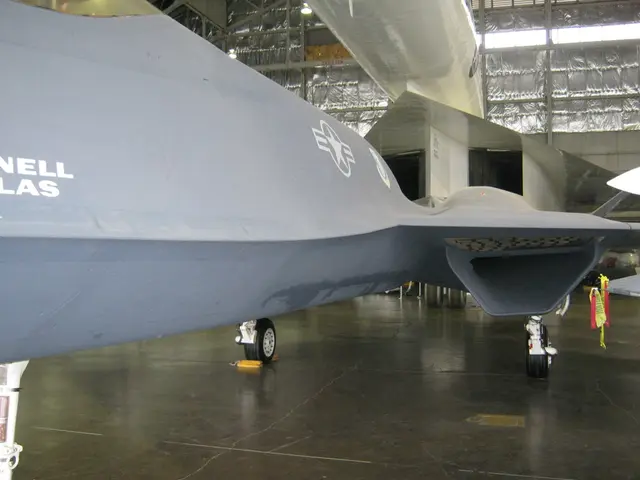
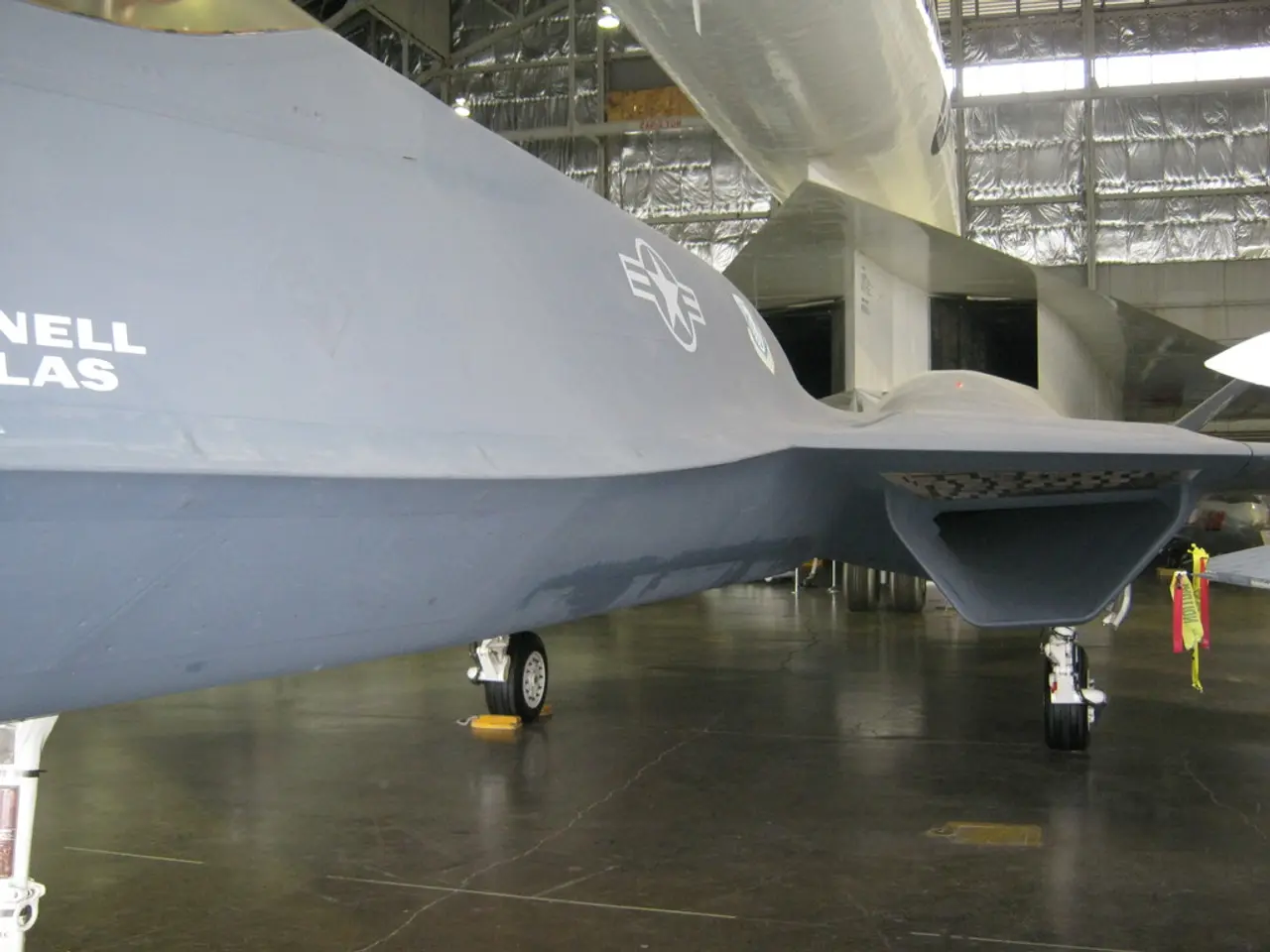
The collaboration between aerospace companies and government agencies has been instrumental in the evolution of hypersonic technology, which underpins the capabilities of this record-breaking aircraft. Its design features a sleek, streamlined fuselage and advanced wing shapes, ensuring minimal resistance and optimal stability at high speeds.
Modern fastest civil aircraft, such as the Bombardier Global 8000, capable of cruising at Mach 0.94 (about 1,161 km/h), are already dramatically shortening long-haul flight durations. Non-stop connections like Singapore to Los Angeles or London to Perth become feasible, helping passengers bypass multiple time zones and reduce jetlag effects.
Beyond speed, the latest fastest business jets integrate luxury living spaces, including air spas and crew rest areas, turning high-speed travel into a comfortable, premium experience. This sets the stage for future commercial aircraft to combine speed with high-end passenger amenities.
Although hypersonic experimental planes like NASA's X-43A have reached speeds up to Mach 9.6, these are currently short-duration test flights with no direct commercial application. However, their technological breakthroughs in scramjet engines pave the way for future hypersonic commercial aviation, which could revolutionise intercontinental travel by drastically reducing flight times.
New engines, such as the GE Aerospace Passport powering the Global 8000, emphasise improved efficiency alongside speed, crucial for balancing high performance with environmental considerations. Future aircraft will likely integrate advanced propulsion with sustainable fuels and AI-optimised flight systems for reduced carbon footprints.
Artificial Intelligence will play an increasing role in aviation, from enhancing flight safety and navigation to optimising performance and predictive maintenance. The world's fastest commercial aircraft of the future will likely leverage AI to manage complex hypersonic flight dynamics and ensure passenger safety at extreme speeds.
Regulatory bodies will need to adapt quickly to ensure safety standards evolve alongside technological advancements in faster aircraft. Advancements in computational fluid dynamics (CFD) allow for precise modeling of airflow over complex surfaces, optimising designs for minimal drag and maximum performance.
Partnerships between aerospace companies and tech innovators will be essential in driving advancements in areas like onboard connectivity, passenger comfort during high-speed travel, and enhanced navigation systems designed for faster aircraft. The legacy of the retired Concorde, which allowed passengers to cross the Atlantic at supersonic speeds, continues to inspire engineers and designers aiming to recapture lost speed in aviation.
In summary, the fastest aircraft in the world today, exemplified by cutting-edge business jets and experimental hypersonic planes, not only push the envelope on speed but also herald a future where commercial travel is faster, safer, more comfortable, and technologically advanced. The ongoing evolution in propulsion, AI, and sustainable aviation technologies suggests a transformative era ahead in both commercial aviation and aerospace innovation.
- The unveiling of the world's fastest aircraft is a testament to human ingenuity and ambition in the aerospace industry, highlighting the collaboration between aerospace companies and government agencies.
- This record-breaking aircraft, featuring a sleek fuselage and advanced wing shapes, demonstrates the evolution of technology in aviation, reducing long-haul flight durations.
- Modern fastest civil aircraft, like the Bombardier Global 8000, offer luxurious living spaces, turning high-speed travel into a premium experience, setting the stage for future commercial aircraft with speed and high-end passenger amenities.
- Hypersonic experimental planes, such as NASA's X-43A, have paved the way for future hypersonic commercial aviation, potentially revolutionising intercontinental travel by drastically reducing flight times.
- Improved engine efficiency, as seen in the GE Aerospace Passport powering the Global 8000, is crucial for balancing high performance with environmental considerations, and future aircraft will likely integrate advanced propulsion, sustainable fuels, and AI-optimised flight systems.
- Artificial Intelligence will play an increasing role in aviation, enhancing flight safety, optimising performance, and managing complex hypersonic flight dynamics, ensuring passenger safety at extreme speeds.
- Regulatory bodies must adapt quickly to ensure safety standards evolve alongside technological advancements in faster aircraft, leveraging innovations in computational fluid dynamics to optimise designs for minimal drag and maximum performance.