U.S. Air Force Maintenance Techniques Ensure Unique Fighter Jet's Battle Readiness
**B-2 Spirit Bomber Undergoes Modernization for Enhanced Capabilities**
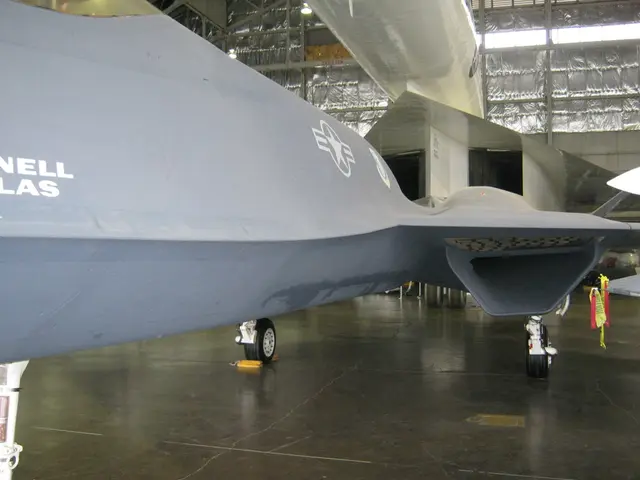
The B-2 Spirit stealth bomber, a strategic asset of the United States Air Force, is undergoing a modernization program to ensure its operational effectiveness against evolving threats. The focus of this program is on software and hardware upgrades, faster maintenance cycles, enhanced stealth, and improved communication capabilities.
The modernization includes continuous updates to the B-2’s avionics, sensors, and communication systems. These upgrades may involve both software and hardware modifications to keep the B-2 ahead of emerging threats. The bomber receives frequent software upgrades to improve survivability and communication, ensuring crews can navigate, communicate, and strike their targets with precision, while maintaining a low radar profile.
The B-2 undergoes a Programmed Depot Maintenance (PDM) every nine years at Northrop Grumman’s Plant 42 in California. Ongoing efforts aim to reduce maintenance time and improve aircraft availability, contributing to quicker turnaround and increased readiness.
The modernization also enhances the B-2’s low observable materials and radar cross-section signature to improve stealth capabilities. Continued stealth improvements are part of the survivability upgrades, helping the B-2 maintain its unique ability to operate in heavily defended airspace.
Upgraded beyond-line-of-sight satellite communication systems significantly enhance data transfer speeds for real-time mission planning and allow simultaneous voice and data transmission. This is a marked improvement over the bomber’s previous communication capabilities, providing the crew with a more complete and current battlefield picture, improving situational awareness and operational effectiveness.
Despite its origins in the late 1970s and first flight in 1987, the B-2 remains a frontline strategic asset. Recently, seven B-2s conducted a precision strike on Iran’s nuclear sites using Massive Ordnance Penetrator bombs, showcasing the platform’s continued relevance.
The B-2 will continue to be upgraded into the 2030s, and it will be replaced by the B-21 Raider, which is currently in early production and testing. The B-21 Raider is expected to have better stealth, payload capacity, communication, and sensors than its predecessor. The U.S. Air Force is enhancing the B-2's satellite communication capabilities through a new program, with the goal of producing at least 100 B-21 Raiders.
The B-2, manufactured by Northrop Grumman, is a $2 billion (approximately €1.7 billion) bomber that entered service with the US Air Force in 1997. Northrop Grumman received a $7 billion contract for maintenance and support work, as well as planned upgrades, in May 2024. Each "GBU-57 Massive Ordnance Penetrator" bomb weighs 15 tons.
The B-2 bombers are capable of carrying nuclear weapons, and their unique wing design, precise edge alignment, and other technologies are being used to reduce their signature across multiple frequency bands. The B-21 Raider will also replace the B-1 Lancer, and development of the new bomber began in 2015.
The costs and delivery schedules of the B-21 program have shifted over the years, but it is expected to be fielded in this decade. The US Air Force is working to make the B-2 less recognizable and more operationally ready, ensuring its continued role as a formidable strategic asset in the years to come.
What about integrating advanced technology into the B-2's systems for enhancing finance and aerospace capabilities? For instance, the modernization could include upgrading the communication systems with technology that allows for quicker data transfer and real-time mission planning, akin to the industries' most innovative practices. Furthermore, the bomber could potentially benefit from future advancements in the technology sector, ensuring its relevance and effectiveness in the aerospace industry even beyond the 2030s.