
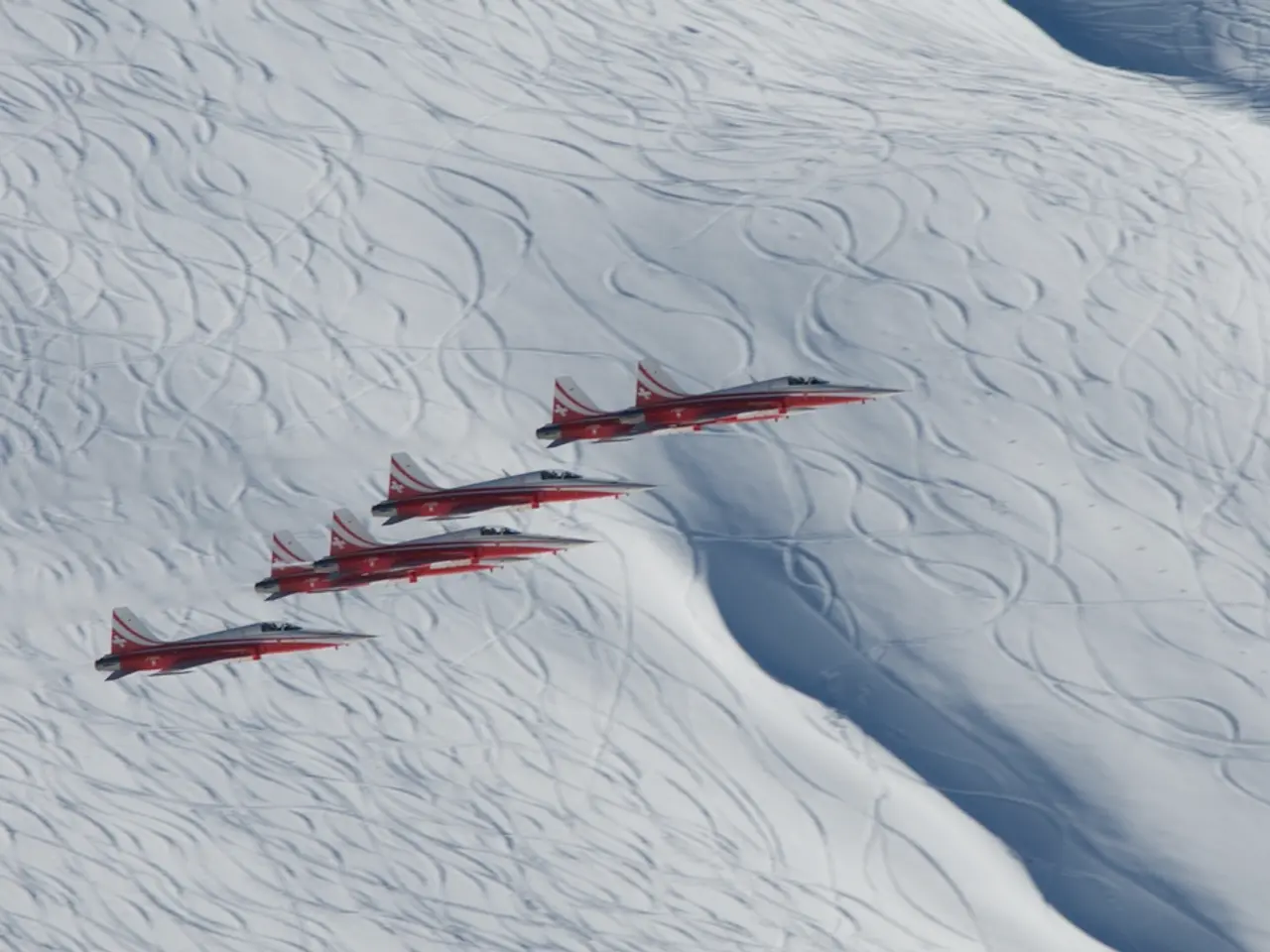
Winter Weather Awareness for Instrument Flight Rules (IFR) Operations: Maintaining Safety in Cold Conditions
In the realm of aviation, icing can pose a significant threat year-round, particularly at higher altitudes. For pilots, remaining vigilant, no matter the season, is crucial. While aircraft systems and equipment can assist in managing icing, they do not replace the need to avoid flying in icing situations.
To effectively recognise and respond to icing conditions during IFR flights, pilots must be trained on a range of critical elements related to airborne icing. Here's a breakdown of the key steps to ensure flight safety and regulatory compliance.
**Recognising Icing Conditions**
1. **Meteorological Awareness**: Understanding weather patterns conducive to icing is essential. Icing typically occurs in visible moisture at or below freezing temperatures, such as in clouds, freezing rain, or snow. Pilots must be familiar with both classical and non-classical mechanisms producing freezing precipitation and review freezing level charts and weather forecasts before and during the flight.
2. **In-Flight Recognition**: Pilots should monitor for signs of ice accumulation on critical aircraft surfaces—such as wings, tail, and propellers—which can disrupt airflow and control. This includes observing changes in aircraft handling, airspeed fluctuations, and visual cues like ice buildup on windshields or sensors.
**Responding to Icing Conditions**
1. **Pre-Flight Planning**: Effective avoidance begins on the ground by reviewing forecasts that identify potential icing layers and planning routes to circumvent these areas. Use of advanced meteorological tools and AI-based flight planning aids can improve hazard recognition.
2. **Use of De-icing and Anti-icing Equipment**: Pilots must be trained in the operation of aircraft-specific anti-icing and de-icing systems, ensuring these are activated proactively when icing conditions are expected or encountered.
3. **Flight Crew Responsibilities**: According to Canadian Aviation Regulations, flight crew training includes understanding the aerodynamic effects of icing, procedures for de-icing and anti-icing, and directives set by the operator's manual on operating in icing conditions.
4. **In-Flight Actions**: Upon encountering icing, pilots should immediately take steps to exit these conditions, commonly by: - Descending below the freezing level to warmer air, - Climbing above the icing cloud layer, - Altering the flight path to avoid visible moisture or clouds producing ice.
Prompt and decisive action is crucial to prevent ice accumulation that can severely degrade aircraft performance and safety.
5. **Ongoing Monitoring and Communication**: Continuously monitor weather and aircraft systems, and communicate with Air Traffic Control about icing encounters to receive updated information and assistance if needed.
By integrating meteorological knowledge, training on aircraft systems, and proactive operational procedures, pilots can effectively manage icing hazards during IFR flights.
Remember, icing can occur when flying through visible moisture at temperatures ranging from 0°C to -20°C (32°F to -4°F), and Supercooled Large Droplets (SLD) can create ice even at lower temperatures. In most cases, following the 3000-foot altitude rule is advisable for clearing icing conditions either by climbing or descending.
When dealing with icing, communication with Air Traffic Control (ATC) is essential. Pilots should notify ATC about icing encounters, ask for altitude or route changes, and declare an emergency if the situation worsens. ATC can offer valuable support by suggesting alternate routes, coordinating altitude changes, and providing vectors to the destination.
Aircraft come equipped with various systems designed to address in-flight icing, such as de-icing boots, heated pitot tubes, electrically heated propellers, heated windshields, and anti-icing systems. Pilots should understand and use these features correctly for safe IFR operations in the winter.
In summary, pilots should be prepared, vigilant, and proactive when it comes to icing conditions during IFR flights. By following these guidelines, they can ensure flight safety, maintain regulatory compliance, and navigate the skies with confidence.
- To prepare for a flight in aviation, where icing can potentially occur, pilots should study the finance aspects of various aircraft de-icing and anti-icing equipment, as these systems play a crucial role in maintaining flight safety.
- To manage icing hazards in the transportation industry, aviation pilots must not only be aware of weather patterns, but also of the interplay between finance and industry regulations, as these factors can impact their ability to operate safely and effectively during IFR flights.


%20Operations%3A%20Maintaining%20Safety%20in%20Cold%20Conditions)