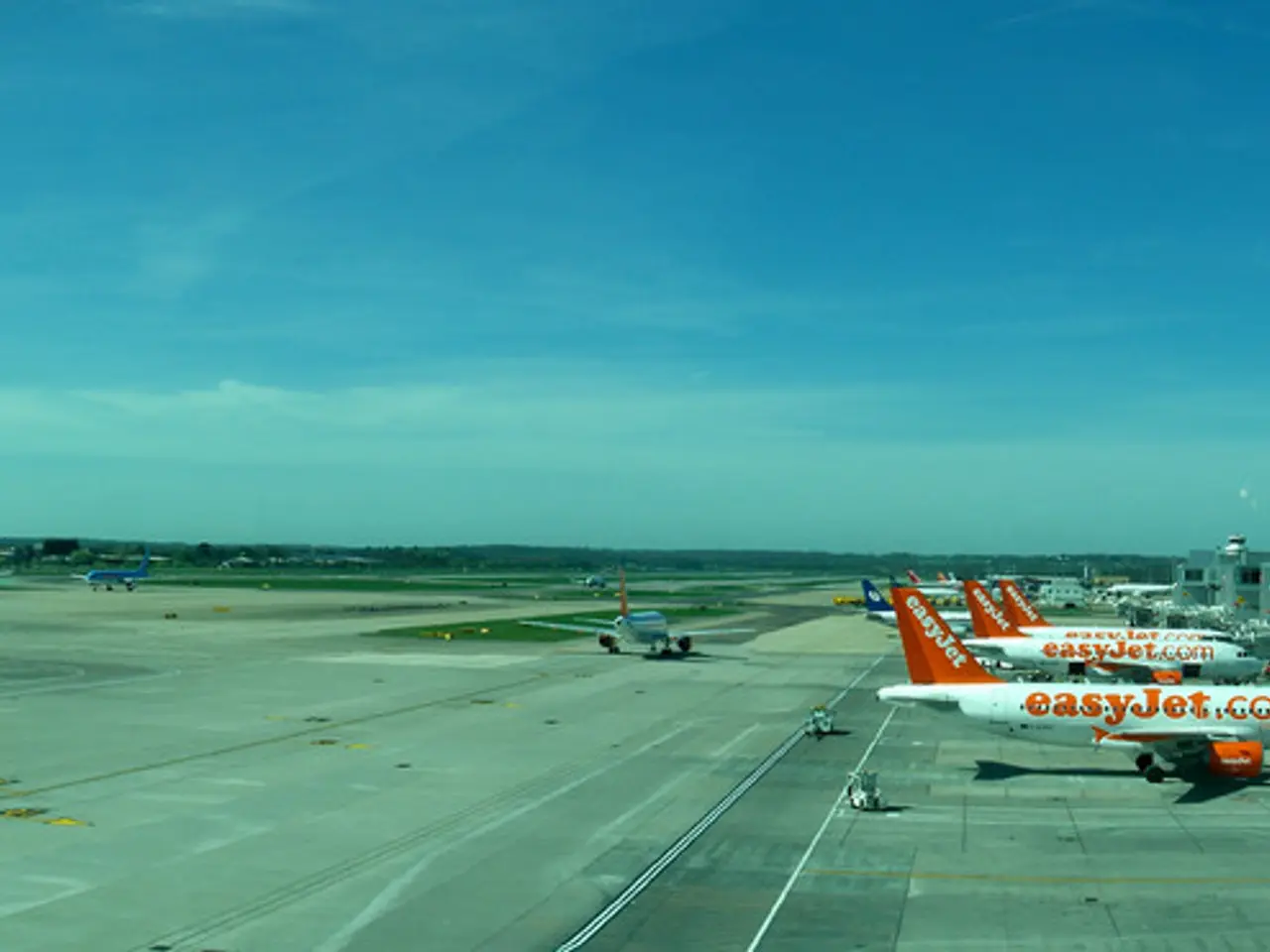
Work limitations implemented at Sochi airport commenced on July 23rd
In the Kuban region of Russia, a heightened threat from unmanned aerial vehicles (UAVs) or drones has contributed to a tense security situation, with several airports, including Sochi, experiencing delays and operational disruptions [1][5].
Sochi Airport, a major hub for travel in the region, has implemented heightened security measures in response to the threat. Despite these precautions, the airport has managed to keep essential services running, such as the free mother and child room in the terminal and fountains with free drinking water, strategically located near all restrooms [2].
The specific countermeasures at Sochi Airport are not fully detailed, but the operational impact and airport delays suggest active responsiveness to the threat [1]. On July 23, Sochi Airport temporarily halted operations due to an UAV threat, and as of the report, these operations have yet to be resumed [3].
The UAV threat in Kuban is part of an escalating pattern involving more destructive payloads elsewhere in southern Russia, underscoring the ongoing and evolving nature of the UAV threat in the region [1][2][5]. Military and civilian areas in nearby regions, such as Rostov, have been targeted by increasingly sophisticated drones equipped with incendiary warheads similar to napalm [2].
It's important to note that the suspension of operations at Sochi Airport was to ensure flight safety, as reported by Rosaviatsiya representative Artem Koreniako [3]. The threat in Kuban is a separate incident from the one that led to Sochi Airport's suspension of operations.
The nature of the threat in Kuban, such as the type of UAV or its intended target, was not specified in the report [4]. The declaration of the threat in Kuban did not affect the advice given to the public at Sochi Airport regarding seat usage and consideration for the elderly, women, and children [6]. The Sochi Airport press service asked the public to respect others and not occupy seats with belongings and luggage, with seats to be given up for the elderly, women, and children [6].
Despite the ongoing threat, Sochi Airport remains committed to providing a comfortable and safe environment for passengers. The airport's commitment is evident in the continued availability of the mother and child room and the fountains with free drinking water, offering a small comfort in these challenging times.
References: [1] https://www.rt.com/russia/557885-drone-attack-sochi-airport/ [2] https://www.themoscowtimes.com/2021/07/26/sochi-airport-shuts-down-over-drone-threat-a76490 [3] https://www.themoscowtimes.com/2021/07/26/sochi-airport-shuts-down-over-drone-threat-a76490 [4] https://www.themoscowtimes.com/2021/07/26/sochi-airport-shuts-down-over-drone-threat-a76490 [5] https://www.themoscowtimes.com/2021/07/26/sochi-airport-shuts-down-over-drone-threat-a76490 [6] https://www.themoscowtimes.com/2021/07/26/sochi-airport-shuts-down-over-drone-threat-a76490
In the evolving UAV threat landscape, the finance industry may need to be prepared for potential disruptions to the aviation sector, considering the impact on transportation and travel industries, such as Sochi Airport. The sports industry could also face challenges in organizing events in regions with heightened security threats from UAVs. On the other hand, Sochi Airport's commitment to maintaining essential services like the free mother and child room and drinking water fountains during tough times underscores the importance of industry collaboration and resilience in responding to unexpected threats.