Borkum's N05-A gas field sparks fierce climate and political showdown
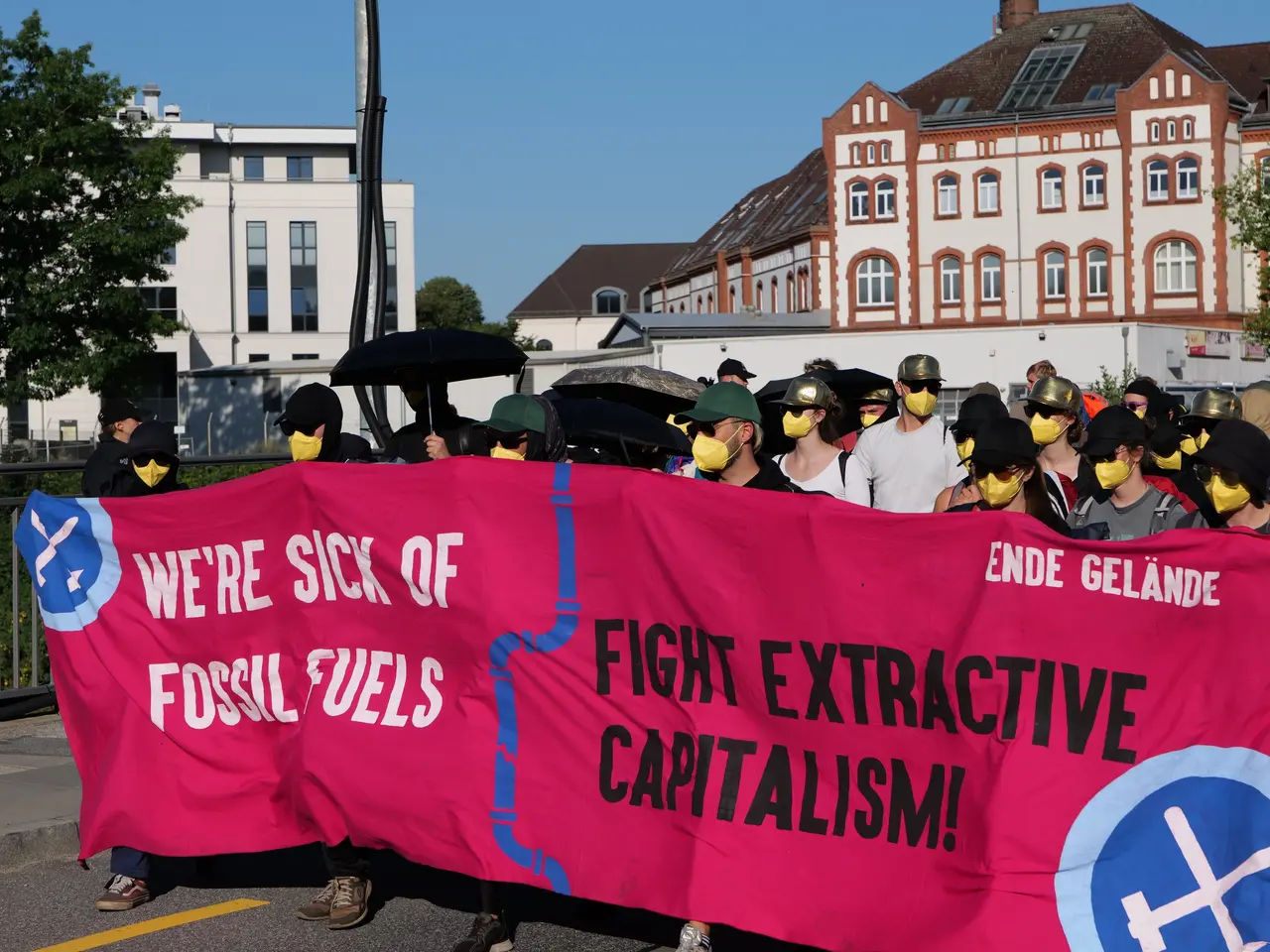
This conflict has it all: a corporate giant as the adversary, a local population fighting for their island, and a drilling platform visible from the shores of the North Sea. "Borkum is one of the most important projects we have right now," says Nele Evers, 21, who leads the gas protests for Fridays for Future. "Here, the fight against fossil fuels becomes very real."
Movements need symbolic battlegrounds—places that come to represent the struggle. This was true of the anti-nuclear protests in Wyhl, Wackersdorf, and Gorleben. More recently, the climate movement rallied around Lützerath, the Rhineland village slated for demolition by coal excavators. Activists ultimately lost that fight, in their view, because the Greens—now a governing party—betrayed them.
Three years later, Borkum offers them a chance to finally make an impact again after a long dry spell—this time, with the Greens on their side. In the Bundesrat, where the final say lies, the party still holds some influence. This time, it wants to stand alongside the movement.
But will all Greens really unite in the decisive moment? And even if they do, will they still have enough seats in the Bundesrat? State elections in March could shift the balance of power. The future of Borkum—which belongs to Lower Saxony—may well be decided in Baden-Württemberg and Rhineland-Palatinate.
At the heart of the dispute is the N05-A natural gas field, located 20 kilometers off Borkum beneath the seabed, straddling Dutch and German territorial waters. Energy company One-Dyas has long sought to extract gas there. When the war in Ukraine began in 2022 and Russia cut off gas supplies, the then-red-black state government in Hanover cleared the way. Local Greens protested, but their federal counterparts had bigger priorities: building LNG terminals and securing alternative suppliers abroad.
Legal challenges have been mounted against the drilling. Most recently, the environmental group Deutsche Umwelthilfe sued over One-Dyas laying a submarine cable through protected reefs to power the extraction platform with electricity from a nearby offshore wind farm. The lawsuit failed. Other cases are still pending, but on the ground, One-Dyas is moving ahead with its plans.
The platform is now in place, and according to the company, gas production has begun. A supply contract has been signed with German energy provider EWE, which serves customers across much of northern Germany. The companies market their gas as ecologically valuable, arguing that, unlike liquefied natural gas from the U.S., its extraction releases far fewer greenhouse gases.
Critics counter that using wind energy to expand fossil fuel production—rather than replace it—is absurd. Greenpeace, in a legal opinion, argues that approving new gas projects violates international and constitutional law. Others warn of risks to the Wadden Sea, potential accidents, and earthquakes. Locals on Borkum fear the island's tourism industry could suffer.
Yet there are few levers left to stop the project. The Bundesrat's decision is one of the last. At stake is the Unitization Agreement, a treaty between the federal government and the Netherlands designed to establish a legal framework for cross-border extraction. The economics ministry says the agreement is already signed at the government level. Next, the Bundestag must approve it—a formality, given the coalition's majority. After that, it goes to the Bundesrat.
What exactly happens if the Bundesrat rejects it remains unclear. Lower Saxony's environment ministry—now led by the Greens—states in response to inquiries: "Without the agreement, the extracted gas cannot be used." Conversely, the treaty would make it easier to drill additional gas fields near N05-A—something One-Dyas is already planning. The company, however, claims the agreement "does not affect gas production itself" and insists it has no bearing on future projects. If so, the courts may once again have to untangle the real-world consequences. For opponents, even that would be better than nothing.
Climate NGOs and Fridays for Future Have Sharpened the Debate for Months—Will the Gas Deal Go Through?
For months, NGOs and Fridays for Future have framed the conflict around a single question: Will the gas agreement be approved? Over time, they have pushed the issue onto the national agenda of the Green Party, offering it an opportunity—after the years in the traffic-light coalition—to regain the trust of climate activists and, at the same time, environmentalists.
Ahead of the party conference this fall, a motion was tabled to oppose gas extraction. Some Green-led state governments viewed it critically, but after lengthy discussions, delegates formally committed to rejecting the agreement. The seven Green environment ministers announced their intention to vote against it in the Bundesrat.
This is where the political arithmetic begins: If 35 votes in the Bundesrat are cast as "no" or abstentions, the deal fails. The states with Green participation in government control only 32 votes. However, the Left Party also opposes gas extraction and, through its role in Mecklenburg-Western Pomerania's government, could provide the decisive three votes. But if the Greens are ousted from the government in Rhineland-Palatinate, four votes disappear. If they also lose Baden-Württemberg, another six are gone—making a veto far less likely.
Many opponents of the gas deal are now hoping the Bundestag will vote quickly, allowing the Bundesrat to weigh in before new state governments take office. Yet timing is everything: If the Bundestag approves the deal as early as next week, the Bundesrat would vote on it at its next session on March 6—just two weeks before Rhineland-Palatinate's election and two days before Baden-Württemberg's.
Will all Greens then abide by the party conference decision? Or will fear prevail—the fear of being accused of risking another energy crisis by making Germany dependent on U.S. gas, even under Trump?
For the Greens in Rhineland-Palatinate, the question is moot. Their lead candidate is Environment Minister Katrin Eder, who states: "We will push to ensure Rhineland-Palatinate does not approve the deal in the Bundesrat." With her party polling at just 10 percent, she needs to mobilize core voters—and a climate-conscious stance helps.
But in Baden-Württemberg, where the race against the CDU is tighter and centered on centrist voters, the calculus is different. Still, Environment Minister Thekla Walker stands by the party conference resolution. Her ministry has made no secret of its preference to reject the agreement. Walker wields influence: If the Greens remain in government, she is a top contender for a cabinet post. Meanwhile, the State Ministry under Minister-President Winfried Kretschmann remains noncommittal, stating that Bundesrat votes are decided by the cabinet when the time comes.
And perhaps there is still time: Sources in parliament suggest that a Bundestag vote next week is unlikely. Consequently, the Bundesrat might not take up the issue until its following session at the end of March—by which point the outgoing state governments will still be in a caretaker capacity, no longer constrained by election campaign considerations. Case closed?
The climate movement isn't taking any chances. "It would be disastrous for the Greens if one of their states broke ranks," says Fridays for Future activist Nele Evers. "This is about their credibility—we've seen what happened in Lützerath." As a precaution, they plan to engage in intensive discussions with politicians—not just the Greens—right up until the vote.
Read also:
- American teenagers taking up farming roles previously filled by immigrants, a concept revisited from 1965's labor market shift.
- Weekly affairs in the German Federal Parliament (Bundestag)
- Landslide claims seven lives, injures six individuals while they work to restore a water channel in the northern region of Pakistan
- Escalating conflict in Sudan has prompted the United Nations to announce a critical gender crisis, highlighting the disproportionate impact of the ongoing violence on women and girls.