Germany's consumer policies show uneven progress in new VZBV review
Out of 23 consumer policy initiatives that the CDU, CSU, and SPD had—at least in part—explicitly pledged to pursue in their coalition agreement, nine have not even been addressed yet, according to the Federation of German Consumer Organizations (VZBV). Of the 14 projects that have either been launched or completed, the federation rates implementation as "strong" in six cases, "mediocre" in six, and "weak" in two.
The measures taken so far to lower electricity prices for households were deemed "weak," as were efforts to simplify data protection rules while maintaining existing safeguards. Here, the federal government must take a stronger stance at the EU level against proposed adjustments by the European Commission, the VZBV argues.
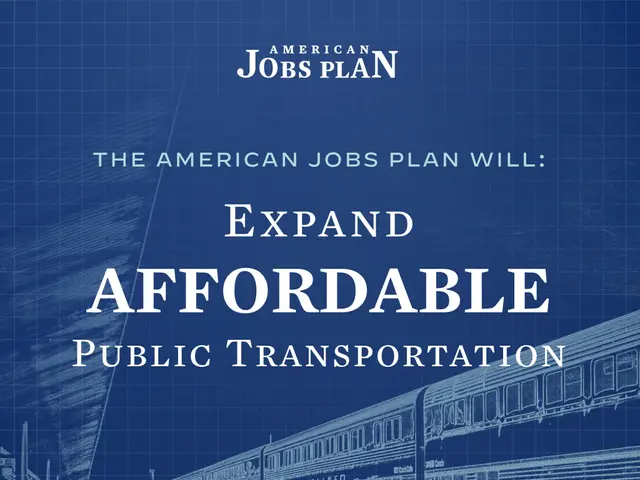
The extension of the Deutschlandticket—Germany's nationwide public transport pass—approved last November earned only a "mediocre" rating. Though the coalition had originally promised not to raise the price for users until 2029, the monthly cost jumped to €63 at the start of this year. Despite the increase, the pass's future has at least been secured for the coming years.
On the other hand, the federation praised as "strong" Consumer Protection Minister Stefanie Hubig's (SPD) opposition to an EU Council initiative to revise air passenger rights in a way that would disadvantage travelers. The reform of private pension schemes was also hailed as a "milestone."
"Some of the new laws represent real progress from a consumer perspective," said Ramona Pop, a member of the VZBV executive board. "The problem is that nothing is moving forward in other areas at all."
Pop has also called for a meeting with Economic Affairs Minister Katherina Reiche (CDU). "We would welcome the opportunity to meet—after all, consumers and their private spending are a major economic factor," she said. Several associations have recently criticized Reiche for holding discussions with corporate representatives while failing to engage with environmental and consumer protection groups.
Read also:
- American teenagers taking up farming roles previously filled by immigrants, a concept revisited from 1965's labor market shift.
- Weekly affairs in the German Federal Parliament (Bundestag)
- Landslide claims seven lives, injures six individuals while they work to restore a water channel in the northern region of Pakistan
- Escalating conflict in Sudan has prompted the United Nations to announce a critical gender crisis, highlighting the disproportionate impact of the ongoing violence on women and girls.