Germany's Oil Shortage Crisis Sparks Aviation Cuts and Emergency Talks
Germany Has Enough Fuel—for Now, Says Economics Minister Reiche
For Katherina Reiche, the message is clear: Germany has sufficient fuel supplies—enough gasoline and diesel for road traffic, enough jet fuel for aviation. "I stand by my statement that energy security in Germany is guaranteed," the CDU politician declared in a Monday interview with Deutschlandfunk. With this assertion, the federal economics minister continues to defy warnings of dwindling jet fuel reserves issued last week by the International Energy Agency (IEA).
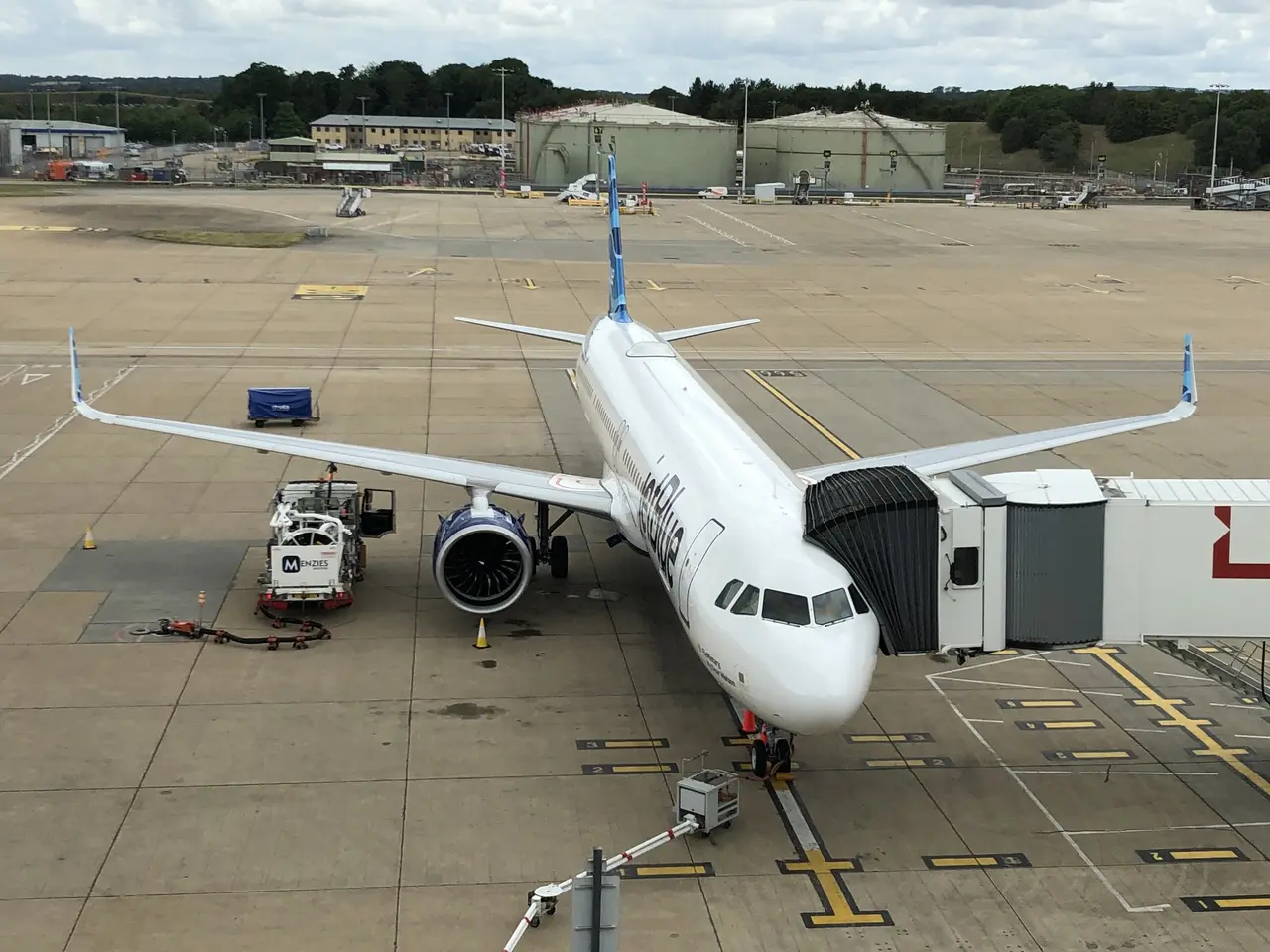
IEA Director Fatih Birol had cautioned that jet fuel—the lifeblood of aviation—could run short in Europe within roughly six weeks. If that happens, airlines may be forced to cancel flights. The crisis began after Iran effectively blocked the Strait of Hormuz, a critical shipping lane, following the outbreak of war between the U.S., Israel, and the Iranian regime.
With nearly one-fifth of the world's oil normally passing through this Persian Gulf chokepoint, disruptions to supply chains were inevitable. Though Iran later allowed some vessels to transit—for a fee—U.S. President Donald Trump announced last week that the United States would now impose its own blockade on the strait. Fuel prices have since surged, affecting both aviation and road transport.
Birol warns that the blockade will hit Asian nations—Japan, Pakistan, and South Korea—particularly hard, as they rely heavily on oil from the war-torn Middle East. But Europe and the U.S. could also face jet fuel shortages. How serious are these concerns?
Reiche's coalition partner and Finance Minister Lars Klingbeil (SPD) urged taking the warnings seriously. Reiche, however, emphasized the role of domestic refineries, which produce jet fuel within Germany. Crude oil, she noted, is sourced from countries like Kazakhstan, Norway, and the U.S. On Monday, she met with aviation industry representatives and officials from the Federal Transport Ministry to discuss securing oil imports and domestic jet fuel production.
Chancellor Friedrich Merz (CDU) also stressed that supplies remain secure. Nevertheless, he plans to convene the National Security Council "promptly" to address the energy crisis. "Our goal is clear: German businesses and citizens must be able to rely on the steady supply of essential products like diesel, gasoline, and aviation fuel," he stated at the opening of the Hannover Messe on Sunday evening. When asked to define "promptly," deputy government spokesman Steffen Meyer declined to specify on Monday, noting only that the council's meetings are "fundamentally confidential." He did confirm that supply security is a "top priority" and that state representatives—including Lower Saxony's Minister-President Olaf Lies (SPD)—would attend.
The center-right coalition government reinstated the National Security Council as a key body for coordinating security policy, housing its secretariat within the Chancellery. Alongside Merz and Chancellery Minister Thorsten Frei, the council includes ministers from finance, interior, foreign affairs, defense, economics, and digital policy, with intelligence agency heads as permanent observers.
So, Is the Crisis Overblown? Not according to Carolin Schenuit, managing director of the Forum for Ecological-Social Market Economy (FÖS). "We are facing a real oil shortage," she told our website. With jet fuel prices rising, Lufthansa has already begun cutting unprofitable short-haul routes, and fuel-inefficient aircraft may be retired early. "While politicians are downplaying the situation in public," Schenuit said, "executives in boardrooms know exactly how serious it is."
Politics and Business Must Manage Potential Shortages—Not Just in Aviation
"Working from home and video conferences instead of commuting and business trips for meetings, identifying essential activities and consumption while limiting others," suggests Felix Schenuit. In concrete terms, he explains, this means: "Trucks delivering food are objectively more important at the fuel pump than sports cars out for a joyride in the countryside."
While air transport accounts for only a small fraction of global freight, it often carries perishable goods or high-value shipments requiring highly secure supply chains, making its cargo disproportionately valuable compared to other modes of transport. Freight should take priority, argued energy policy expert Michael Kellner (Alliance 90/The Greens). Domestic passenger flights within Germany, short-haul flights to neighboring European countries, and private jets, however, are dispensable.
"The kerosene crisis reveals what the new normal looks like," added Mira Kapfinger, spokesperson for the climate organization Stay Grounded. Aviation, one of the sectors most vulnerable to global shocks, makes one thing clear: dependence on fossil fuels means instability. "The solution is straightforward: reduce flights and invest in ground-based alternatives," Kapfinger told our website.
Meanwhile, fuel reserves are also a pressing issue in other European countries. In Austria, for example, energy giant OMV has purchased crude oil from the national emergency stockpile—"at market prices," as the Austrian Ministry of Economic Affairs announced on Monday.
If a Europe-wide plan for sharing and allocating kerosene reserves is developed, Spain intends to play an active role, declared Energy and Environment Minister Sara Aagesen Muñoz (independent) on Monday. The European Commission is currently drafting an emergency plan to prevent kerosene shortages at European airports.
Aagesen Muñoz, who is also a chemical engineer, stated that Spanish refineries have already ramped up kerosene production. According to Reuters, she also advocated for a windfall tax, arguing that if oil companies profit from the crisis by selling fuel at inflated prices, it is only fair to redirect those excess profits back to consumers.
Katherina Reiche, however, remained firm on Monday, reiterating her opposition to a windfall tax for German companies.
Read also:
- American teenagers taking up farming roles previously filled by immigrants, a concept revisited from 1965's labor market shift.
- Weekly affairs in the German Federal Parliament (Bundestag)
- Landslide claims seven lives, injures six individuals while they work to restore a water channel in the northern region of Pakistan
- Escalating conflict in Sudan has prompted the United Nations to announce a critical gender crisis, highlighting the disproportionate impact of the ongoing violence on women and girls.