Germany's VAT hike plan sparks debate over economic fairness and household strain
Economists are divided over the German government's consideration of raising value-added tax (VAT). Clemens Fuest, president of the Ifo Institute, called the proposal "a sensible step that would boost incentives for work and enhance Germany's competitiveness," according to comments made to Handelsblatt (Thursday edition).
Gabriel Felbermayr, a member of the German Council of Economic Experts, also welcomed the idea. "It could well make sense to increase VAT and use the additional revenue to reduce more harmful taxes or levies," he said.
Marcel Fratzscher, president of the German Institute for Economic Research (DIW), was more skeptical. He warned that such a reform package would amount to a redistribution from both the top and bottom of society toward the middle. "Many low-income workers could end up worse off under this kind of reform," Fratzscher cautioned.
Opposition lawmakers in the Bundestag dismissed the proposal outright. "For the conservative bloc to seriously consider fueling inflation further with a VAT hike in the middle of an oil price crisis is sheer madness," Andreas Audretsch, deputy leader of the Green Party's parliamentary group, told Handelsblatt (Thursday edition). Green Party financial policy spokesperson Katharina Beck added, "Few things would be worse right now than raising VAT amid the current economic challenges."
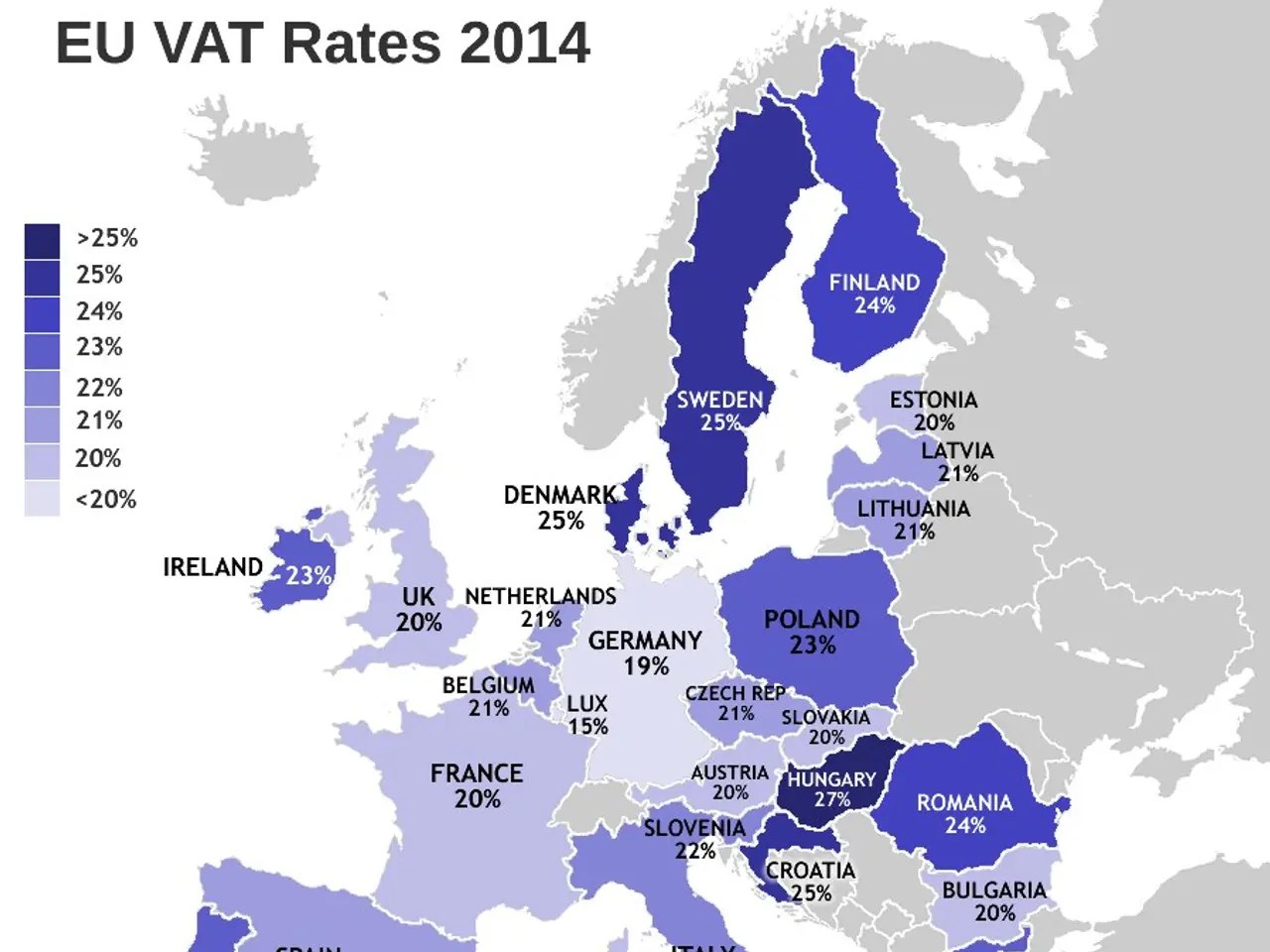
According to Handelsblatt, the Federal Ministry of Finance is examining various models at the request of the Chancellery. One option under discussion would raise the standard VAT rate from 19% to 21%, while cutting the reduced rate on essential goods from the current 7%. The additional revenue could then be used to lower taxes and social contributions on labor income.
Read also:
- Federal Funding Supports Increase in Family Medicine Residency Program, Focusing on Rural Health Developments
- Potential Role of DHA in Shielding the Brain from Saturated Fats?
- Alternative Gentle Retinoid: Exploring Bakuchiol Salicylate for Sensitive Skin
- Hanoi initiates a trial program for rabies control, along with efforts to facilitate the transition from the dog and cat meat trade industry.