Hamburg's Altona Station Relocation Sparks Debate Over Future Designs
Hamburg's Altona Station Relocation Sparks Ongoing Debate
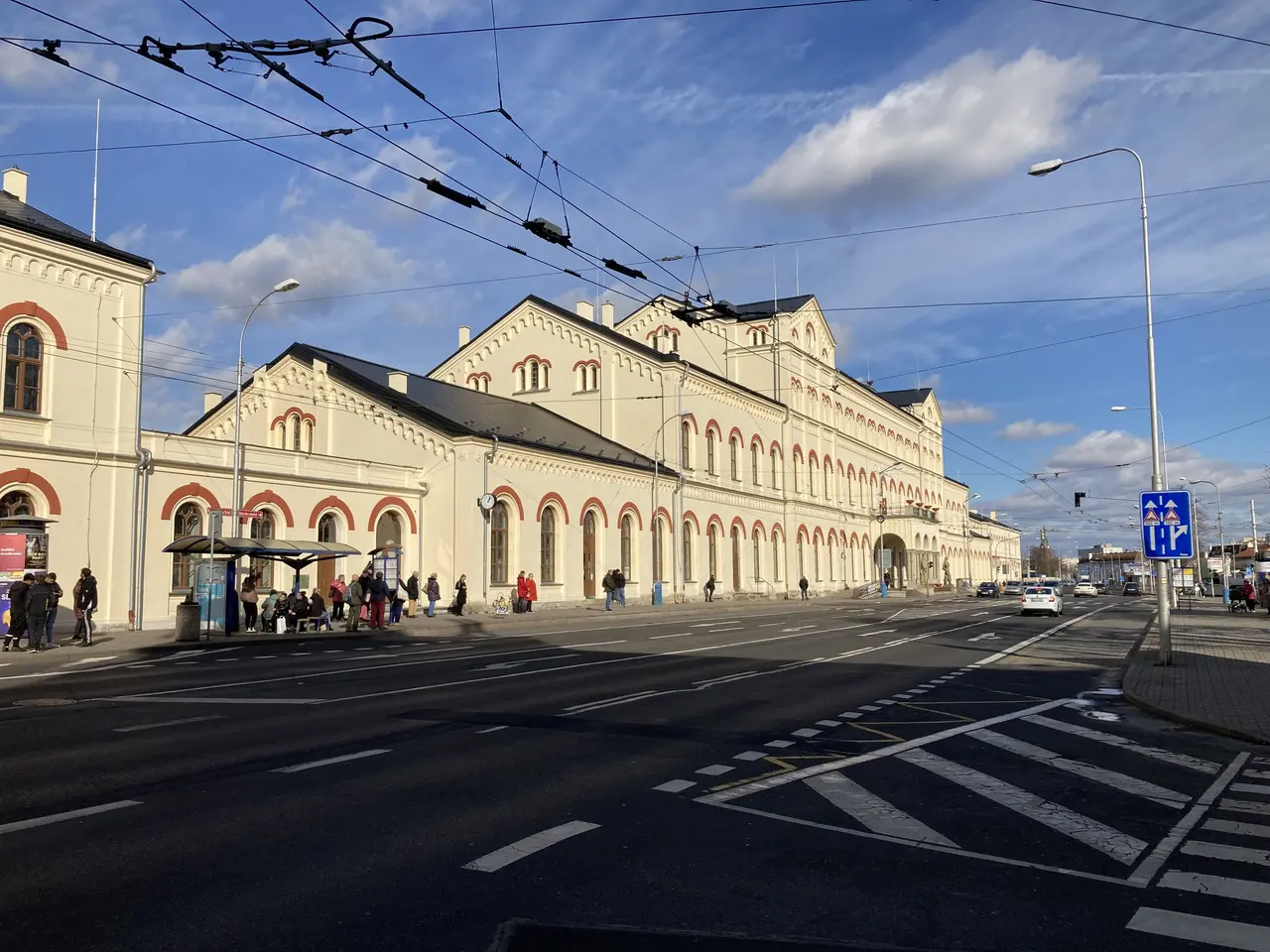
Plans to relocate Hamburg's Altona train station continue to stir controversy. The city's Senate recently unveiled the results of a design competition for the future use of the old terminal station's site. According to official plans, a new long-distance station is set to open at Diebsteich—roughly two kilometers away—by the end of 2029.
However, the citizen initiative Prellbock Altona has cast doubt on the timeline, dismissing the project as a "distraction maneuver." Instead, the group is calling for the immediate modernization of Altona's bus terminal.
The design competition selected two contrasting proposals. The winning entry, submitted by the team CF Møller and Vogt Landschaft, envisions demolishing the station's distinctive 1979 brutalist structure to make way for a new green space.
The runner-up design, by Noto and Studio Erde, proposes preserving the building and repurposing it as a "civic center." While this concept also replaces the existing tracks with a park, it retains remnants of the rails to, in the Senate's words, "preserve visible traces of the site's former use."
A study suggests that the cleared space could accommodate two additional bus bays, along with clearly marked pedestrian and cycling paths.
"Altona will gain an attractive new city center," promised Finance Senator Andreas Dressel (SPD). The initial concepts will now be further refined, with one new requirement: following Dressel's proposal, both designs must incorporate at least 400 new residential units directly in the center. This means a significant increase in the planned building volume. Alongside Dressel's finance authority, the project involves the city's environmental, transport, and urban development agencies, as well as the Altona district administration.
Chief Building Director Franz-Josef Höing praised both designs for promising "well-proportioned urban and green spaces." The former track areas would become a "versatile park landscape with highly attractive pathways," he said. The city now plans to take its time refining the concepts before making a final decision. The competition was accompanied by an exhibition and included randomly selected citizens who were able to follow the process.
Criticism has come from Prellbock Altona, which considers public participation insufficient. The initiative, which has advocated for preserving the station for over a decade, has presented its own counter-study. Regardless of which design is chosen, the group argues, the city must first expand the adjacent bus terminal to advance Hamburg's mobility transition. The terminal's location—directly next to the Altona S-Bahn station, which will remain in any case—makes it a key transport hub.
The study was conducted by transport experts Jens Ode and Dieter Doege, both advocates for expanding Hamburg's tram network. Their analysis of passenger numbers found that with 47,800 daily boardings and alightings, Altona's bus terminal is the second-busiest in the city, served by 17 bus lines. Yet it currently has only a narrow double bay with severely limited capacity.
Ode and Doege propose relocating the taxi rank from the station entrance to the east side of the building. The freed-up space could then accommodate two additional bus bays and clearly marked pedestrian and cycling paths, while also providing step-free access to buses—eliminating the need for passengers to use stairs, as they must now.
The experts criticize the two winning competition entries for failing to adequately address the bus terminal's challenges. The first-place design would relocate the terminal to the north, where space for turning buses is scarce, forcing passengers to endure long walking distances. The second-place proposal would expand the terminal to the south but still lacks sufficient space, particularly for parked buses, leaving key issues unresolved.
According to Prellbock spokesperson Michael Jungblut, the advantage of Odes and Doege's proposal is that it could be implemented at minimal cost and construction could begin as early as this year. In contrast, a complete redevelopment of the entire station area is not expected before 2032.
The initiative remains "fairly optimistic" that it can still prevent the relocation of the station to Diebsteich. Jungblut argued that Deutsche Bahn needs to "get its priorities straight" regarding how it spends its money. He noted that an investor who had planned to build office towers at Diebsteich has "more or less pulled out." Apart from the new S-Bahn stop, no construction work has yet begun in the area.
Sven Hielscher, leader of the CDU faction in Altona, is confident that the station will indeed be relocated, calling it a "historic opportunity for the district." However, he cautioned against half-hearted compromises. "The main station building has to go," he insisted. Anyone who wants better pedestrian connections and a higher quality of stay must demolish the structure entirely. "A dreary concrete block stays a dreary concrete block, even if you spruce it up a little," Hielscher said.
Read also:
- American teenagers taking up farming roles previously filled by immigrants, a concept revisited from 1965's labor market shift.
- Weekly affairs in the German Federal Parliament (Bundestag)
- Landslide claims seven lives, injures six individuals while they work to restore a water channel in the northern region of Pakistan
- Escalating conflict in Sudan has prompted the United Nations to announce a critical gender crisis, highlighting the disproportionate impact of the ongoing violence on women and girls.