USC Exhibits Rare 1778 Washington Letter and Declaration of Independence Stone Engraving
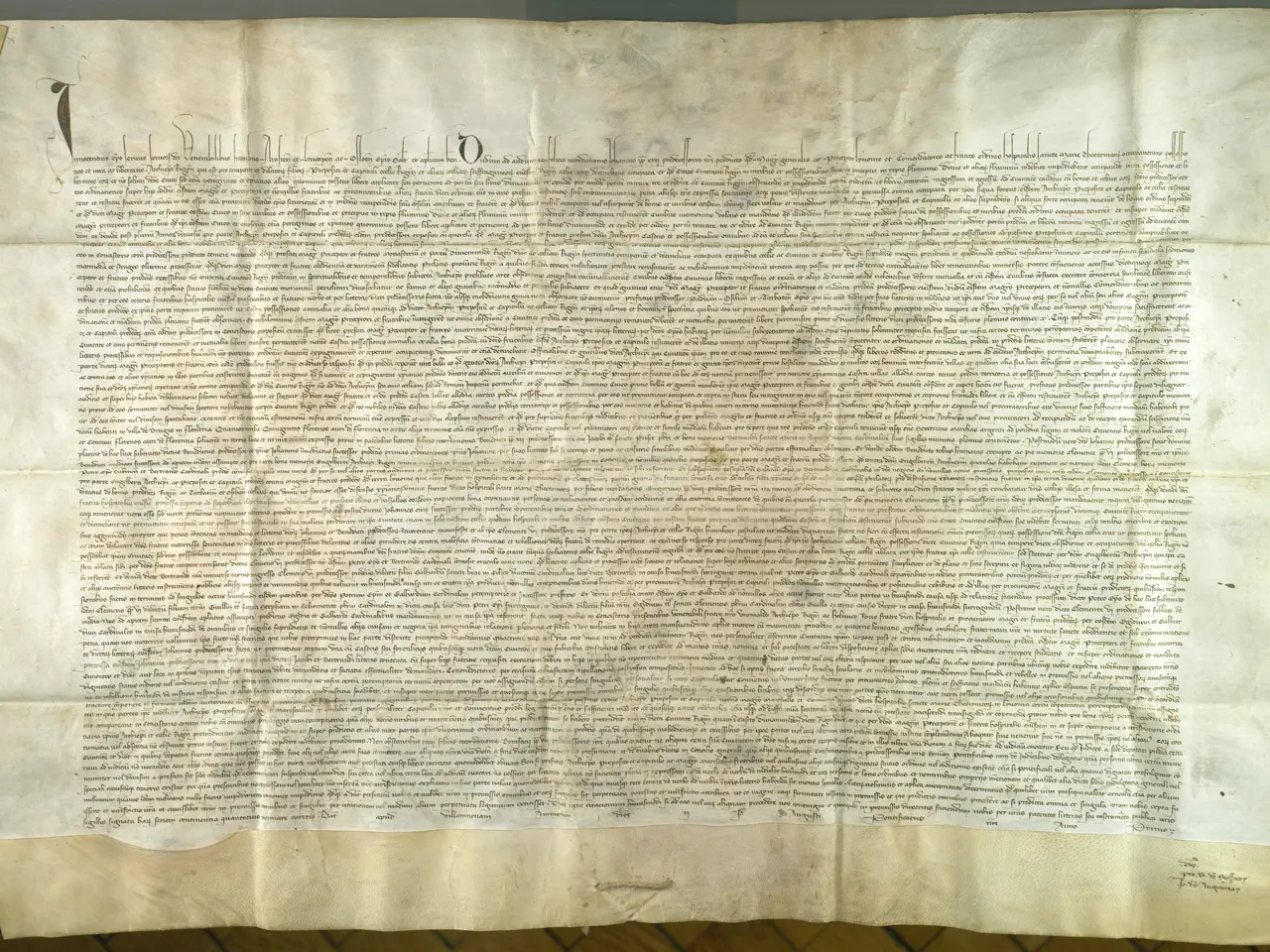
A stone engraving of the Declaration of Independence. The Treaty of Paris, which ended the war with Great Britain. A sheet of paper that holds the Senate markup of the Bill of Rights from 1789. A 1778 document with George Washington's signature floating above the Oath of Allegiance. These are among 16 of the nation's rare and delicate treasures that are on display at the USC Fisher Museum of Art, the third of eight stops for the National Archives' traveling exhibit to commemorate the 250th anniversary of the country's founding. Museum visitors Jean and Phil Orozco marveled over the pieces of history inside the dimly lit exhibition room. "In these times right now we're in, there's a lot of value in the documents and interpreting them in the way they're supposed to be interpreted," Phil said. "It validates what we should've followed in the first place," Jean said. USC is the only university to host the exhibit and Fisher Museum has been carefully prepped to display the sensitive archives, said Bethany Montagano, museum director. "We have the infrastructure, and we have the staff to be able to live up to the rigorous standards," Montagano said. The exhibit is being transported around the county on a specially equipped 'Freedom Plane,' which was greeted by a brass and drum welcome from the USC marching band when it recently landed at Van Nuys Airport. Members of the USC Reserve Officers Training Corps were in perfect step as they carefully maneuvered the documents off of the Boeing 737. The documents were taken to USC in degradation-safe cases. USC President Beong-Soo Kim said that while the country continues the 250-year-long debate over the substance of these documents, he felt it important that the public be allowed to see every addendum and amendment to the original texts. "It is really a tremendous opportunity for us to educate the community and give them an opportunity to appreciate these magisterial documents," said Kim, who was on hand at Van Nuys Airport to receive the archives in mid-April. "These documents remind us that these principles of freedom and democracy are ones that need to be worked at." The Fisher Museum had to meet specific conditions to accommodate the documents, said Jessie Kratz, a historian at the National Archives and curator of the exhibit. The documents are highly sensitive to light, and the lumens of the overhead lamps are kept as low as candlelight to avoid risking degradation. The artifacts - yellowing parchment with slight marks of stress at the edges and an intricately detailed stone tablet - are almost luminous under dim overhead lights at the exhibit. A lengthy debate unfolds on the sheet of paper that holds the Senate markup of the Bill of Rights from 1789, and Washington's signature towers above the Oath of Allegiance. Montagano, who holds a doctorate in history, said seeing the actual documents after studying copies for years was a cathartic experience. "I can't tell you the thrill of being able to see the documents in person," Montagano said. "We're all, you know, well versed and steeped in the stories behind each document ...as students of history, it's amazing." The curation was inspired by the 'Freedom Train' traveling exhibit, which took place from 1947 to 1949 and again in 1975-1976, the latter to celebrate the bicentennial anniversary of the founding of the U.S. The second tour took the exhibit to 48 states and held historical documents in display cars for citizens to see up-close. "These documents can only be on view a certain amount of time, in terms of the light, so we wondered 'How do we get to the greatest number of people?'" said Patrick Madden, CEO of the National Archives Foundation, a partner to the U.S. Archive. "That's where the airplane comes in."
Read also:
- American teenagers taking up farming roles previously filled by immigrants, a concept revisited from 1965's labor market shift.
- Weekly affairs in the German Federal Parliament (Bundestag)
- Landslide claims seven lives, injures six individuals while they work to restore a water channel in the northern region of Pakistan
- Escalating conflict in Sudan has prompted the United Nations to announce a critical gender crisis, highlighting the disproportionate impact of the ongoing violence on women and girls.