A Historic Turning Point
Baden-Württemberg's economic shift: From Fordism to AI-driven future
In Baden-Württemberg, polls suggest only the CDU or the Greens can secure a governing majority on election day. The question is which of the two lead candidates—Cem Özdemir or Manuel Hagel—will succeed Winfried Kretschmann in a black-green or green-black state government. Coalitions between the CDU and the AfD or the Greens with the SPD and the Left can be ruled out for various reasons.
One might think, "Well, it's just state elections—what does it matter?" But this is about a defining choice in the economic heart of the republic. Baden-Württemberg is not Mecklenburg-Western Pomerania. Together with North Rhine-Westphalia and Bavaria, the state generates well over half of Germany's economic output—€4.26 trillion a year. Baden-Württemberg thrives on its above-average economic strength, its export-driven automotive, mechanical engineering, and chemical industries. Unemployment here has always been below the national average. Its potential for modernization, research excellence, and universities set benchmarks for the entire country. Contrary to some stereotypes, Baden-Württemberg fosters a high quality of life, intellectual brilliance, and remarkable openness. Lothar Späth (1978–1991) and Kretschmann (since 2011) were the right ministers-president at the right time—visionary modernizers. But can Manuel Hagel fill their shoes?
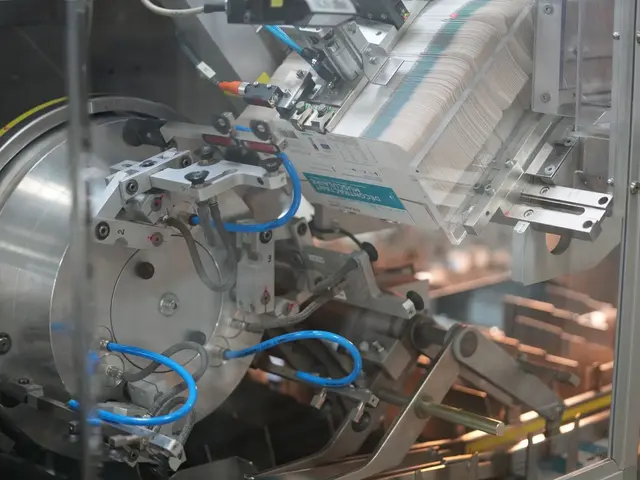
The economy, industry, and society are in the midst of a historic transformation. Fordism—the standardized mass production with rigid control of workflows—has long shaped the economy, social systems, and society, defining the relationship between people and work, and between the state and the economy. This system has enabled broad prosperity, mass consumption, unequal wealth distribution, and yet also the welfare state. But digitalization and AI are dismantling this industrial production model. The entire relationship between the state, economy, and society must now be rebalanced.
In the factories of tomorrow, human labor will no longer be needed, and the interventionist state—controlling and regulating all aspects of life—will become obsolete. AI entrepreneurs and platform owners, wielding largely unregulated market power, will dictate the terms of existence. Our established political and legal structures are deemed superfluous by them. There's even a name for this societal model: "Muskism."
Empty Promises and Hollow Rhetoric
Against this backdrop, Manuel Hagel's insistence that engines—whether combustion or electric—must be built in Baden-Württemberg rings hollow. The reality is that fewer and fewer workers will be needed, no matter where these engines are produced. Daimler-Benz's profits are projected to halve by 2025, and the company will continue cutting jobs, no matter what Hagel claims. If he truly cares about more than just corporate profits—if he wants to protect jobs and families—then his promise is one he cannot keep. Or does he intend to turn engine manufacturing into a state-subsidized employment program?
If Baden-Württemberg is to become a hub for digital AI capitalism, then we must ask: with what money will people—who can no longer earn a living on the assembly line—buy these AI-driven products?
Hagel's talk of a "culture war over the car" waged by the Greens is equally empty. Not that the Greens are brimming with innovative ideas either. Özdemir's belief that suspending all documentation requirements in legal procedures for two years would spark an innovation boom is just as misguided as Hagel's claims.
No Answers to the Pressing Questions
AI-driven public mobility, with its diverse range of autonomous vehicles available anywhere and everywhere, is in no way inferior to today's individual car ownership. But this kind of mobility demands massive public investment, a dramatic increase in energy production, large data centers, maintenance, continuous development, and much more. Far from being green idealism, this vision is already feasible today. Just recently, Amsterdam's city council decided to completely overhaul its entire city center within a few years—without cars. The guiding principle is accessibility: no matter where someone is coming from or where they want to go, they should be guaranteed the ability to reach their destination using public transport.
Manuel Hagel wants to reconcile tradition with innovation, which is all well and good. But how exactly this should work—how AI-driven capitalism could be shaped politically in a way that inspires everyone—remains unclear. His slogan, "No matter what powers it—just as long as it's built in Baden-Württemberg," isn't economic patriotism; it's a political admission of bankruptcy by classical conservatism in an era where everything is changing.
Read also:
- American teenagers taking up farming roles previously filled by immigrants, a concept revisited from 1965's labor market shift.
- Weekly affairs in the German Federal Parliament (Bundestag)
- Landslide claims seven lives, injures six individuals while they work to restore a water channel in the northern region of Pakistan
- Escalating conflict in Sudan has prompted the United Nations to announce a critical gender crisis, highlighting the disproportionate impact of the ongoing violence on women and girls.