Bank of England warns of hidden risks as markets ignore economic threats
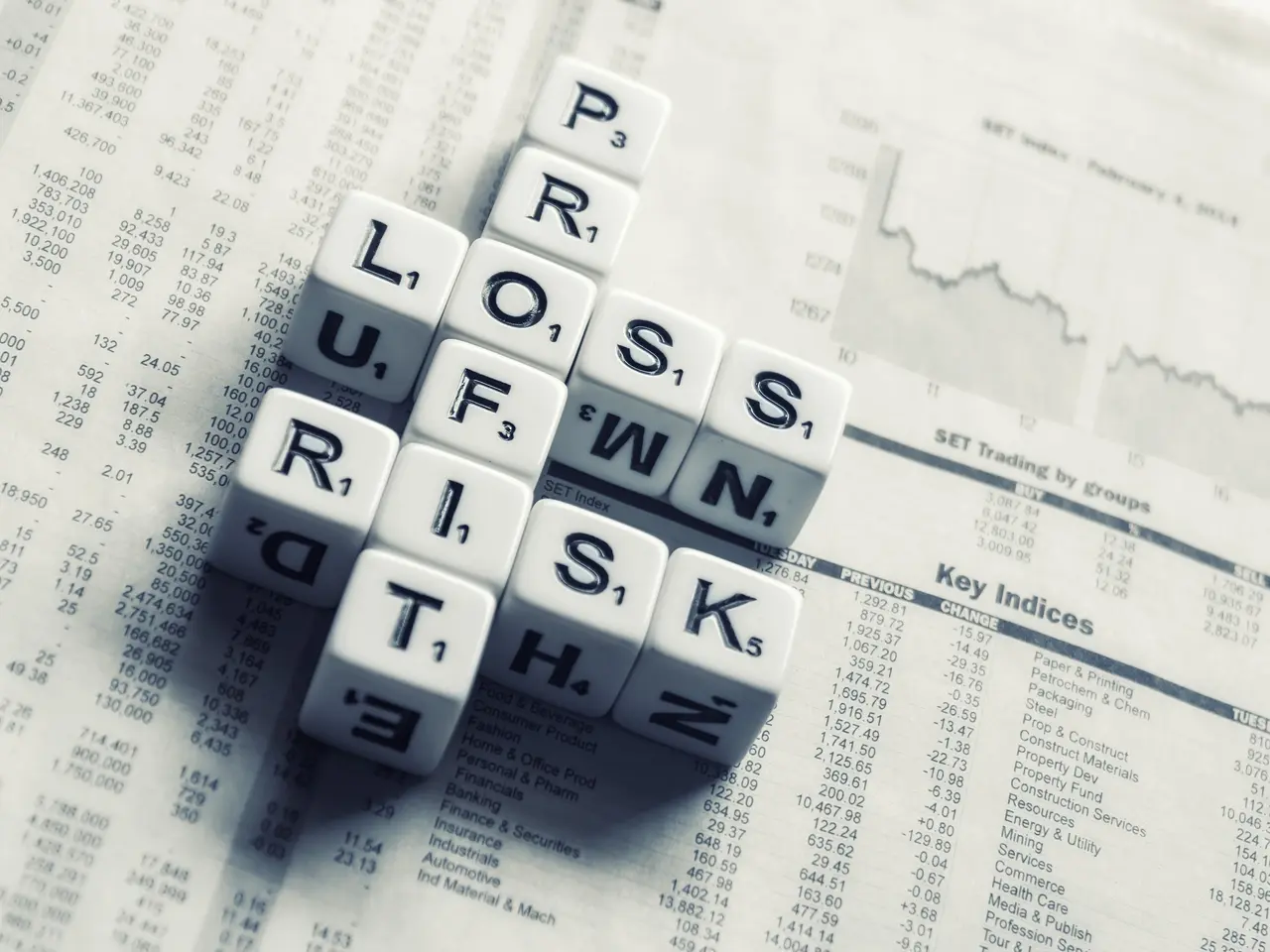
The deputy governor of the Bank of England, Sarah Breeden, claims current global stock market prices did not reflect the array of risks facing the global economy.
Breeden told the BBC: 'There's a lot of risk out there and yet asset prices are at all-time highs. We expect there will be an adjustment at some point.'
The deputy governor did not pinpoint when she expected global stock markets to drop or by how much.
It is unusual for a senior figure at the Bank to be so upfront about their concerns regarding share prices.
Breeden said: 'The thing that really keeps me awake at night is the likelihood of a number of risks crystallising at the same time - a major macroeconomic shock, confidence in private credit goes, AI and other risky valuations readjust - what happens in that environment and are we prepared for it?'
She added: 'I'm not saying it will happen today, tomorrow, in 12 months' time. It's ensuring that if it happens the system is resilient.'
Richard Hunter, head of markets at Interactive Investor, told This is Money: 'That the comments should have come from a central bank official was slightly unusual and raised some eyebrows.'
He added: 'However, the content of those market concerns does little more than echo the issues with which professional investors have been grappling for some time.'
Russ Mould, investment director at AJ Bell, said: 'Breeden wasn't simply referring to the Middle East events - she also referenced concerns around a private credit crunch, high equity valuations and AI.'
He added: 'It's important to remember there is always noise and something for investors to weigh up. Investors often climb the 'wall of worry' which is when financial markets rise even though there are pockets of anxiety.'
Breeden has warned of a potential private credit crunch.
Some funds that mimic the role of banks and lend privately to companies have sustained losses and have had to restrict withdrawals from investors, sparking concerns of weaknesses in the financial system.
Breeden said the rapid growth in this so called 'shadow banking' system had not yet been tested.
Breeden said: 'Private credit has gone from nothing to two-and-a-half trillion dollars in the last 15 to 20 years.'
'It hasn't been tested at this scale with the degree of complexity and interconnections it has with the rest of the financial system so far.'
'It's a private credit crunch, rather than a banking-driven credit crunch, that we're worried about.'
The US stock market has seen a series of record highs recently.
Big technology firms with sky-high valuations continue to pump investment into artificial intelligence (AI), but critics say it is driven by hype and the 'fear of missing out'.
The colossal sums being churned into AI have prompted some, including Bill Gates, to brand the situation a 'frenzy' resembling the dotcom bubble of the late 1990s.
During the the dotcom bubble of the late 1990s, investors threw money at unproven start-ups which quickly went bust or had billions wiped off their value.
Chuck Robbins, chairman and chief executive of Cisco Systems, said in January that while there will be winners from the AI boom, there will also be 'carnage along the way'.
But in November 2025, Jensen Huang, the boss of Nvidia, claimed the AI sector was a 'long, long way' from a Big Short-style collapse. Nvidia is the largest supplier to chips to AI businesses.
In the year to date, US markets are clinging onto gains, albeit a touch lower than the highs which were tested earlier this week, with spikes of 2.6 per cent, 3.8 per cent and 5.1 per cent for the Dow Jones, S&P500 and Nasdaq respectively.
In Britain, the FTSE 100 index is within 5 per cent of its own all-time high, boosted by strong performances in energy, financials and multinational earnings exposure.
But on Friday morning the FTSE 100 fell 0.67 per cent or 71.23p to 10,385.78p.
Amid turmoil triggered by the Iran war, Brent crude is up around 20 per cent on the week and is trading at around $105 a barrel.
Jonathan Moyes, head of investment research at Wealth Club, told This is Money: 'There will inevitably be an adjustment in stock markets at some point in the future.'
'This does not mean investors should make any knee-jerk reactions to their investment portfolios today. Short term decisions that seek to avoid future setbacks tend to end up costing investors more in the long run.'
Breeden's warning came as fresh data highlighted inflationary pressures exacerbated by war across the Middle East.
Rachel Reeves said the Iran crisis was 'not our war, but it is pushing up bills for families and businesses' as a result.
The rate of Consumer Prices Index inflation increased to 3.3 per cent in March from 3 per cent in February, the Office for National Statistics said this week.
Higher motor fuel was the main driver of the rise in inflation, increasing by 8.7 per cent month-on-month. This was the largest increase since June 2022, shortly after Russia invaded Ukraine.
Read also:
- American teenagers taking up farming roles previously filled by immigrants, a concept revisited from 1965's labor market shift.
- Weekly affairs in the German Federal Parliament (Bundestag)
- Landslide claims seven lives, injures six individuals while they work to restore a water channel in the northern region of Pakistan
- Escalating conflict in Sudan has prompted the United Nations to announce a critical gender crisis, highlighting the disproportionate impact of the ongoing violence on women and girls.