Border Controls Extended: Greens See EU Law Violated - Germany extends border controls for six more months despite Schengen concerns
Dobrindt Extends Internal Border Checks—At Least Until September, With No End in Sight; Greens Voice Criticism
Federal Interior Minister Alexander Dobrindt (CSU) has decided to extend controls at Germany's internal borders through at least September, a move that has drawn sharp criticism from the Green Party in Saxony. "With this decision, the federal government is sacrificing freedom of movement for the sake of its security rhetoric while also overburdening the federal police," said Anna Cavazzini, a Chemnitz-based Member of the European Parliament, in a statement. "The European Commission must finally take a clear stand against systematic violations of EU law."
Cavazzini condemned the checks as a strain on commuters and businesses in border regions, noting that daily life between Görlitz and Zgorzelec has been significantly disrupted. The MEP has thrown her support behind a local man's lawsuit challenging the controls before the Dresden Administrative Court. According to the Greens, the plaintiff—who argues that the repeatedly extended checks are unlawful—considers them an unjustified and illegal measure. Cavazzini described the legal action as a crucial step "to defend citizens' rights."
Earlier, Dobrindt's ministry announced that Germany had informed the European Commission of its plan to prolong the temporary internal border controls—initially reintroduced and later extended—beyond March 15 for an additional six months.
"A continuation of these border checks remains necessary for migration and security policy reasons," a ministry spokesperson stated. News of the planned extension was first reported by Bild. Dobrindt, according to his ministry, asserted: "Border controls are a key component of our efforts to overhaul Germany's migration policy."
Gradual Expansion of Internal Border Checks
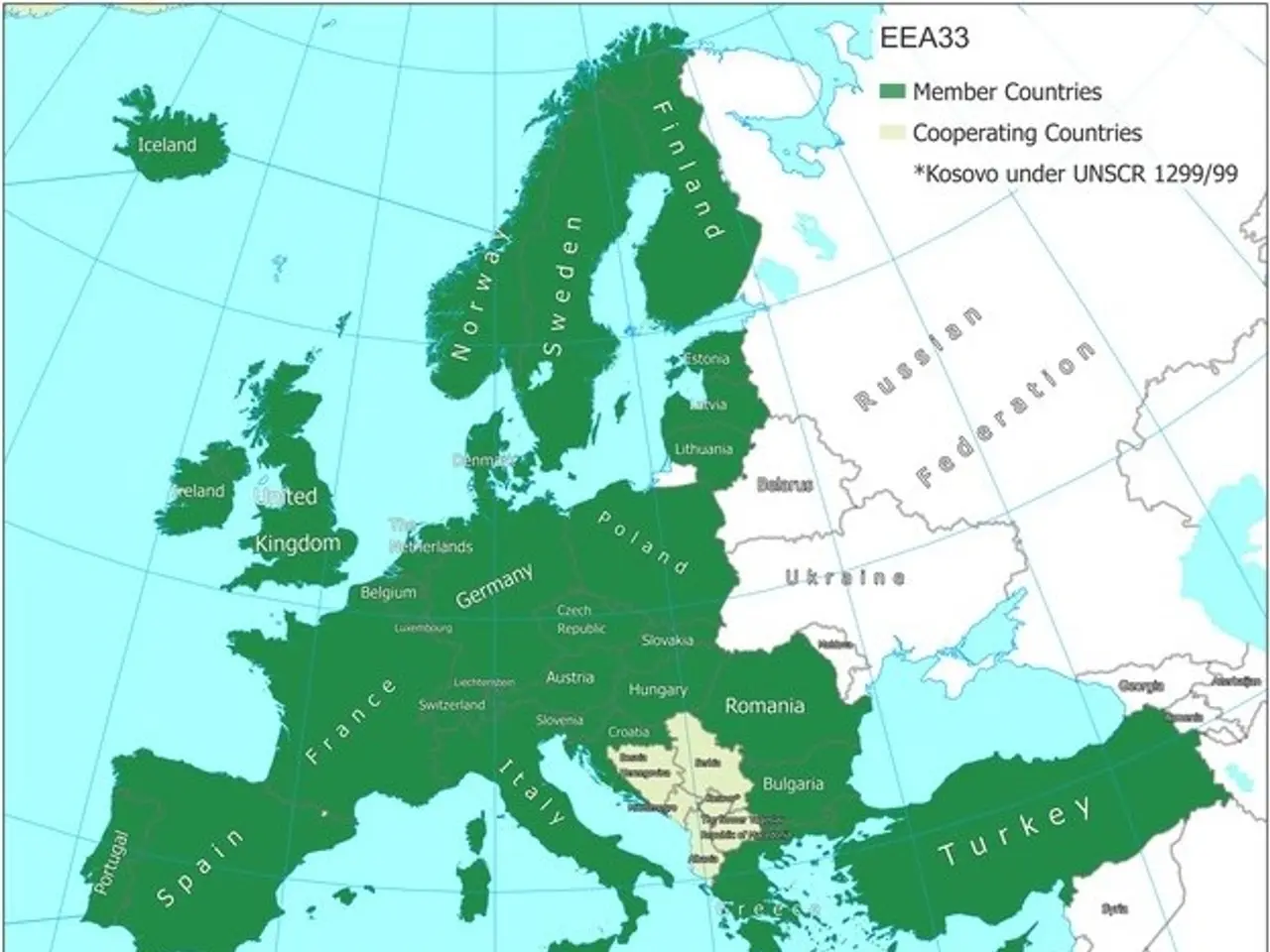
Under the Schengen Agreement, internal border controls are not normally permitted. However, stationary checks at the Austrian border have been in place since 2015. In October 2023, then-Interior Minister Nancy Faeser (SPD) ordered similar controls at the borders with Poland, the Czech Republic, and Switzerland. Since September 2024, federal police have also been conducting checks at the borders with Denmark, France, Belgium, Luxembourg, and the Netherlands. Dobrindt has not only extended and intensified these temporary measures—which must be notified to the European Commission—but also, following his appointment in May, directed that asylum seekers attempting to enter Germany at internal borders be turned away. Exceptions apply to vulnerable groups, including pregnant women, unaccompanied minors, and the sick.
Read also:
- American teenagers taking up farming roles previously filled by immigrants, a concept revisited from 1965's labor market shift.
- Weekly affairs in the German Federal Parliament (Bundestag)
- Landslide claims seven lives, injures six individuals while they work to restore a water channel in the northern region of Pakistan
- Escalating conflict in Sudan has prompted the United Nations to announce a critical gender crisis, highlighting the disproportionate impact of the ongoing violence on women and girls.