Germany slashes air passenger tax to aid struggling airlines and airports
The planned reduction in Germany's air passenger duty, set to take effect on July 1, will not be enough to offset rising ticket prices driven by the energy crisis, according to Anja Karliczek (CDU), chair of the Bundestag's Tourism Committee.
Speaking to the Rheinische Post (Monday), Karliczek acknowledged the severe challenges facing the travel industry. "Of course, these are difficult times for the sector once again," she said. "And ticket prices will inevitably climb even higher. We shouldn't fool ourselves about that."
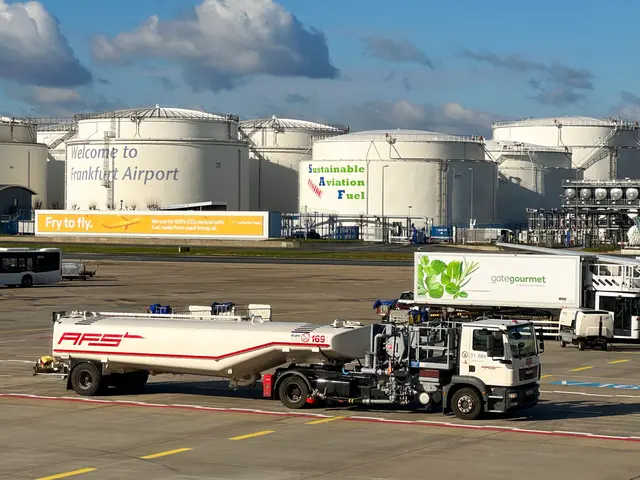
While the cut in air travel taxes represents an initial step to prevent German airports and airlines from falling further behind their foreign competitors, she stressed that the country needs attractive hubs—"including for tourists visiting us." Unlike national operating costs, soaring kerosene prices are not a distortion of competition that disproportionately burdens German airports but rather a market reality that all airlines must factor into their calculations.
Read also:
- Federal Funding Supports Increase in Family Medicine Residency Program, Focusing on Rural Health Developments
- Potential Role of DHA in Shielding the Brain from Saturated Fats?
- Alternative Gentle Retinoid: Exploring Bakuchiol Salicylate for Sensitive Skin
- Hanoi initiates a trial program for rabies control, along with efforts to facilitate the transition from the dog and cat meat trade industry.